
Regensburg Areas & Parks
Explore Regensburg’s historic center, Stadtamhof, practical shopping areas and the green spaces along the Danube.
OVERVIEW
Get to Know the Destination
Regensburg’s historic center is where I spend much of my time, but it is only one part of the city I enjoy. Across the Stone Bridge, Stadtamhof has its own character, while the Danube islands and western riverside offer space for walking, cycling and relaxing. The shopping centers add a practical side to a longer stay. These are areas I have explored myself, bringing together the familiar sights with places that show more of everyday Regensburg beyond its medieval streets.
LOCAL LIFE
Areas to Explore
Most sightseeing takes place in the compact Innenstadt, or historic city center. Rather than treating its individual squares and streets as separate neighborhoods, I find it more useful to explore them together. Stadtamhof makes a natural extension across the river, while the station area and Weichs serve a different purpose, with larger shopping centers and useful services. Each offers a distinct reason to visit, whether you want historic surroundings, somewhere to eat or a practical shopping stop.
Innenstadt & Altstadt: Regensburg’s Historic Center
The Innenstadt is the heart of a visit to Regensburg, with the medieval Altstadt bringing together narrow lanes, colorful façades, churches, shops and lively squares. The cathedral, Porta Praetoria, old town hall and Stone Bridge are close enough to connect on foot, but I would leave time for the streets between them rather than moving straight from one landmark to the next.
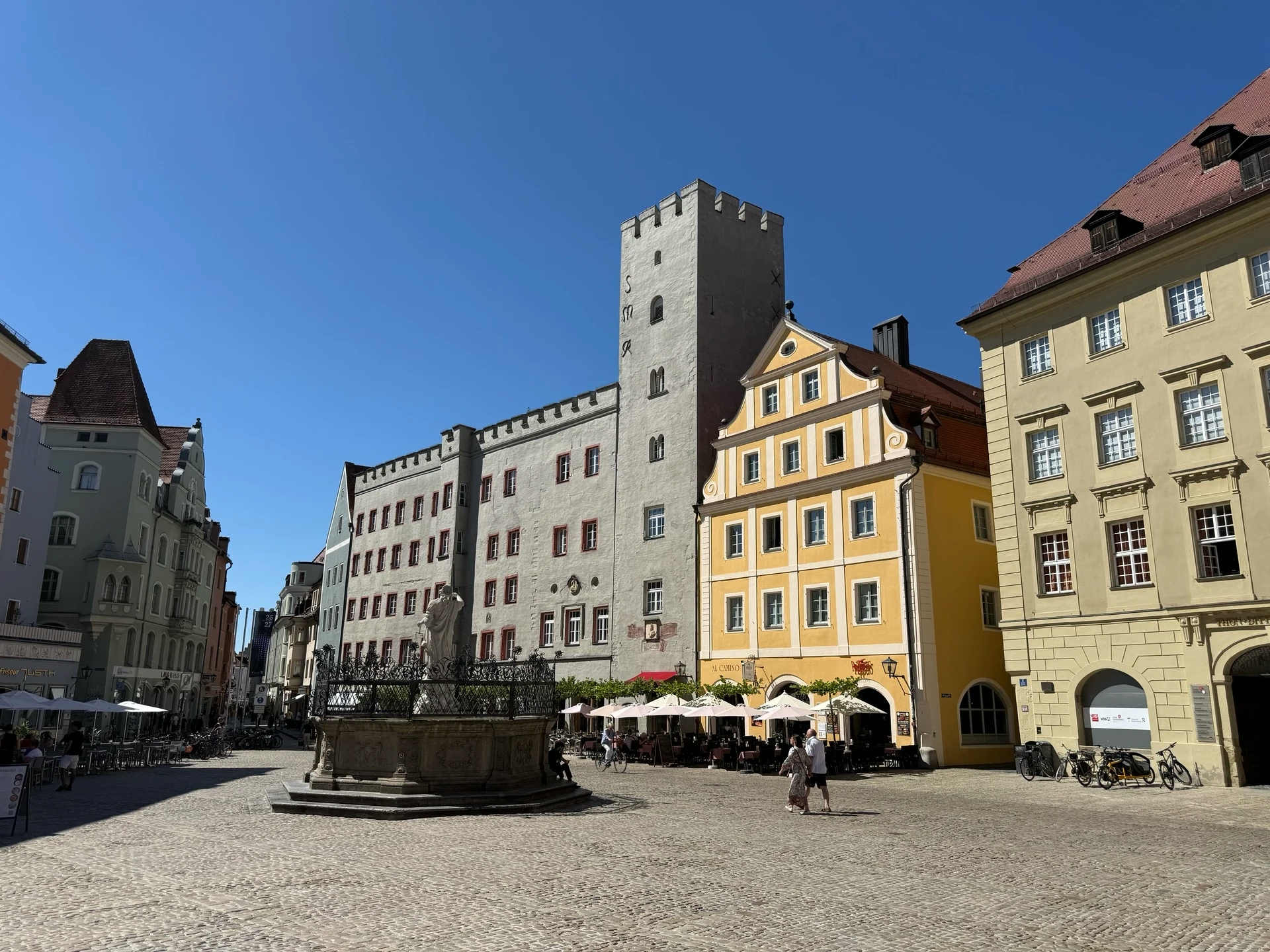
Haidplatz is one of my favorite places to stop. I have returned to Café Goldenes Kreuz for its beautiful-looking cakes and the pleasure of sitting outside on the square in the sunshine. Bismarckplatz, beside the theater, offers another place to pause. Farther south, St. Emmeram and the Thurn und Taxis palace sit near the public avenue belt.
Look up as well as along the lanes. The Goldener Turm and Baumburger Turm were statements of status by wealthy medieval families. Together with Regensburg’s trading links to Italy, they help explain the almost Italian impression I get from parts of the Old Town. Connect these streets on foot, leaving time for small shops and courtyards.
Best for: First visits, historic streets, cafés, shopping and evenings in the city.

Colorful historic buildings and outdoor cafés on a square in Regensburg Old Town
Stadtamhof: Across the Stone Bridge
Cross the Stone Bridge and Stadtamhof feels like a small town within the city. For centuries it was a separate Bavarian town, distinct from the Free Imperial City across the river, and it joined Regensburg permanently in 1924. Its colorful main street, restaurants and quieter side streets are worth exploring beyond the familiar view back toward the cathedral.
Stadtamhof also has a more difficult history. The memorial to prisoners of the former Colosseum subcamp of Flossenbürg concentration camp deserves a thoughtful stop.
The Dultplatz is here too, hosting Regensburg’s traditional Dult fairs. During the events, rides, stalls and beer tents bring a much livelier character to this part of the city. At other times, the historic streets and nearby riverbanks are the main reasons to come.
Best for: Historic atmosphere, restaurants, views from the bridge and the seasonal Dult.

Looking along the Stone Bridge toward Regensburg’s Old Town and cathedral
Shopping Areas: Main Station & Weichs
For shopping beyond the Old Town’s streets, there are two useful areas to know. The Regensburg Arcaden are immediately south of the main railway station, making them convenient for a shopping stop around your arrival or departure. The station area is also convenient for a stay, with the historic center within walking distance.
A separate shopping destination lies north of the Danube. Across the Nibelungenbrücke, the Donau-Einkaufszentrum, usually shortened to DEZ, is in Weichs, beside Reinhausen. It brings a broad selection of shops, cafés and places to eat together under one roof.
I would visit these areas for their convenience and shopping rather than their historic atmosphere. Both provide useful indoor options when the weather is poor or you need something during your trip.
Best for: Shopping, everyday essentials, indoor breaks and convenient transport connections.

Red-tiled rooftops and church towers across Regensburg Old Town
GREEN SPACES
Parks & Outdoors
The Danube gives Regensburg room to breathe beyond its compact historic center. I enjoy the contrast between the paved Old Town streets and the open riverbanks, island paths and larger green spaces farther west. You can take a short break close to the sights or allow more time for a walk or bicycle ride along the river. The islands, Donaupark and parks around the Old Town each offer a different setting, without needing to turn the outing into a full excursion outside the city.
The Danube Islands: Oberer & Unterer Wöhrd
The Wöhrd islands offer a different perspective on Regensburg, with water, greenery and views back toward the historic center. They are a good choice when you want to keep exploring on foot but take a break from the busier streets and squares.
For a greener walk, focus on Oberer Wöhrd and its Inselpark. Combine the paths and open spaces with time along the river, where the changing views make even a short outing worthwhile. Unterer Wöhrd has more buildings and streets, alongside riverside stretches that reveal another side of the city. The two islands are worth distinguishing rather than treating the whole area as one continuous park.
I would come here for an unhurried walk, photographs of the old town across the river, or a quiet pause by the water. Choose a route that suits the time you have, returning to the Old Town across one of the connecting bridges.
Best for: Island walks, green breaks, river views and photography.

A quiet riverbank and bridge along the wider Danube cycling route
Westenviertel & Westheim: Donaupark and Riverside Paths
The western Danube is one of the areas I enjoy for longer walks and bicycle rides. Around Westheim and the Donaupark, the city opens into generous green spaces, with riverside paths, playgrounds and room to spend time outdoors away from the busiest sightseeing streets.
The Baggersee, also called the Westbadweiher, adds a lakeside setting within the park. Combine a walk near the lake with stretches beside the Danube, stopping for river views or a break along the way. The nearby Westbad provides a separate option for swimming.
This part of Regensburg is particularly useful when you want a more relaxed afternoon or are staying long enough to explore beyond the historic center. I would allow time to enjoy the landscape itself rather than treating the park as a quick stop between attractions.
Best for: Longer walks, cycling, playgrounds, lakeside scenery and relaxed outdoor time.

A separate Danube excursion: Walhalla near Donaustauf, east of Regensburg
Green Spaces Around the Old Town
You do not need to head far along the Danube to find a green break. The Fürst-Anselm-Allee forms part of the public avenue belt around the Old Town. Begun in 1779, the planting follows the line of the former city fortifications. Its shaded paths fit naturally into a walk between the station area and St. Emmeram.
Nearby Dörnbergpark is a nineteenth-century English-style landscape garden, with established trees, lawns and curving paths. It offers another reason to slow down, especially when you want a short leafy pause between the historic streets.
For a longer green break, continue west to Stadtpark, a spacious park with mature trees, lawns and shaded paths. It fits well into a walk linking St. Emmeram, Dörnbergpark and the western edge of the Old Town.
The distinction around St. Emmeram matters: the public avenues and nearby parks are separate from the palace’s private Schlosspark. Plan your everyday walk around the public spaces rather than assuming the palace gardens are freely accessible.
Best for: Short walks, leafy surroundings and a quiet break between sightseeing stops.

Beyond Regensburg: a passenger boat on the Main-Danube Canal in the Altmühl Valley
Where to Stay
For a first visit, I would choose accommodation in or close to the Altstadt. It puts the main sights, restaurants and cafés within easy walking distance and lets you enjoy Regensburg in the evening after many day visitors have left. Check the exact street if quiet nights matter, as some central squares and restaurant areas remain lively.
Stadtamhof is another appealing option, with its own historic character and a walk across the Stone Bridge into the center. If your visit coincides with the Dult, consider the accommodation’s proximity to the fairground.
The main station area is practical for arriving by train or making onward journeys. Its surroundings are less atmospheric than the Old Town, but access to the center and the Arcaden can make it a convenient place to stay.
On the edge of the Westhafen, there are also hotels in a more commercial and industrial setting. Depending on the property, walking into the center can be reasonable, but check the actual route and distance before booking. I would consider this area when the hotel suits your needs and price range, with the understanding that the immediate surroundings offer a different experience from staying in the historic center.