

Venice Areas & Parks
Discover Venice beyond San Marco through residential sestieri, lagoon islands, waterfronts, gardens, beaches and endlessly surprising walks.
OVERVIEW
Get to Know the Destination
Venice’s six historic districts offer more variety than the busy walk between Rialto and San Marco suggests. Use this guide to choose an area to stay, find quieter streets and plan time on the lagoon islands. Distances are short on a map, but bridges and waterbus connections can change how convenient a location feels.
LOCAL LIFE
Areas to Explore
The six historic sestieri are San Marco, San Polo, Santa Croce, Cannaregio, Dorsoduro and Castello. They are districts of the main city; Murano, San Michele and Lido require separate island journeys. Walk beyond the station-to-Rialto route to find the smaller canals, squares and residential streets that make each district different.
San Marco
San Marco contains many of the sights people travel across the world to see: Piazza San Marco, the basilica, Doge's Palace and some of Venice's grandest architecture. It is spectacular but can also be overwhelmingly busy. I especially enjoy Piazza San Marco between 6 and 8 a.m., before the daytime crowds. In the evening, I like hearing the café orchestras from across the square, along with voices and footsteps. It is still lively then; morning is the better chance for a quieter visit.
Best for: First-time visitors, major landmarks and early-morning walks
San Polo: Markets, Rialto & Old Venice
Across the Grand Canal from San Marco, San Polo combines some heavily visited areas with quieter lanes that are surprisingly easy to find. The Rialto Bridge and market are major attractions, but wandering beyond them reveals smaller squares and residential streets. It is also a useful area for finding lunch away from San Marco.
Best for: Rialto Market, historic lanes and central exploration
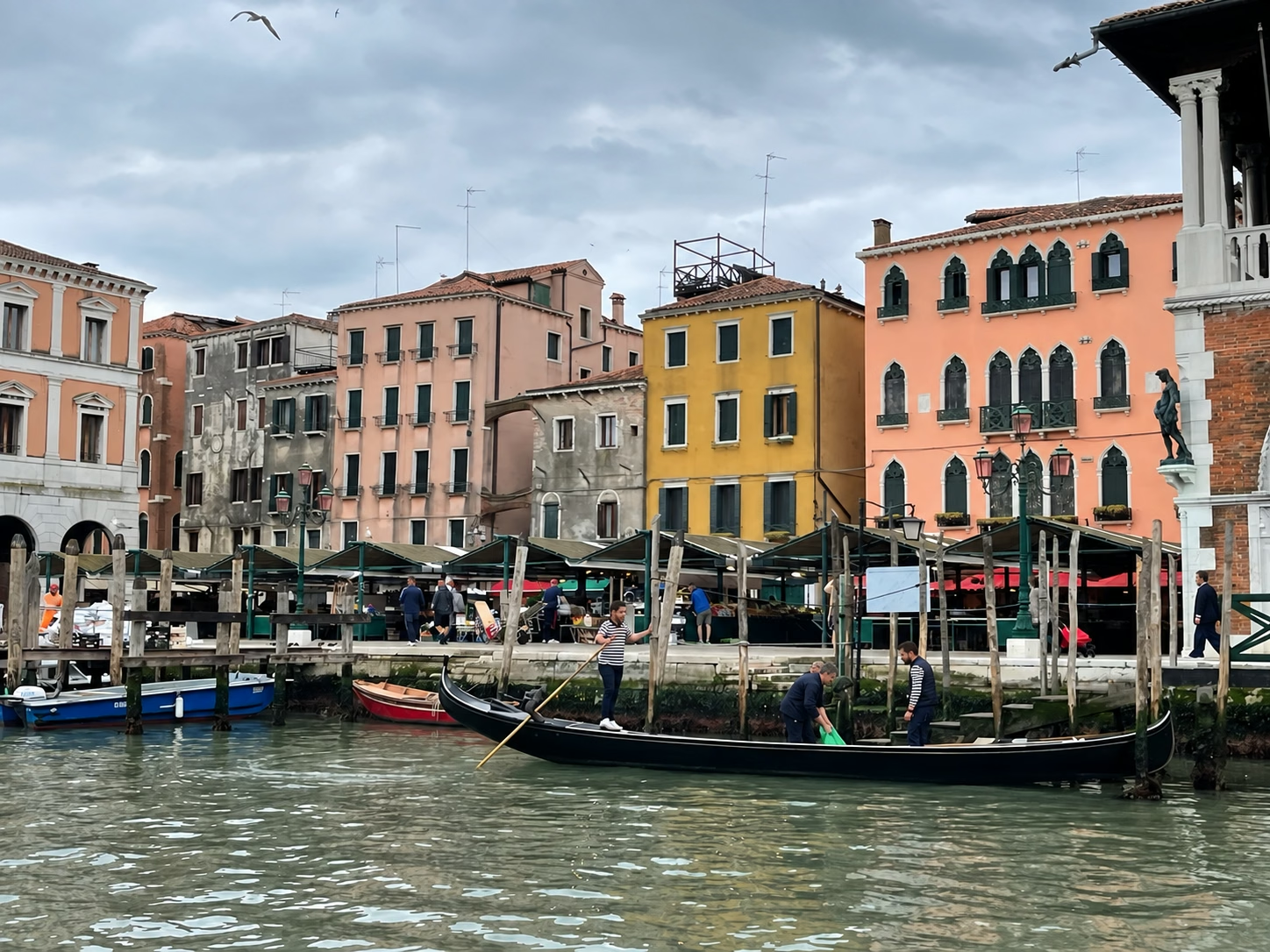
Gondoliers beside the Rialto fish market on Venice’s Grand Canal.
Cannaregio
Cannaregio is one of the areas where I most enjoy escaping the busiest tourist corridors. The historic Jewish Ghetto adds an important layer to Venice's history, while quieter canals and neighborhood streets create a more residential atmosphere. The main route between the station and Rialto can still be crowded, so explore the side canals if you want a quieter walk.
Best for: Jewish history, quieter canals and a more residential feel
Dorsoduro: Art & Waterfronts
Dorsoduro combines major cultural institutions with some wonderful waterfront walking. The Peggy Guggenheim Collection is here, as is the great Basilica di Santa Maria della Salute at the entrance to the Grand Canal. It offers a compelling mixture of art, monumental architecture, smaller streets and waterside views. The Zattere runs along its southern waterfront facing the Giudecca Canal, with space for a longer walk and views of passing boats.
Best for: Art museums, architecture, waterfront walks and quieter evenings
A manageable choice: For an art-focused walk, group the Accademia, Peggy Guggenheim Collection and the Salute in Dorsoduro, choosing one museum interior. For Jewish history and side canals, give Cannaregio a separate part of the day.

Santa Maria della Salute and rooftops in Venice’s Dorsoduro district
Castello
Castello stretches east from the busiest part of Venice and becomes increasingly residential as you move away from San Marco. The district is also home to the Giardini della Biennale. For me, its appeal lies in being able to walk from monumental Venice into quieter streets and green spaces without leaving the historic city.
Best for: Longer walks, quieter streets and the Biennale gardens
Santa Croce
Santa Croce connects Venice’s arrival points around Piazzale Roma with quieter lanes and squares farther east. It is easy to overlook while heading toward Rialto, but the area around Campo San Giacomo dell’Orio rewards a slower walk. Ca’ Pesaro adds a major modern-art collection on the Grand Canal. The district can be a practical base, although access still depends on the hotel’s exact position and the bridges along your route.

Strolling through the backstreets of the Castello area near the Biennale Gardens
GREEN SPACES
Parks & Outdoors
Venice's outdoor life is less about conventional city parks and more about water, waterfronts, islands and public space. After hours inside palaces and museums, I enjoy finding somewhere open to the lagoon, walking through quieter districts or taking a vaporetto to another island simply to experience a different side of the city.
Grand Canal
The Grand Canal is Venice's great ceremonial avenue, except that it is made of water. Historic palaces line both sides while vaporetti, taxis, delivery boats and gondolas create a constant stream of traffic. I enjoy seeing it from a vaporetto; if you already hold a valid ACTV pass, an included waterbus journey also serves as sightseeing.
Santa Maria della Salute
Standing near the entrance of the Grand Canal, Santa Maria della Salute is one of the buildings that defines Venice's skyline. I find it impressive both as architecture and as a destination reached on foot through Dorsoduro.
San Michele
San Michele is Venice’s cemetery island, reached by vaporetto between the historic city and Murano. It offers a quiet pause from sightseeing, but it remains a place of remembrance. Follow opening hours, dress and behavior requirements, and respect mourners while exploring.
Giudecca
Across the Giudecca Canal, Giudecca offers waterfront walks looking back toward central Venice and the church of the Redentore. It requires a waterbus crossing in ordinary conditions; the temporary festival bridge is not a year-round walking connection. Add it as an alternative outing, rather than another island to squeeze into the Murano day.

San Michele cemetery with flowers on Igor Stravinsky’s grave
Murano
Murano is best known for glass, but I also enjoy simply walking along its canals. The island feels more open and less monumental than central Venice, with colorful buildings and workshops along the canals. It makes an easy change of pace after several days in the historic center.
Best for: Glassmaking, canal walks and an easy half-day island excursion
Giardini della Biennale
The Giardini provide something Venice does not offer in abundance: substantial greenery. Located in Castello, the gardens are closely associated with the Venice Biennale and its national exhibition pavilions. Distinguish the public green spaces from the ticketed exhibition grounds, and check access before planning a visit.
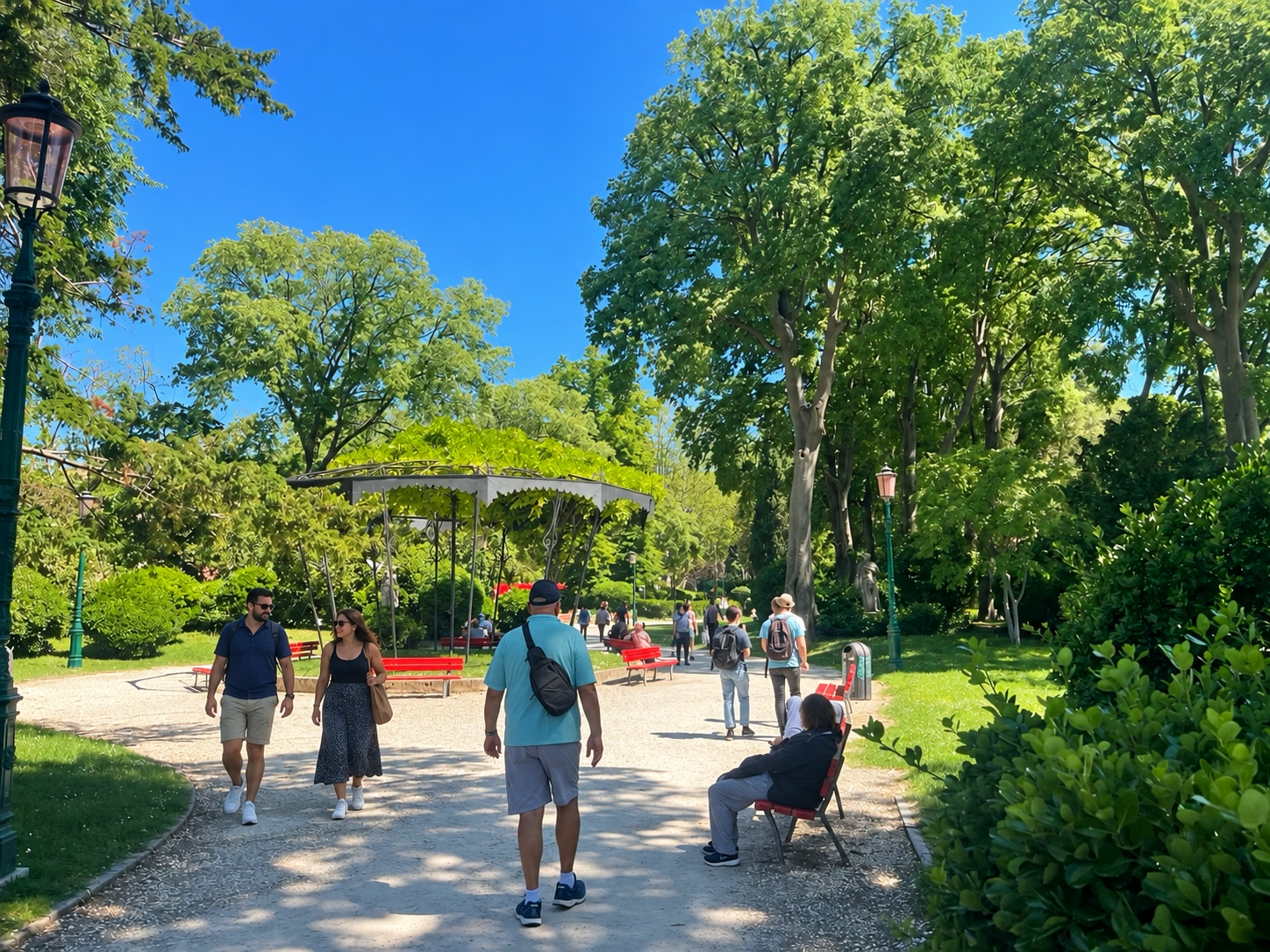
Tree-lined paths in Venice’s Giardini della Biennale
Lido di Venezia
Lido provides a dramatic change of environment. Streets are wider, vehicles are allowed and beaches stretch along the Adriatic side of the island. The change can be refreshing, particularly during a longer stay or in warmer weather. This is where my grandmother stepped into the sea for the first time during her 70th-birthday trip.
Best for: Beaches, open space and a complete change from central Venice
Venice's Calli & Campi
Calli are the city’s narrow streets, while campi are its squares. Bridges determine where you can cross canals, and the Grand Canal has no continuous waterside footpath. Keep a map available for finding your way back, particularly when you have a timed reservation or a boat to catch.
For me, there is no single quiet square that everyone needs to find. I enjoy the cooler air in shaded passages, water lapping against canal edges and boats, and steps disappearing into the water. Near Teatro Malibran, I particularly like the diagonal crossing of the Ponte Marco Polo. Still, I would rather leave room to wander than turn every small discovery into another stop on a checklist.
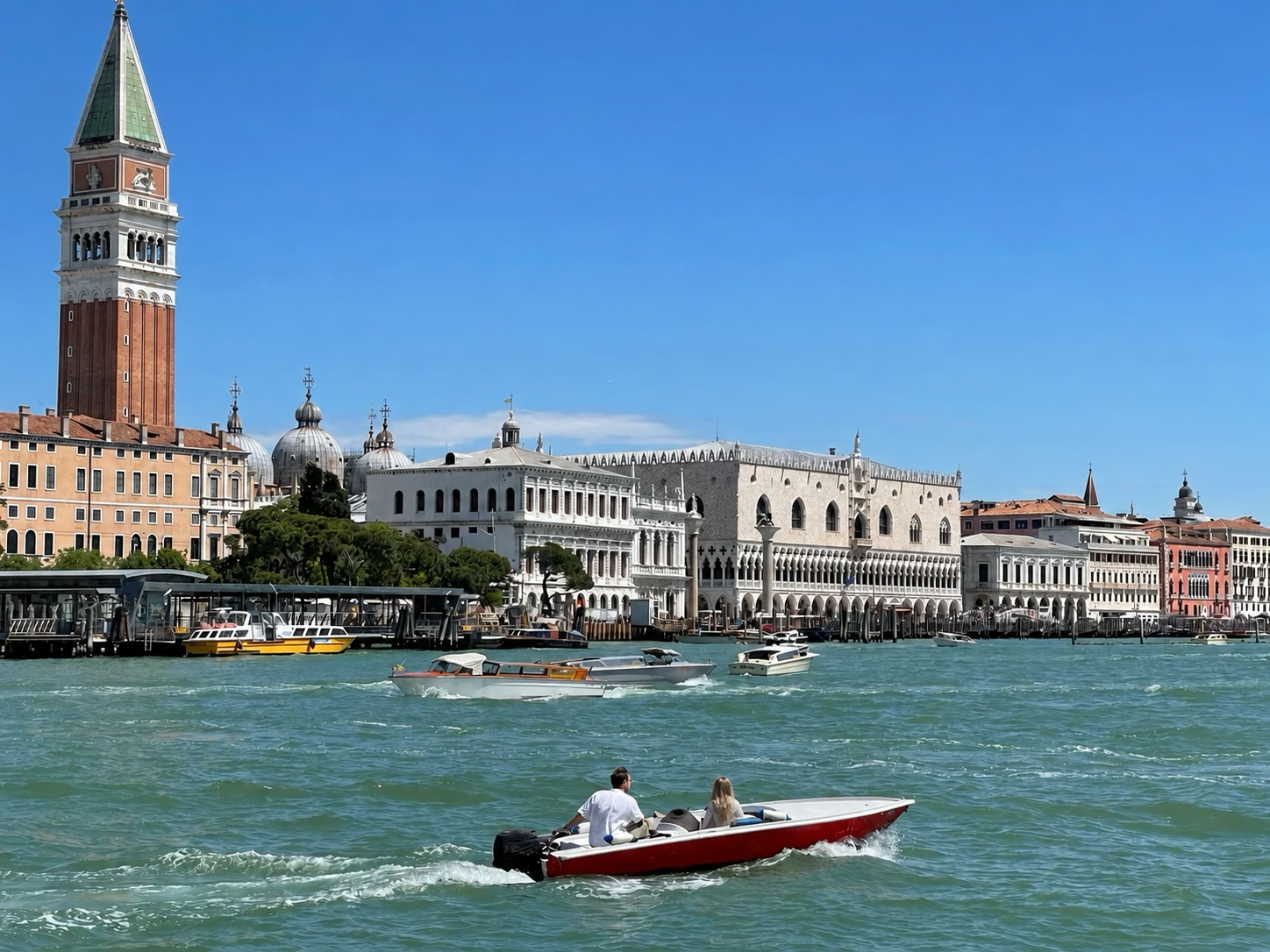
Boats crossing the Venetian Lagoon near St. Mark’s waterfront
Where to Stay
San Marco suits visitors who want immediate access to the main landmarks and accept the crowds. San Polo is convenient for Rialto, while Santa Croce can work well for station or Piazzale Roma access. Cannaregio offers quieter canals, Dorsoduro combines art and waterfront walks, and eastern Castello feels more residential. Lido adds beaches and space but requires regular waterbus crossings. For any hotel, check bridge crossings, stairs and the nearest vaporetto stop before booking. A few nights in Venice make it easier to enjoy San Marco early in the morning and wander beside the canals after dinner.
Over years of traveling to Venice, whether embarking on cruises, overnighting in budget-friendly inns, or staying out in Mestre, two hotels stand out as my memorable favorites. I may earn a commission if you book through these hotel links.
- Hilton Molino Stucky Venice: Set across the water on Giudecca, this hotel in a former, brick-faced flour mill offers a calm perspective on Venice, and is reached by water shuttle.
- Hotel Ai Mori d’Oriente: Grandma’s 70th birthday brought us to Venice in 2006, and this canal-side Cannaregio palazzo left me with memories of nicely appointed rooms in all shapes and sizes.