

Northern Italy Adventure
A rail vacation through Venice, Bologna, Verona, Lake Garda, Milan and Genoa, combining historic cities, local food, lakes and sea.
OVERVIEW
Why Make this Journey
Northern Italy offers a surprising amount of variety within a manageable rail journey. You begin among Venice's canals and lagoon islands, head to Bologna for porticoes, university history and local cooking, then continue to Verona and Lake Garda. Milan brings grand architecture, art and shopping before Genoa takes you back to the water, this time at a working Mediterranean port.
The route combines substantial city visits with time beside the lake and sea. Between them, trains cross the northern Italian plains, with agricultural landscapes, vineyards and orchards along parts of the journey. Each stop has its own character, from Venice's pedestrian lanes to Bologna's covered walkways and Genoa's steep streets and public lifts.
Travel Route
Starting point: Venice (4 nights)
Stop 1: Bologna (2 nights)
Stop 2: Verona (2 nights)
Stop 3: Lake Garda, based in Peschiera del Garda (2 nights)
Stop 4: Milan (2 nights)
End point: Genoa (2 nights), followed by a flight, cruise or onward train on Day 15
All six bases can be connected by train, with boats and local buses for the lake and lagoon outings. There are five hotel changes, so choose luggage you can handle on trains and over Venice's bridges. If you prefer fewer stops, finish in Milan or add nights to the places that interest you most.
Quick Stats
Country: Italy.
Duration: 14 nights / 15 days, including arrival and departure. Finishing in Milan reduces the core route to 12 nights / 13 days.
Best times: May, June and September for city walks, lake boats and time outdoors. Summer adds Verona's opera season and swimming at Lake Garda, with hotter weather and larger crowds.
Transportation: Train between bases; walking, local transit, ferries and waterbuses for sightseeing.
Focus: Historic cities, art, food, lakes and maritime Italy, with optional motor museums and Gardaland.
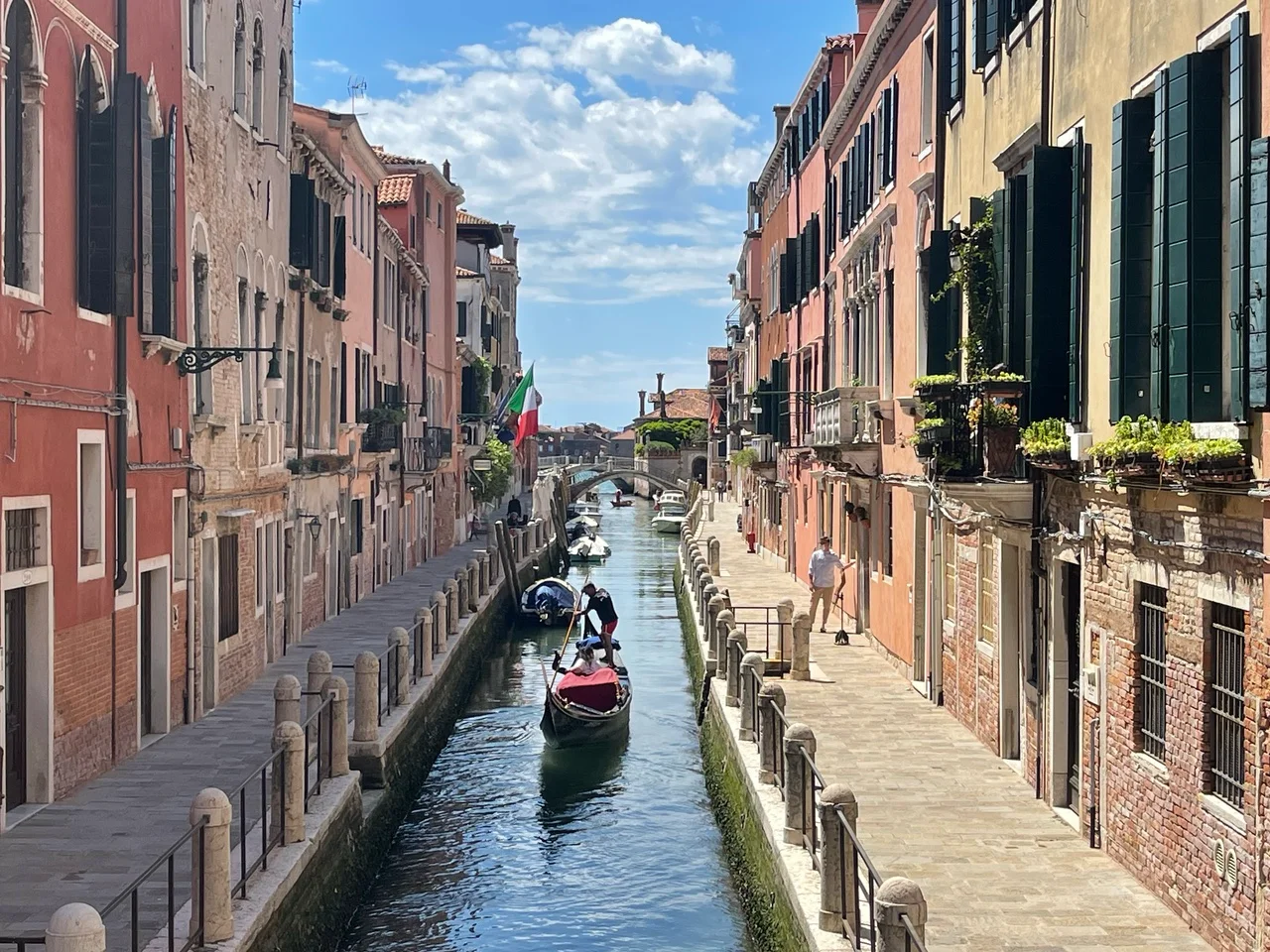
Quiet canal and narrow lanes in Venice, the starting point for the Northern Italy Adventure.
EXPLORE
Places & Experiences

Venice
4 Nights
Arrive at Venice Marco Polo Airport and begin with four nights in the historic city. This gives you an arrival evening and three full days, enough to explore the main sights and some of the lagoon without reducing Venice to a hurried walk between Rialto and San Marco. Choose your hotel partly by its arrival route: the nearest waterbus stop and number of stepped bridges matter when you have luggage.
Arrival and first evening: Use an airport bus to Piazzale Roma and continue on foot or by vaporetto, or compare an Alilaguna boat if its route suits your hotel. These are different services with different tickets. After checking in, take a short neighborhood walk and find somewhere nearby for dinner.
San Marco and Rialto: Give one day to the central sights. Visit the Rialto Market in the morning when trading, cross the bridge, then continue to Piazza San Marco. Reserve your preferred entry to the Doge's Palace or St. Mark's Basilica, leaving enough time if you want both.
Cannaregio and Dorsoduro: Explore the Jewish Ghetto and quieter canals of Cannaregio, then choose an art visit in Dorsoduro: the Accademia for Venetian painting or the Peggy Guggenheim Collection for modern art. Walk toward Santa Maria della Salute or the Zattere waterfront afterward.
Murano and Burano: Set aside a full lagoon day rather than fitting these between city sights. In Murano, visit the Glass Museum or arrange a glassblowing demonstration separately. Continue to Burano for its colorful houses, canals and lace-making tradition. Check the connections and return boats before leaving.
Lido: Take a separate half-day outing for the Adriatic beach side of Venice. Combine it with a shorter walk through eastern Castello, or choose it instead of a museum afternoon. Adding a fifth night makes it easier to see all three islands and give the major interiors proper time.
Evenings on the water and in the lanes: Ride a vaporetto along the Grand Canal and try cicchetti in a neighborhood bacaro. San Marco and Rialto feel quite different early in the morning or after the busiest daytime hours.
I love Venice and have returned around ten times, often arriving by train from Germany. The landmarks are extraordinary, but I particularly enjoy walking into streets I have not noticed before and watching the light change over the water. On this trip, I would protect time for those walks rather than fill every hour with reservations.
Browse Venice experiences on Klook via this paid link.
Transfer: Venice to Bologna
Take a direct high-speed train from Venezia Santa Lucia to Bologna Centrale, generally around 1½ hours. The route takes you inland through Padua and Ferrara toward Emilia-Romagna. Regional services can be cheaper but take longer, so compare both the fare and how much of the day remains on arrival.
From Bologna Centrale, Via dell'Indipendenza leads toward Piazza Maggiore in roughly 20 minutes on foot. Drop your luggage first, then use the arrival afternoon to begin exploring the porticoes and central squares.
Bologna
2 Nights
Bologna's covered arcades, brick buildings and busy food streets make a distinct change from Venice. Its university, traditionally dated to 1088, is widely described as the oldest in the Western world. Two nights gives you time for the historic center and meals, with an optional motor-themed outing if that is a priority.
Piazza Maggiore and San Petronio: Begin at the main square and step inside the vast basilica when open. Nearby, see the Fountain of Neptune and visit the Salaborsa library, where glass floor panels reveal archaeological remains.
Archiginnasio: Explore the former university building, its decorated courtyard and the carved wooden Anatomical Theatre. Check the current visitor arrangements for the rooms you want to enter.
Quadrilatero and Mercato delle Erbe: Browse food shops and market stalls, then sit down for a meal. Look for tagliatelle al ragù, tortellini in brodo, lasagne verdi or a plate of mortadella and local cheese.
Santo Stefano and the university quarter: Walk toward the interconnected churches and courtyards of Santo Stefano, then continue through the surrounding streets. View the Two Towers from accessible areas; the Asinelli Tower is currently closed during work around Garisenda.
Porticoes after dark: Leave an evening for the streets around the center and a proper dinner. Bologna's appeal is as much in these everyday spaces as in its monuments.
My own Bologna stay was brief, an overnight stop on the way to a trade show in Rimini. What stayed with me was walking beneath one arcade after another and seeing the shops and restaurants light up in the evening. With two nights, I would give the food markets and central streets the time I did not have on that first visit.
An Optional Motor Valley Outing
Choose one main visit. Ducati's museum in Borgo Panigale is the closest fit with a Bologna city stay; a factory tour is a separate, scheduled experience and must be planned around availability. Lamborghini's museum is in Sant'Agata Bolognese, outside Bologna, so include the transfer in your plans rather than treating it as a central-city attraction.
Ferrari enthusiasts can travel to Modena for the Museo Enzo Ferrari. The Museo Ferrari in Maranello is a different site and requires an additional transfer. Check the museums' current transport and tour arrangements before booking, and do not assume a museum ticket includes a factory visit. A guided excursion or arranged transfer may be useful for combining outlying sites.
With only two nights, a substantial motor-museum outing replaces much of your full day in Bologna. Add a third night if you want both the city and a full Motor Valley day.
Browse Bologna experiences and excursions on Klook via this paid link.
Transfer: Bologna to Verona
Travel from Bologna Centrale to Verona Porta Nuova. Direct high-speed trains take roughly an hour; regional departures take longer and can offer good value. This is an easy transfer to make after breakfast, leaving most of the afternoon for Verona. From Porta Nuova, take a local bus or walk around 20–25 minutes to Piazza Bra.
Verona
2 Nights
Verona brings together a Roman amphitheater, medieval squares, a riverside castle and attractive shopping streets in a compact center. The Adige curves around the old town, with a hillside viewpoint just across Ponte Pietra. Two nights lets you enjoy the city after the day-trip crowds leave and makes a summer opera evening possible.
Piazza Bra and the Arena: Start at the broad square in front of the amphitheater. Visit inside during sightseeing hours or build your stay around an Arena Opera Festival performance; stage preparations can affect daytime access.
Via Mazzini and the old squares: Follow the pedestrian shopping street to Piazza delle Erbe, then continue to Piazza dei Signori and the Scaliger Tombs. Give yourself time for the smaller streets between them.
Castelvecchio: Explore the medieval fortress and its art museum, then cross the fortified bridge for views along the Adige. This is a substantial museum stop, not just a place to photograph from outside.
Ponte Pietra and Castel San Pietro: Cross the river and take the funicular or steps up to the panoramic terrace. The view puts the city's rooftops, bridges and river bends into perspective.
Juliet's House: Add it if the literary connection interests you, checking current entry requirements. Shakespeare's lovers are fictional; the house is a place associated with the story rather than a documented setting for real events.
Opera and dinner: Check performance dates before choosing your nights, eat before the show and stay close enough to walk back. If you book the stone steps, a cushion makes a long performance more comfortable.
I first came to Verona for opera as a teenager and have since returned for productions including Aida and Turandot. The scale of the sets and the open night sky make the Arena quite different from a conventional theater. Even without a performance, I would keep both evenings for Verona rather than rush onward after seeing the main square.
For performance choices, seating, dress rules, summer heat and planning several opera evenings, read Arena di Verona: Opera Under the Stars. Staying three or four nights gives you more scope to see different productions.
Browse Verona experiences on Klook via this paid link.
Transfer: Verona to Lake Garda
Take a short train ride from Verona Porta Nuova to Peschiera del Garda, often around 15 minutes on a regional service. Peschiera is the suggested base because its station, fortified center and lake boats make it practical without a car. Check the walk or local connection from the station to your particular hotel.
Desenzano del Garda is another rail-connected southern base, especially if you prefer its town center and accommodation choices. Sirmione has no railway station and requires a bus, taxi or seasonal boat connection. For this two-night stay, a southern base keeps the arrival and onward journey simple.
Lake Garda
2 Nights
Lake Garda gives the trip a pause between the cities. The southern shore is broad and open, with lakeside promenades, fortified towns and places to sit by the water. Two nights is enough for Peschiera and one main excursion, such as Sirmione by boat. The mountainous north is a different part of the lake and deserves more time.
Peschiera del Garda: Explore the center enclosed by canals and defensive walls, then follow the waterfront. Use the arrival afternoon for a walk, a lakeside meal and time to settle in.
A lake cruise to Sirmione: Choose a boat connection that leaves you useful time ashore, checking the return service before boarding. The boat ride is part of the outing, so do not judge it only by how quickly it gets you there.
Sirmione's historic center: Enter the peninsula town beside Scaligero Castle, explore its lanes and continue toward the Roman villa remains at the Grotte di Catullo if you have enough time. The ruins are not caves despite the name. Start early when possible, as the narrow streets become busy.
Time by the lake: Keep part of the stay for swimming in suitable conditions, a short waterfront walk or simply a long lunch. You do not need another major attraction to justify stopping here.
Gardaland: Theme-park enthusiasts can dedicate the full day to the park instead of Sirmione. A free shuttle runs from Peschiera station on park operating days. Check the calendar and ticket conditions before fixing your plans.
With extra nights: Add Lazise or Bardolino, or plan a separate northern-lake stay around Malcesine, Limone or Riva. Trying to cross the entire lake and explore several towns in one day leaves little time ashore.
My family spent several summers camping beside Lake Garda when I was a child, and Gardaland was my first amusement park. I have returned as an adult, often staying along the eastern shore. For this rail journey, I would keep the base convenient and enjoy the boats and waterfront; add a third night if you want both Gardaland and Sirmione.
Browse Lake Garda experiences on Klook via this paid link.
Transfer: Lake Garda to Milan
Continue from Peschiera del Garda or Desenzano del Garda to Milano Centrale. The journey is roughly an hour to 1½ hours on many fast services, depending on your starting station and departure; regional trains take longer. Check that your chosen train stops at your lake station.
The railway runs west through Brescia toward Milan. A morning departure gives you an arrival afternoon for the Galleria and central streets, or for a reserved museum visit.
Milan
2 Nights
Milan adds Gothic architecture, major art collections, fashion and modern city life. With two nights, use your arrival afternoon and one full day carefully: you can see the central landmarks and one substantial museum, but this is not the place to add another lake excursion to an already full trip.
Duomo and rooftop terraces: Book the cathedral and rooftop option that suits you and check the areas included. The marble pinnacles are impressive at close range. Lift tickets still involve some stairs and uneven surfaces on the terraces.
Galleria Vittorio Emanuele II and La Scala: Walk through the glass-roofed arcade from Piazza del Duomo to Piazza della Scala. The theater museum is an option if opera interests you; auditorium views depend on rehearsals and other activity.
Castello Sforzesco and Parco Sempione: Follow Via Dante toward the castle, explore the courtyards and choose a museum collection if time allows. Continue into the park for a break from the busy streets.
Art: Choose the Pinacoteca di Brera for Italian painting or plan around a reserved visit to Leonardo's The Last Supper. The latter requires a reservation and should be secured before filling the rest of that day.
Fashion and shopping: Explore Brera's smaller streets and shops, or the luxury fashion district around Via Montenapoleone and Via della Spiga. Window-shopping can be enjoyable even if designer purchases are not part of the budget.
Navigli for dinner: Head toward the Darsena and Naviglio Grande in the evening. The canals, low-rise buildings and restaurant terraces feel quite different from the monumental center.
I have visited Milan many times for work and still enjoy walking through the Galleria. The Duomo rooftop and an evening around the Navigli would be my priorities on a short visit. If shopping or several museums are important to you, add a third night rather than trying to fit them all around one full day.
Browse Milan experiences on Klook via this paid link.
Transfer: Milan to Genoa
Take a direct train from Milano Centrale toward Genoa, commonly around 1½–2 hours depending on the service. The landscape changes as the railway leaves the plains and approaches the Ligurian hills and coast. Check whether your best arrival is Genova Piazza Principe or Genova Brignole.
Piazza Principe is useful for the western old center and some cruise terminals; Brignole suits the eastern center and Via XX Settembre. Choose according to your hotel and, if applicable, the exact cruise terminal. The two station names are not interchangeable.
Genoa
2 Nights
Genoa is a fitting finish because it offers a very different maritime city from Venice. A working harbor sits beside a dense network of medieval lanes, while grand palaces and broad shopping streets appear as you move inland. The city climbs steeply behind the waterfront, with public lifts connecting the center to viewpoints above the roofs.
Porto Antico and the caruggi: Begin at the Old Port to understand the setting, then head into the narrow lanes. Follow a route toward the Cathedral of San Lorenzo, with time for small squares, local shops and a focaccia stop.
San Lorenzo and historic churches: Visit the cathedral when open and look into other churches along your walk, observing service times. Their interiors reveal a different side of the city from its port.
Piazza De Ferrari and Via XX Settembre: Reach the broad square with its large fountain, then follow the arcaded shopping boulevard. Turn into pedestrian Via San Vincenzo for smaller shops as you continue toward Brignole.
Via Garibaldi and the palaces: Walk the street of former aristocratic residences. The Musei di Strada Nuova connect Palazzo Rosso, Palazzo Bianco and Palazzo Tursi for a substantial art visit. Choose this as your main museum outing rather than squeezing it between several others.
Castelletto viewpoint: Take the public lift from Piazza Portello to Spianata Castelletto, also known as Belvedere Montaldo. Go later in the afternoon for views over the rooftops and harbor, and check the lift's operating hours for your return.
A maritime museum alternative: If ships and migration interest you more than painting, consider Galata Museo del Mare near the port. Choose according to your interests and current exhibitions.
Ligurian food: Look for trofie with pesto, focaccia, farinata made from chickpea flour, or pansoti with walnut sauce. A bakery stop and a neighborhood restaurant are good ways to fit local food into your walks.
I first visited Genoa to meet tourism colleagues and returned after some of those relationships became friendships. One evening ended with gelato at Castelletto, looking across the city and harbor, and that remains a favorite memory. I have spent more time walking Genoa than visiting its museums, so the museum suggestions here are options to research rather than personal rankings.
For two nights, explore the Old Port and lanes on arrival, then use the full day for a palace or museum, the central streets and the Castelletto view. I would add a third night for a fuller museum visit or a train outing to Nervi's seafront promenade and parks.
Browse Genoa experiences on Klook via this paid link.

Milan's Naviglio Grande canal lined with historic buildings and restaurants.
Why Make This Trip?
This route shows how much northern Italy changes over relatively short distances. Venice has no cars in its historic center; Bologna is defined by covered walkways and university life; Verona brings Roman and medieval layers; Lake Garda opens up the landscape; Milan is larger and more metropolitan; Genoa adds a working port and steep coastal neighborhoods. The mix works well for travelers who want culture, food and outdoor time in one vacation.
How to Get There
Fly into Venice Marco Polo and choose the airport transfer around your hotel location. An airport bus reaches Piazzale Roma, the road terminal beside the historic city; from there, continue on foot or by vaporetto. Alilaguna airport boats serve selected stops on different routes. Check the total journey, not just the first leg, and avoid carrying large luggage over unnecessary bridges.
Finish with a flight from Genoa, a cruise from its port or an onward rail journey. Genoa's flight network is more limited than Milan's, so compare actual flights before fixing the final nights. For a cruise, confirm the assigned terminal and keep the two-night Genoa stay before embarkation, giving you a buffer if the preceding train is disrupted.
If Milan has the better flight, you have two choices: finish the itinerary there after 12 nights, or keep Genoa and return to Milan afterward. For an early flight, add a final night near the relevant Milan airport or a useful airport connection. Malpensa, Linate and Bergamo require different transfers.
Seasonal events can become the reason for the trip. Check Verona's summer opera program before booking hotels, or build extra time around Venice's Carnival or Biennale, Bologna's cultural calendar, Milan's design and fashion events, or Genoa's Rolli Days when participating historic palaces open. Event dates can also make accommodation more expensive.
Getting Around
Use trains between bases: The main route needs no rental car. Compare Trenitalia and Italo on the high-speed legs and regional trains on shorter journeys, particularly Verona to Lake Garda. Choose Venezia Santa Lucia for the historic city, Verona Porta Nuova, your actual Garda station, Milano Centrale and the appropriate Genoa station.
Keep Lake Garda simple: Peschiera and Desenzano have railway stations; Sirmione and the northern towns need extra transport. Check the seasonal boat timetable and return connections before deciding which towns to combine. A short distance across the water does not guarantee a frequent service.
Use Venice's waterbuses selectively: Compare an ACTV time pass with individual tickets for your island and Grand Canal journeys. Standard ACTV passes do not include Alilaguna or the airport-bus supplement. A transport pass and museum pass cover different things.
Plan outlying motor museums separately: Ducati, Lamborghini and the two Ferrari museums are not clustered in Bologna's center. Confirm museum versus factory access and arrange the full round trip before reserving.
Use lifts and local transit: Milan's metro makes the station and central districts easy to connect. Genoa's lifts help with the hills, but check operating times and the current fare rules. In the smaller historic centers, most sightseeing is on foot.
Check your ticket instructions: Reserved high-speed tickets, paper regional tickets and digital regional tickets can have different validation or activation requirements. Follow the instructions for the ticket you actually bought.
If you choose to drive: Check Italian motorway tolls, hotel parking and restricted-traffic zones before booking a car. Central Venice is pedestrian-only, and parking or driving inside the other historic centers often creates more work than it saves.
How Much Time Should You Plan?
Allow 14 nights and 15 days for the full route: Venice 4 nights, then 2 each in Bologna, Verona, Lake Garda, Milan and Genoa. This is an active trip with six bases and five hotel changes. Two nights normally means one full sightseeing day plus arrival and departure time, not two complete days.
For a shorter trip, finish in Milan after 12 nights or omit one of the intermediate bases. For a more relaxed 16- to 18-night vacation, add nights where the extra time has a clear purpose: Venice for all three island outings and more museums, Bologna for Motor Valley, Lake Garda for both boats and Gardaland, or Genoa for palaces and a coastal excursion.
May, June and September are good starting points for the combined itinerary. July and August suit swimming and opera but can be hot in the cities and crowded at Garda. April and October can be pleasant for walking, with cooler lake weather and reduced boat schedules. Winter shifts the emphasis toward city museums, food and events; check lake transport and attraction operating calendars before keeping the same plan.
Tips to Save Money
Book the longer train legs early when your dates are fixed: Compare advance fares with flexible tickets, including change and refund conditions. For short regional legs, a high-speed ticket may save little useful time.
Match passes to your itinerary: In Venice, group longer boat rides within your ACTV pass period. Compare the Bologna Welcome Card or Verona Card with the specific places you plan to enter. Check reservations and exclusions separately; an attraction card does not buy an opera performance.
Choose practical hotel locations: Being near the right station, boat stop or neighborhood can save transfer costs and effort. In Venice, count bridges; around Lake Garda, check the route to the station and boat landing; in Genoa, check hills as well as distance.
Reserve what is scarce: Plan ahead for The Last Supper, popular Venice interiors, the Duomo terraces, factory tours and opera. Leave neighborhood walks and some outdoor time flexible.
Use local food shops: Mix sit-down meals with cicchetti, Bologna market food and Genoese focaccia. Check menu prices and cover charges before ordering, particularly beside the busiest squares.
Account for local charges: Include hotel taxes in your budget. Check Venice’s current access-fee and exemption registration rules for overnight guests before arrival.
What Not to Miss
Venice beyond San Marco, with at least one substantial lagoon outing.
Bologna's porticoes, Piazza Maggiore and a meal built around its local pasta traditions.
Verona's castle and riverside viewpoints, plus an Arena performance if your dates allow.
A Lake Garda boat ride with enough time ashore in Sirmione.
Milan's Duomo rooftop and dinner around the Navigli.
Genoa's caruggi, Via XX Settembre and the view from Castelletto.

Historic Bologna, a food and architecture stop on the itinerary