

Munich to Milan
A rail vacation from Bavaria across the Alps to Venice, Verona and Milan, with mountain views, historic cities and time on the water.
OVERVIEW
Why Make this Journey
This journey connects Bavarian city life and Alpine landscapes with three very different Italian cities. Begin in Munich with its royal squares, cafés and Bavarian hospitality, spend two nights in Garmisch-Partenkirchen, then cross the Alps by train through Austria to Venice. After several days among the canals and lagoon islands, continue to Verona for its Roman Arena and old-town evenings, and finish in Milan with art, architecture and the option of a Lake Como boat trip.
The scenery is part of the trip, especially on the railway through Mittenwald and Innsbruck and over the Brenner Pass. You do not need a car. Most transfers are straightforward, with the Alpine crossing being the one day to plan carefully around connections. The five overnight bases give you time to explore rather than constantly unpacking.
Travel Route
Starting point: Munich (3 nights)
Stop 1: Garmisch-Partenkirchen (2 nights)
Stop 2: Venice (4 nights), reached through Innsbruck and the Brenner Pass
Stop 3: Verona (2 nights)
End point: Milan (3 nights), with an optional Lake Como and Bellagio day trip
Departure: Fly home or continue by train from Milan on Day 15
Quick Stats
Countries: Germany and Italy, traveling through Austria.
Duration: 14 nights / 15 days, including arrival and departure. Add nights for extra excursions or a slower pace.
Best times: Late May through June and September for the mix of cities, mountains and lakes. Summer adds the Verona opera season, with more heat and crowds in Italy. Winter works as a different trip focused on cities and winter mountain activities.
Transportation: Trains between bases; local buses, metro, walking, cable cars and boats for sightseeing.
Focus: Bavarian culture, an Alpine rail crossing, Venice's canals, Verona's historic center and Milan's art and architecture.
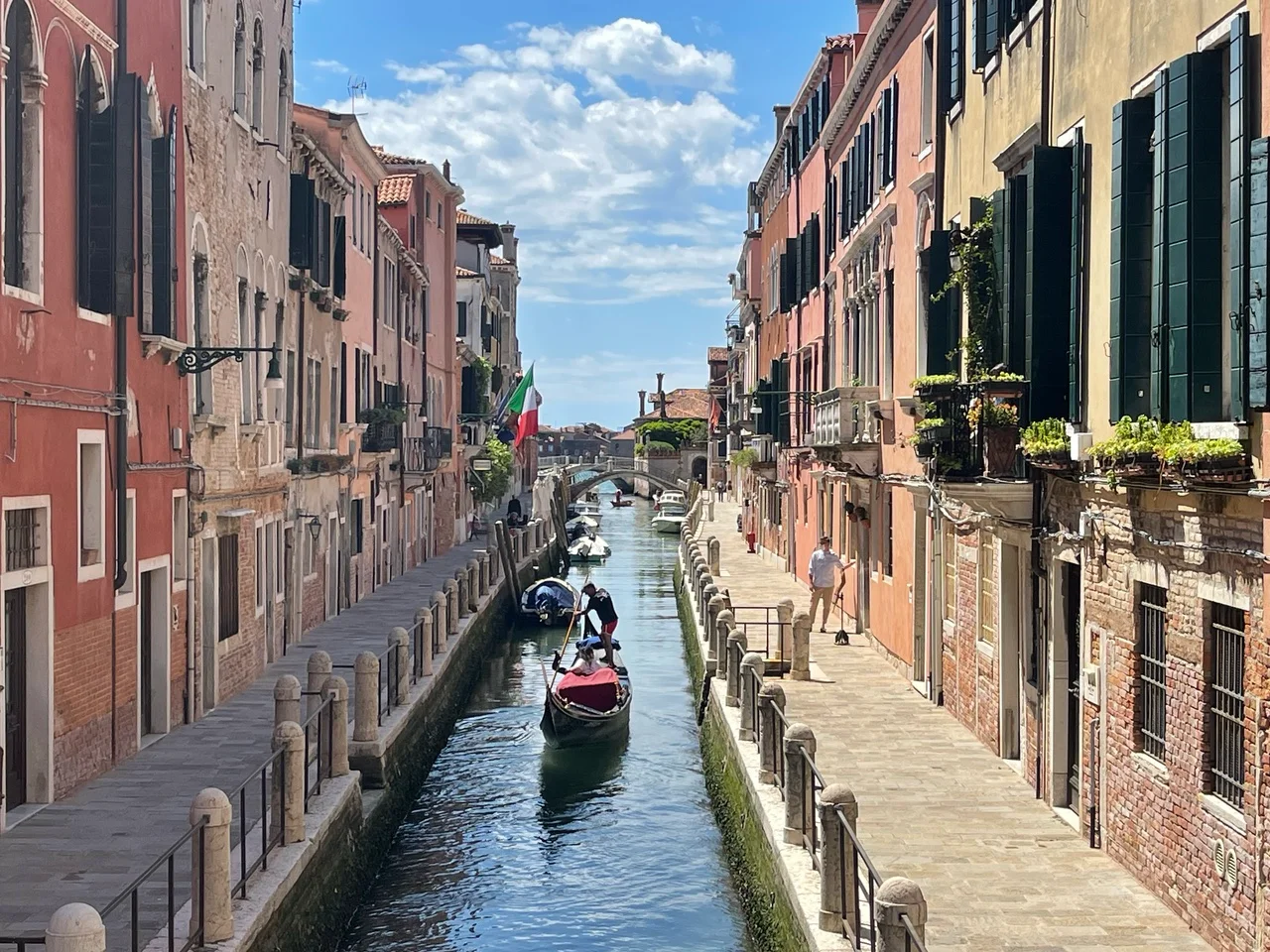
Quiet canal and narrow lanes in Venice, a four-night stop on the Munich to Milan journey.
EXPLORE
Places & Experiences

Munich
3 Nights
Munich gives this journey an Italian connection before you even cross the Alps. Around Odeonsplatz, the Theatinerkirche draws on Italian Baroque architecture, while the Feldherrnhalle takes its inspiration from Florence. Continue to the Residenz and Max-Joseph-Platz in front of the Nationaltheater, and you can see why Munich is sometimes called Italy's northernmost city. Its markets, food and beer gardens remain distinctly Bavarian.
Odeonsplatz, Residenz and the opera square: Follow this as one connected walk, with a visit inside the Residenz if royal interiors interest you. The white stucco interior of the Theatinerkirche is worth seeing as well as its yellow exterior. Add the Hofgarten for a short garden walk.
Wittelsbacherplatz and Café Luitpold: Continue along Brienner Straße for coffee and cake at Café Luitpold. Nearby KOI offers Japanese cooking, sushi and grilled dishes in a stylish setting if you want a change from Bavarian food.
Marienplatz and Viktualienmarkt: Walk through the historic center, see the Frauenkirche and use the market for a lunch stop. Leave an evening for a Bavarian meal or, in suitable weather, a beer garden.
Munich's Nazi history: Visit the Munich Documentation Center for the History of National Socialism near Königsplatz to learn about the city's role in the rise of Nazism and its consequences. Allow time for the permanent exhibition rather than fitting it into a brief gap.
Dachau Concentration Camp Memorial Site: Set aside at least half a day, including travel, to visit the memorial on the grounds of the former camp, learn about its history and reflect on what happened there. Take the S-Bahn to Dachau, then bus 726 to KZ-Gedenkstätte. A guided visit or audio guide helps explain the site.
Lake Starnberg: For a lake excursion, take the train to Starnberg station beside the waterfront. Check the seasonal boat timetable before leaving Munich and choose a cruise that fits your afternoon. The view toward the Alps depends on the weather; the lakefront is enjoyable even when the peaks are hidden.
I would make the walk from Odeonsplatz through the Residenz area a priority and include a cake stop at Café Luitpold. With three nights, you usually have two full days plus your arrival time. You can combine the central walk with the Documentation Center and give Dachau its own half day; add a fourth night if you also want a substantial palace visit and the Starnberg boat trip.
Browse Munich activities and bookings on Klook via this paid link.
Transfer: Munich to Garmisch-Partenkirchen
Take a regional train south from München Hauptbahnhof to Garmisch-Partenkirchen, normally around 1½ hours. The approaching mountains make this an enjoyable transition from the city. An early departure leaves time to drop your luggage and explore that afternoon. Check for engineering works before travel, as replacement buses can make this leg longer.
Garmisch-Partenkirchen
2 Nights
Garmisch-Partenkirchen is a good place to stop before crossing the Alps. You can walk beside a mountain stream inside the Partnach Gorge, see the Olympic ski jumps and take a cable car to a viewpoint above the valley. The two historic town centers also deserve time: Garmisch has pedestrian shopping streets, while Partenkirchen's Ludwigstraße is lined with painted houses.
Partnachklamm and the ski stadium: Begin at the Olympic Ski Stadium, where the large ski jump dominates the hillside, and walk toward the gorge entrance. The narrow path follows the rushing Partnach through rock passages and tunnels. Allow a substantial half day for the approach, gorge and return; wear shoes with grip and bring a waterproof layer.
Alpspitzbahn and AlpspiX: On the clearest day, take the Alpspitzbahn to the Osterfelderkopf area and walk to the crossed viewing platforms of AlpspiX. This provides a mountain experience without climbing the Alpspitze summit. Optional walks depend on snow, weather and your ability; the cable-car ticket does not make every surrounding trail an easy walk.
Partenkirchen's Ludwigstraße: Explore the painted façades, small shops and restaurants in the older part of town. It makes a good late-afternoon outing after the gorge.
Garmisch town center: Walk around the pedestrian streets and stop for a Bavarian dinner. Local buses are useful because the station, historic centers, ski stadium and cable-car terminals are spread out.
I have returned to this region many times for hiking, cycling, skiing and cable-car rides. For this shorter stay, I would use the arrival afternoon for the gorge and Partenkirchen, then keep the full day for AlpspiX and a mountain walk if conditions allow. Swap those plans if the clearer weather comes first. A third night gives you room for Zugspitze or Eibsee without squeezing everything into one day.
If you prefer a guided Alpine excursion from Munich instead of an independent Garmisch stay, the link below gives you alternatives. Check the departure location carefully: these excursions generally start in Munich.
Browse Alpine excursions from Munich on Klook via this paid link.
Transfer: Across the Alps to Venice
Make this a full travel day and choose the route deliberately. Travel from Garmisch-Partenkirchen through Mittenwald and Seefeld to Innsbruck, with a change if required by the timetable. The descent from the Seefeld plateau toward the Inn Valley is one of the scenic parts of the journey, so keep some time by the window.
From Innsbruck, continue over the Brenner Pass into Italy. Depending on the departure, you may find a through Railjet or EuroCity service to Venezia Santa Lucia, or need to change in Verona. The Brenner corridor runs through Bolzano and Trento; from Verona, the route turns east toward Vicenza, Padua and Venice. Merano is on a separate branch and would require a detour.
When comparing tickets, enter Innsbruck as a via point and check the actual route and every connection. Leave a sensible transfer margin rather than choosing the shortest possible change. Reserve seats on the long-distance section and arrive at Venezia Santa Lucia, the station in the historic city. Stepping out to the Grand Canal is a very different arrival from any of the earlier stops.
Venice
4 Nights
Four nights gives Venice the time it deserves after the long Alpine crossing. You have an arrival evening and three full days for its major sights, neighborhoods and lagoon islands. Stay in the historic city if the budget allows: early mornings and evenings are some of the best times to enjoy San Marco and Rialto, and you can reach quieter streets within a few turns.
Arrival evening: Settle in, find your nearest vaporetto stop and take a first walk close to the hotel. After a long train day, dinner and a short canal walk are enough.
First full day: Rialto and San Marco. Start with the Rialto Market on a market morning, then cross the bridge and continue toward Piazza San Marco. Reserve the Doge's Palace or St. Mark's Basilica as your main interior visit; seeing both properly needs more time. Return to the square later, when many day visitors have left.
Second full day: Cannaregio and Dorsoduro. Explore the canals around the Jewish Ghetto, then continue to Dorsoduro for either Venetian painting at the Accademia or modern art at the Peggy Guggenheim Collection. Finish near Santa Maria della Salute and the Zattere waterfront. These areas involve plenty of walking, so use a vaporetto when useful.
Third full day: San Michele and Murano. Travel by vaporetto to the cemetery island of San Michele, respecting its quiet setting and visitor rules, then continue to Murano. Visit the Glass Museum and arrange a separate glassblowing demonstration if you want to watch the craft in practice. A museum ticket does not automatically include a workshop visit.
Grand Canal by vaporetto: Work a ride into your afternoon or evening. The palaces and boat traffic are a large part of the experience, and the waterbus doubles as practical transportation.
With an extra day: Walk east through Castello toward the Biennale gardens. Choose a substantial exhibition visit when the Biennale is running, or continue to Lido for a different view of the lagoon.
I have visited Venice around ten times and still find places I have forgotten or never noticed before. I particularly enjoy walking away from the San Marco–Rialto corridor, then returning to the water as the light changes toward sunset. Leave an evening for cicchetti, the small savory bites served in local bacari, and dinner in a neighborhood you have enjoyed exploring.
Browse Venice experiences on Klook via this paid link.
Transfer: Venice to Verona
Take a direct train from Venezia Santa Lucia to Verona Porta Nuova. Fast trains generally take a little over an hour, while regional services take roughly 1½ hours. Compare the fare and departure time: on this short leg, a regional train can be good value. From Porta Nuova, take a local bus or allow around 20–25 minutes to walk to Piazza Bra.
You will pass through Verona on the Alpine crossing before returning for this stay. That short retracing of the route gives Venice its own uninterrupted visit, followed by two nights in Verona as you continue west to Milan.
Verona
2 Nights
Verona is much more than Juliet's balcony. The Roman Arena, medieval squares, shopping streets and bends in the Adige make it an enjoyable city to explore on foot. Two nights give you an arrival afternoon, a full sightseeing day and two evenings, which is especially useful if you want to see an opera.
Piazza Bra and the Arena: Begin at the broad square in front of the Roman amphitheater. Visit inside during sightseeing hours, or plan a summer opera evening. Performance preparations can affect daytime access.
Via Mazzini, Piazza delle Erbe and Piazza dei Signori: Follow the pedestrian shopping street into the old center, then explore the adjoining squares and Scaliger Tombs. The streets between these sights are part of the pleasure of being here.
Juliet's House: Include it if Shakespeare's story interests you. Romeo and Juliet are literary characters; the house is a place associated with the story, not evidence that the events occurred there. Check current entry and reservation arrangements before going.
Castelvecchio: Visit the medieval fortress and its art museum, then cross the fortified bridge over the Adige. This adds a substantial cultural stop beyond the central squares.
Ponte Pietra and Castel San Pietro: Cross the river and walk uphill or take the funicular toward the viewpoint. Late-afternoon light can be especially attractive over Verona's rooftops.
Opera in the Arena: Check the summer program before fixing your hotel dates. Productions can be spectacular even if you are not a regular opera-goer. Choose your seat category carefully; the stone steps are less comfortable during a long performance, and a cushion helps.
My first Verona opera trip was as a teenager, and I have since returned for productions including Aida and Turandot. The enormous sets and open-air setting make this a very special evening. I would stay within walking distance of the Arena and leave the next morning free of an early departure.
For performance choices, seating, dress rules, summer heat and planning several opera evenings, read Arena di Verona: Opera Under the Stars. Staying three or four nights gives you more scope to see different productions.
Browse Verona experiences on Klook via this paid link.
Transfer: Verona to Milan
Continue from Verona Porta Nuova to Milano Centrale. High-speed services usually take around 1¼ hours, while regional trains take longer and can be cheaper. The route passes the southern Lake Garda area and Brescia. There is no need to change hotels at the lake unless you want to add another stop.
At Milano Centrale, pause to look at the station's monumental halls before taking the metro or a taxi to your hotel. Staying near Centrale can simplify the arrival, Lake Como outing and some airport connections; Brera or the Duomo area puts more of the central sightseeing within walking distance.
Milan
3 Nights
Milan finishes the trip with a different side of Italy: Gothic marble, major art collections, fashion, modern architecture and lively canal-side evenings. Three nights allows an arrival afternoon and two full days. Use both days in the city, or dedicate one to Lake Como and keep your Milan sightseeing focused.
Duomo and rooftop terraces: Visit the cathedral and go up among its marble pinnacles for a close view of the architecture. Check exactly which areas your ticket includes. Lift access still leaves some stairs and uneven surfaces on the roof.
Galleria, La Scala and Brera: Walk through Galleria Vittorio Emanuele II to Piazza della Scala, then continue into Brera. The Pinacoteca di Brera is a strong choice for Italian painting; the La Scala museum suits those more interested in opera and theater.
Castello Sforzesco and Parco Sempione: Explore the castle courtyards, choose one of the museum collections, and continue into the park toward Arco della Pace. Michelangelo's unfinished Rondanini Pietà is a particular reason to enter the museums.
The Last Supper: If Leonardo's painting is a priority, secure a timed reservation before arranging the rest of your Milan sightseeing. Admission is limited and all visits require a reservation.
Shopping streets and modern Milan: Via Dante connects the center with the castle; Brera has smaller shops and side streets. For a contrast, head to Piazza Gae Aulenti and Porta Nuova, then walk toward Isola and the tree-covered Bosco Verticale towers.
Navigli: Begin near the Darsena and walk along Naviglio Grande around aperitivo time. The canals, bridges and restaurant terraces feel quite different from the Duomo district.
I have visited Milan many times for work, but the Galleria is still one of my favorite places to walk through. Going onto the Duomo roof and spending an evening around the Navigli are two experiences I would make room for. If Lake Como is included, use your arrival afternoon for the Galleria and central streets, then one full day for the Duomo, your preferred museum and the canals.
Lake Como and Bellagio: An Optional Full Day
The boat ride is a large part of the appeal, so give this outing a full day. A practical route is a train from Milano Centrale to Varenna-Esino, normally about an hour, followed by the walk downhill to Varenna's waterfront and a boat to Bellagio. Explore Bellagio's lanes and lakeside, then return via Varenna.
Check the train schedule and the Navigazione Laghi boat timetable together, including the last convenient return connection, and leave time for boarding queues in busy periods. Bellagio's lanes are steep and stepped, so you can keep more of your visit along the waterfront if needed. Como town is an alternative for a shorter outing, but it is at the southern end of the lake; do not assume a slow boat from Como to Bellagio will fit neatly into a brief afternoon.
With only three nights in Milan, the lake day replaces a second full city day. Add a fourth night if you want Bellagio, several museums and time for shopping.
Browse Milan experiences and excursions on Klook via this paid link.

Naviglio Grande canal in Milan, lined with historic buildings and waterside restaurants.
Why Make This Trip?
This is a good route if you want mountain scenery and substantial city stays in the same vacation. The progression is easy to appreciate: Bavarian squares and food, a gorge and cable-car outing, the Alpine crossing, Venice's waterways, Verona's Roman and medieval center, then metropolitan Milan. Trains take you between the bases, and none of the suggested stops requires a rental car.
How to Get There
Fly into Munich and home from Milan, using a multi-city flight search. From Munich Airport, use the S-Bahn or an airport bus for the city, choosing the option that best matches your hotel. You can also arrive in Munich by long-distance train from elsewhere in Europe.
Check which Milan airport your flight uses before choosing the final hotel and departure time. Malpensa, Linate and Bergamo have different transfer routes; allow for the trip to the airport as well as check-in. An early flight may justify a final night closer to the relevant airport.
For a cruise combination, Venice is the natural place to adapt the route, but confirm the actual embarkation port. A cruise marketed with Venice may use a port outside the historic city, including Ravenna or Trieste. Add the necessary transfer time and preferably a buffer night; do not connect the long Alpine rail day directly to a cruise departure.
The Verona opera season is the strongest event around which to build the trip. Munich's Oktoberfest, Venice's Carnival or Biennale, and Milan's major fairs can also shape a visit, but check dates and accommodation prices before fixing the order.
Getting Around
Book the Alpine crossing first: Check Garmisch–Mittenwald–Seefeld–Innsbruck and the onward Brenner connection together. Choose seats on the long-distance train and review any works or replacement transport shortly before travel. Through tickets are preferable where available; if you buy separate tickets, leave more time between services and check missed-connection conditions.
Use local transport where it helps: Munich has extensive rail, tram and bus services. In Garmisch-Partenkirchen, check the guest card from your accommodation for included local buses and its limits. Milan's metro connects Centrale with the main sightseeing districts, while Verona's core is mostly walkable.
Plan Venice around bridges and boat stops: Check the hotel arrival route with luggage before booking. A short distance on a map may involve several stepped bridges. Compare an ACTV time pass with individual waterbus tickets if you plan Murano, San Michele and Grand Canal rides. Standard ACTV passes do not include Alilaguna services or the airport bus supplement.
Check ticket validation: Follow the instructions for the operator and ticket you bought. Paper regional tickets, app tickets and reserved high-speed tickets can have different activation or validation rules; do not assume one system applies throughout the journey.
A car adds little here: The rail version has no road-toll planning. If you substitute a drive across Austria, check ASFINAG's current vignette and separate Brenner motorway toll requirements, plus Italian tolls, parking and restricted traffic zones before renting.
How Much Time Should You Plan?
The suggested stay is 14 nights: Munich 3, Garmisch-Partenkirchen 2, Venice 4, Verona 2 and Milan 3. This is a 15-day vacation when arrival and departure are included. Nights are not full sightseeing days: two nights generally provides one full day plus whatever arrival and departure time you have.
For 12 nights, reduce Munich to two and Venice to three, leaving out Starnberg and choosing fewer Venice neighborhoods. A more comfortable 16- or 17-night version adds time in Munich, Garmisch or Milan: Munich for both Dachau and Starnberg, Garmisch for a second clear-weather opportunity, and Milan for Lake Como without losing museum time.
Late May, June and September suit the combination well. High mountain trails can still hold snow in spring, even when the towns are warm. July and August offer long days and summer opera, but Venice, Verona and Milan can be hot. Early autumn often works well for cities and boat trips, subject to seasonal schedules. In winter, replace summer walks and lake cruises with suitable winter activities and check cable-car maintenance periods.
Tips to Save Money
Compare the train types: Advance fares can help on the Brenner and Italian high-speed services. Venice–Verona is short enough that regional trains may be better value. Check whether a rail pass actually beats point-to-point tickets once reservations and supplements are included.
Choose passes for a specific plan: In Munich, compare the day-ticket or group-ticket zones you need, especially for Dachau and Starnberg. In Venice, concentrate your longer boat journeys within the validity of an ACTV pass. In Verona, compare the Verona Card with your selected museums and monuments, and check reservations separately. An attraction card is not an opera ticket.
Reserve the limited-capacity experiences: The Last Supper requires a reservation; popular Venice interiors, the Duomo terraces and Arena performances benefit from advance planning. Keep mountain outings flexible enough to respond to visibility and closures.
Check hotel dates against events: Opera nights, Carnival, Oktoberfest and Milan's fairs can raise prices substantially. Moving a stay by a day or two can matter more than choosing a hotel far from the center.
Use the cities themselves: Historic streets, markets, river walks, castle courtyards and public parks provide substantial sightseeing between paid visits. In Venice, buying a simple lunch from a local business and choosing one sit-down meal can help the budget.
Check local charges: Allow for accommodation taxes. Before arriving in Venice, check the city’s current access-fee and exemption requirements for overnight visitors.
What Not to Miss
Munich's Odeonsplatz and Residenz area, with time for Café Luitpold and a Bavarian meal.
A visit to the Dachau Concentration Camp Memorial Site, with time to learn and reflect.
Partnach Gorge and the AlpspiX viewpoint when conditions permit.
The daylight rail journey through the Alps, treated as part of the vacation.
Venice early or late in the day, plus Murano and the quieter setting of San Michele.
An evening in Verona, preferably with opera in the Arena during the summer season.
Milan's Duomo rooftop and Navigli canals, with a full Lake Como day if your schedule allows.

Historic Verona on the route between Venice and Milan