

Nuremberg to Rothenburg
Medieval walls, timbered streets and sweeping views across the Tauber Valley
OVERVIEW
Why Make this Journey
I have visited Rothenburg ob der Tauber four or five times, usually as a train trip from Nuremberg. Few towns make such a strong first impression: fortified gates lead into narrow lanes, timbered houses crowd around small squares, and the city wall still frames the rooftops and surrounding countryside. Rothenburg is carefully maintained and undeniably popular, but it is more than the familiar photograph of Plönlein.
I especially enjoy walking sections of the wall and looking down into the Tauber Valley, where the town’s dramatic setting becomes much clearer. On one visit, we stayed overnight at Villa Mittermeier and had a wonderful meal there. The creative rooms and relaxed evening made the visit feel very different from a daytime excursion. Rothenburg can be seen in a day, but arriving early or remaining after the largest groups leave reveals a quieter and more atmospheric side of the town.
For the rail route, look for Steinach (b. Rothenburg ob der Tauber), where the RB82 branch line serves Rothenburg. Steinach is different from Stein near Nuremberg; use your booked connection rather than the illustrated overview to identify the changes.

Illustrated route from Nuremberg to Rothenburg ob der Tauber through the Franconian countryside.
EXPLORE
Places & Experiences

Travel from Nuremberg
Rothenburg is less straightforward to reach than Bamberg or Bayreuth because there is no direct train from Nuremberg. Most regional connections take approximately 1 hour 30 minutes to 1 hour 50 minutes and require two changes, commonly in Ansbach and Steinach.
The final section from Steinach to Rothenburg uses a small regional branch line. Pay attention to the transfer time because trains generally operate hourly. From Rothenburg station, it takes approximately 10 to 15 minutes to walk to the eastern edge of the old town.
Enter through the Rödertor
Approach the historic center through the Rödertor, one of Rothenburg’s fortified gateways. The gate provides a much stronger sense of arrival than simply heading directly toward the Market Square.
This is also a convenient place to begin walking the city wall. Rothenburg’s fortifications extend for approximately four kilometers, but there is no need to complete the entire circuit during a day trip. The section between Rödertor and Spitaltor provides views over tiled roofs, defensive towers and the countryside without taking over the entire morning.
The elevated walkway includes narrow passages, uneven steps and low beams. Visitors with limited mobility can follow the streets below and meet the route again near the gates.
Spital Quarter and Plönlein
Leave the wall near the Spitaltor and walk north through the quieter southern part of town. The Spital Bastion is one of Rothenburg’s most substantial defensive structures and is worth exploring before continuing toward Plönlein.
Plönlein is the town’s best-known view, with a small timbered house framed by two diverging streets and defensive towers. It is much smaller than many photographs suggest and can become extremely crowded. Arriving early provides a better chance to see it without tour groups gathering in the intersection.
Continue along Schmiedgasse toward the Marktplatz. The surrounding lanes contain timbered houses, fountains, small shops, bakeries and restaurants. It is worth leaving the main street occasionally because the quieter side lanes often provide a more convincing sense of the historic town.
Marktplatz and Town Hall
The Marktplatz is Rothenburg’s civic center, surrounded by the Town Hall, the historic council tavern and rows of colorful buildings. The square is used for markets, festivals and historical performances throughout the year.
When the Town Hall tower is open, the climb provides an excellent view across the roofs, walls and Tauber Valley. The final stairs are narrow and steep, making this unsuitable for anyone uncomfortable with heights or confined spaces.
The nearby Historiengewölbe introduces the Thirty Years’ War and the legend of the Meistertrunk. According to the story, former mayor Georg Nusch saved the town by drinking more than three liters of wine in one attempt. The story inspired Rothenburg’s best-known historical festival, although it should be understood as a local legend rather than established fact.
St. Jakob’s Church
Walk from the Marktplatz to St. Jakob’s Church, Rothenburg’s most important church. Its principal artistic treasure is the Holy Blood Altarpiece, carved by Tilman Riemenschneider around the beginning of the 16th century.
The church is more restrained than many Baroque churches in Bavaria, but the woodcarving and medieval architecture make it one of the most significant interiors in town. Allow approximately 30 minutes unless you have a particular interest in religious art.
Burggarten and the Tauber Valley
Continue through the Burgtor into the Burggarten. Although the medieval castle that gave Rothenburg its name no longer stands, the garden occupies its former site and offers some of the best views over the Tauber Valley.
From here, you can see the old city walls, vineyards, the Tauber River and the Doppelbrücke below. This is one of my favorite parts of Rothenburg because it shows that the town is not simply a collection of picturesque streets. Its defensive position high above the valley becomes much easier to understand.
A longer route descends into the valley toward the Doppelbrücke and Topplerschlösschen. The walk is scenic but requires a substantial climb back into town. Save it for an overnight visit or replace a museum with the valley walk.
Lunch in a Historic Inn
Rothenburg has many restaurants and historic inns, so I would choose a place that looks appealing rather than building the entire day around one famous address. Traditional menus generally include Franconian sausages, pork dishes, dumplings, seasonal game and regional wine.
The best-known local sweet is the Schneeballen, made from strips of fried pastry formed into a ball and covered with sugar, chocolate or other toppings. It is worth trying, but one is often large enough to share and the traditional versions can be quite dry.
Choose One Museum
Trying to visit every museum will leave too little time for the walls and streets. Choose one based on your interests:
Medieval Crime and Justice Museum: The strongest choice for visitors interested in law, social control and the development of European justice. It is more substantial than a simple collection of torture devices.
RothenburgMuseum: Best for understanding the town’s history, art and period as a Free Imperial City.
German Christmas Museum: A specialized museum connected with Rothenburg’s year-round Christmas tradition.
Alt-Rothenburger Handwerkerhaus: A smaller museum showing domestic and working life in an old craftsman’s house.
Allow at least 60 to 90 minutes for the Medieval Crime and Justice Museum or RothenburgMuseum.
Stay for the Night Watchman
From my perspective, the Night Watchman tour is one of Rothenburg’s most enjoyable experiences and a good reason to remain into the evening. The approximately one-hour walk begins at the Marktplatz and uses stories and humor to explain everyday medieval life and the town’s history.
English and German tours generally operate at different evening times. Check the current schedule together with the final train connections before committing to the tour. Returning to Nuremberg afterward is possible on some dates, but it produces a long day and missed connections can become a problem late at night.
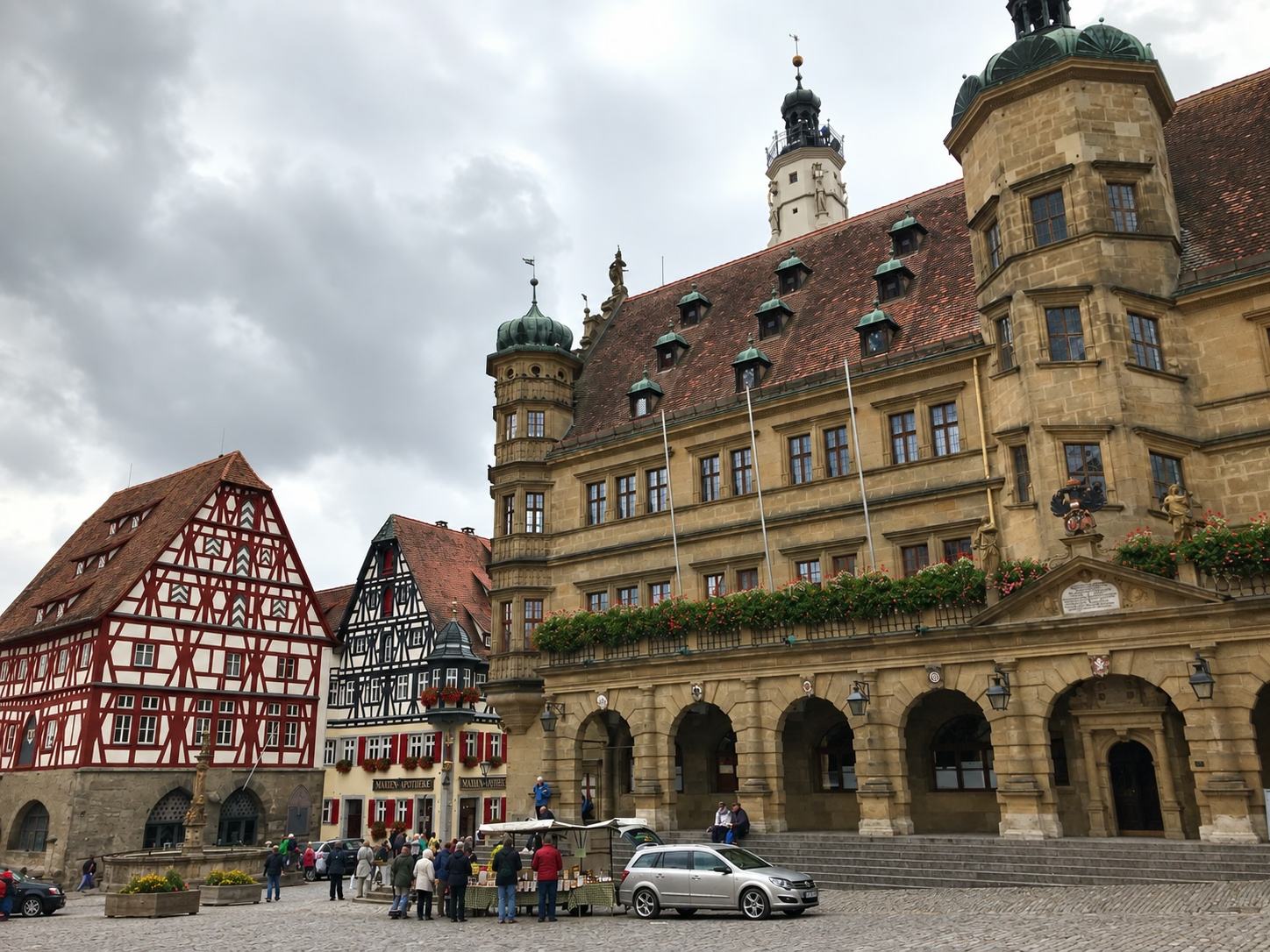
Rothenburg’s Renaissance Town Hall and half-timbered buildings overlooking the historic Marktplatz.
How to Get There
Starting point: Nürnberg Hauptbahnhof
Destination: Rothenburg ob der Tauber
Typical travel time: Approximately 1 hour 30 minutes to 1 hour 50 minutes each way
Transfers: One to two, commonly at Ansbach and Steinach
Train type: Regional services, bus service
Station to old town: Approximately 10 to 15 minutes on foot
Driving time: Roughly 1 hour 15 minutes, depending on traffic
Parking: Large visitor parking areas are located outside the old-town walls.
Regional trains are covered by the Deutschlandticket. VGN or Bavarian day tickets may be better for visitors without one, particularly when traveling together. Check the exact connection shortly before departure because the final branch-line service is not as frequent as the main routes.
Driving offers more flexibility for an evening tour or overnight stay, but a car is unnecessary once you arrive.
Getting Around
The historic center is compact and explored almost entirely on foot. However, the experience includes:
Cobblestoned streets
Steps and narrow passages on the city wall
Steep stairs inside towers
Hills leading into the Tauber Valley
Limited vehicle access within the old town
Visitors with limited mobility can still see the Marktplatz, Plönlein and many principal streets, but the elevated wall walk and Town Hall tower may not be suitable.
How Much Time to Plan
Allow a full day:
Train travel: Around three to four hours round trip
Time in Rothenburg: Six to eight hours
Total excursion: Approximately nine to twelve hours
Recommended departure: Around 7:30 or 8:00 in the morning
Recommended return: Early evening, or after the Night Watchman tour if connections permit
An early arrival is especially valuable in Rothenburg. The streets are noticeably quieter before the largest tour groups arrive.
Who Will Enjoy This Trip?
Rothenburg is particularly well suited to:
Travelers interested in medieval towns and fortifications
History and architecture enthusiasts
Photographers
Couples, families and independent travelers
Visitors who enjoy walking and exploring narrow streets
Travelers interested in traditional inns and regional food
Anyone visiting during the Christmas season
It may be less enjoyable for:
Visitors who strongly dislike tourist crowds
Travelers expecting an undiscovered local town
People with difficulty using steps, cobblestones or narrow wall passages
Anyone who wants a simple journey without train changes
Visitors trying to combine Rothenburg with several other towns in one day
Rothenburg is heavily visited, especially between late morning and mid-afternoon. This does not make it unworthy of a visit, but timing has a major effect on the experience.
Should You Stay Overnight?
Rothenburg works as a day trip, but this is one destination where an overnight stay genuinely changes the experience.
Staying overnight allows you to:
Explore after many tour groups have departed
Join the Night Watchman tour without worrying about the final train
Walk the empty streets early the following morning
Enjoy dinner in a historic inn
Descend into the Tauber Valley
Visit a museum without rushing
Experience one of the town’s evening festivals or performances
Our stay at Villa Mittermeier was particularly enjoyable because of the excellent food and creative rooms. For a first visit, I would recommend one night if the schedule and budget permit. If not, arrive early and consider returning on a later train.
What Makes Rothenburg Special?
Rothenburg is one of Germany’s most complete historic walled towns. Its gates, towers, churches, houses and streets form a coherent townscape rather than a small reconstructed historic quarter.
The town’s position above the Tauber Valley is equally important. Walking the Burggarten or looking down from the walls reveals how the landscape, trade routes and defenses shaped Rothenburg.
The center looks remarkably intact, but it is not entirely untouched. Parts of the eastern old town and fortifications were damaged during the Second World War and later reconstructed. The restoration is part of Rothenburg’s modern history and helps explain the donor names visible along sections of the wall.
Historic Significance
Rothenburg developed into a prosperous Free Imperial City during the Middle Ages, controlling a substantial surrounding territory. Many of its most important churches, civic buildings and fortifications date from this period.
The Thirty Years’ War and later political changes reduced the town’s economic importance. That decline also limited large-scale redevelopment, helping preserve its medieval appearance. Rothenburg became an early heritage-tourism destination during the 19th century and later an important stop on Germany’s Romantic Road.
Cost
Rothenburg is a moderately priced day trip.
Walking the streets, city wall and Burggarten is free.
Churches, towers and museums may charge admission.
The Night Watchman tour is relatively inexpensive.
Regional day tickets can keep transportation costs manageable.
Restaurants in the historic center may cost slightly more than comparable places outside heavily visited areas.
Staying overnight adds considerably to the total but provides a better evening and early-morning experience.
Annual Events
Historisches Festspiel “Der Meistertrunk”: Held around Pentecost, normally in May or June, with historical performances, costumes and processions.
Taubertal Festival: A major rock and alternative music festival held in the valley below Rothenburg, usually in August.
Rothenburg Wine Village: Usually held in August, with regional wines and food served around the old town.
Reichsstadt-Festtage: Held in early September, bringing historical groups, torchlight processions and reenactments into the old town.
Reiterlesmarkt: Rothenburg’s Christmas market, generally held from late November until shortly before Christmas.
Autumn festival and walking weeks: Seasonal events normally held during October.
Festival weekends and the Christmas market create a special atmosphere but also bring larger crowds and higher demand for accommodation. Always check the current dates before booking.
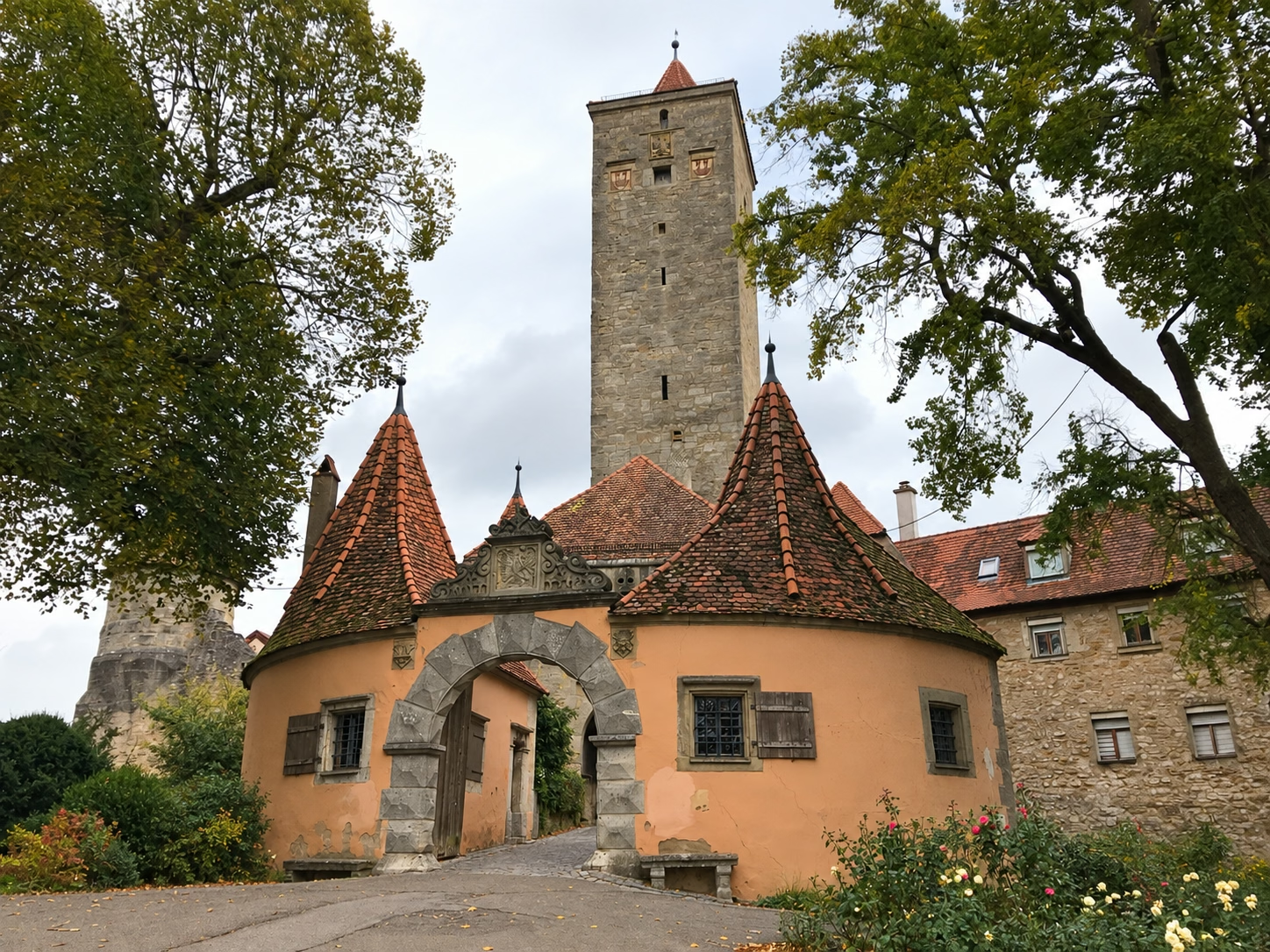
Fortified Burgtor entrance leading from Rothenburg’s old town into the Castle Garden.