

Germany · Bavaria
Nuremberg
Medieval streets, riverside walks and a distinctly Franconian identity, with remarkable museums and a complex history to explore.
Quick Facts
The essentials
LOCATION
Bavaria, Germany
POPULATION
About 540,000
CURRENCY
Euro (€)
Plan your time
RECOMMENDED STAY
3 to 4 days; longer with day trips
GETTING AROUND
Walking, U-Bahn, tram, bus and bicycle
BEST TIME
March to October; December for Christmas markets
What draws you
KNOWN FOR
Medieval Old Town, WWII history and Christmas market
DON'T MISS
Kaiserburg and a walk along the Pegnitz
INTRODUCTION
Why Visit
Nuremberg has been part of my life since childhood. Growing up about 90 minutes south of the city, I came here with my family to visit the zoo, go shopping and wander through the Christmas market. Entering the walled Old Town felt a little like stepping into a fairy tale. I returned as a teenager for shopping trips with friends, later spent several days camping at Rock im Park, and in 2017 finally experienced Nuremberg as a temporary home when I lived here from late summer into fall.
What I still love most is simply being in the Old Town. The Kaiserburg rises above a maze of historic streets, churches and squares, while the Pegnitz winds through the center beneath bridges such as Henkersteg and Kettensteg. Some of my favorite time here has been spent without much of a plan: following narrow lanes, walking along the river, stopping somewhere for a coffee or looking across the rooftops from the castle.
Nuremberg has enough history, culture and things to do to fill several days, but it remains compact and approachable. You can explore much of it on foot and still leave time to wander rather than rushing from sight to sight. Much of the historic center was rebuilt after severe wartime destruction. Its medieval appearance is only one layer of the city. Nuremberg was closely connected to the Holy Roman Empire, later became an important center of industry and railway history, and today has excellent museums and a lively cultural scene. Its role during National Socialism also makes places such as the former Nazi Party Rally Grounds and the courtroom used for the Nuremberg Trials essential for understanding a much darker chapter of German history.
That combination is what makes Nuremberg so rewarding to me. It can be beautiful and atmospheric, particularly along the Pegnitz and around the castle, but it is not a city preserved simply for visitors. People shop, work, study and live within and around the historic center.
Give Nuremberg several days and there is time to appreciate both the postcard views and the much more complicated city behind them. Whether you're interested in architecture, history, museums, food or simply wandering beautiful streets, Nuremberg offers something for almost everyone.

The Kaiserburg rising above Nuremberg's historic city center
EXPLORE MORE
Plan Your Visit

Practical Information
Nuremberg is straightforward to reach by train, with the Hauptbahnhof just outside the Old Town walls. The airport has a direct U-Bahn connection, and walking works well in the center. Use public transport for the Rally Grounds, Palace of Justice and neighboring Fürth. The practical guide covers arrivals, tickets, payments and the seasons, including the busy Christmas-market period. Allow for cobblestones and the uphill approach to the Kaiserburg when planning your days.

Attractions & Museums
Nuremberg's sights span imperial history, German art, railway heritage and the city's role in National Socialism. Start with the Kaiserburg, churches and bridges, then choose museums according to your interests. The Germanisches Nationalmuseum deserves several hours, while the Documentation Center and Memorium Nuremberg Trials provide essential historical context. Underground cellar tours and the future-focused Deutsches Museum Nürnberg add very different experiences.

Neighborhoods & Parks
The Pegnitz divides the Altstadt into the St. Lorenz and St. Sebald quarters, each with its own streets, landmarks and atmosphere. Beyond the walls, Wöhrd brings residential life and lakeside paths, while Bärenschanze is home to the Palace of Justice. I also enjoy following the river west toward Fürth or east into greener surroundings. The neighborhood guide combines places to explore and stay with parks, the old city moat and longer walking or cycling routes.

Food Experiences & Drinks
Small grilled Nürnberger Rostbratwürste and spiced Lebkuchen are the city's best-known specialties, but Franconian cooking offers much more. Look for crisp-roasted Schäufele, beef sauerbraten, seasonal carp and regional beer or wine. Historic inns add atmosphere to a meal, while bakeries, markets and international restaurants provide plenty of simpler choices. The food guide brings together local traditions, nine specialties and the everyday food experiences I associate with Nuremberg.

Festivals & Events
Nuremberg's events give the city a different atmosphere throughout the year. Rock im Park brings large crowds in early summer, while Klassik Open Air turns Luitpoldhain into a concert lawn. The Blaue Nacht adds late-night art and culture on its scheduled dates, and neighboring Fürth hosts the Michaelis-Kirchweih in autumn. During Advent, the Christkindlesmarkt and seasonal concerts are major draws. Check the current programs before arranging travel around an event.
Trips & Journeys
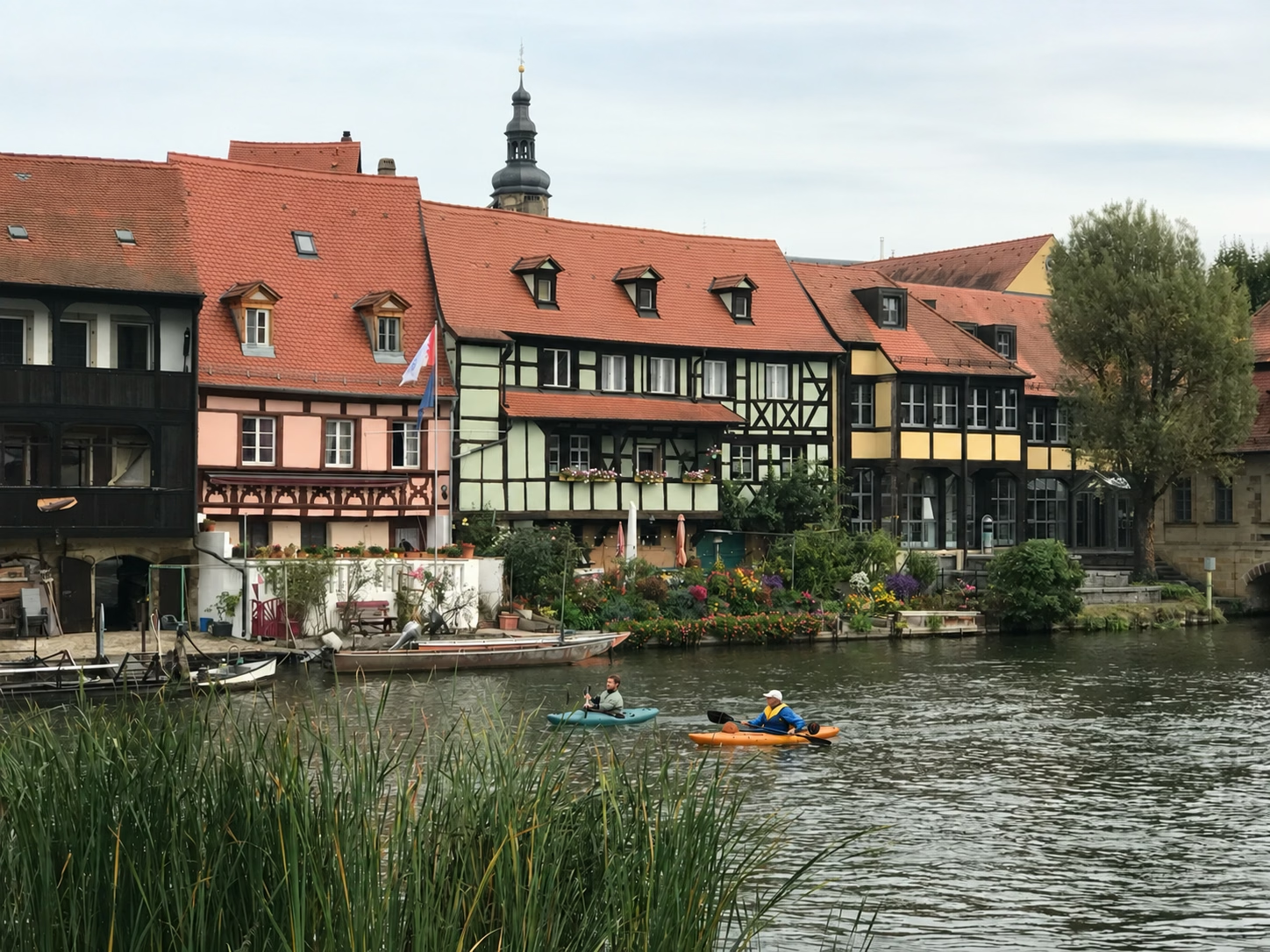
Nuremberg is a useful base for exploring Franconia and continuing through Bavaria. Bamberg offers riverside streets and brewing traditions, Bayreuth combines music with palaces and gardens, and Coburg adds royal history and a hilltop fortress. Rothenburg rewards an early start or an overnight stay. Regensburg and Munich are also connected by rail, although both deserve more than a quick visit. The journeys guide helps you choose a day trip or the next stop on a longer route.
PLAN YOUR TIME
Suggested Itineraries
These four days build on one another without repeating the same sightseeing route. Day One introduces the Altstadt, Kaiserburg and Pegnitz; Day Two combines art, shopping and neighboring Fürth. Day Three focuses on National Socialism and the Nuremberg Trials, while Day Four adds railway history and either the underground cellars or future-focused exhibits. Choose the days that fit your interests and available time. Check museum closing days and book timed visits before settling the order.
Arrange the museum days around the calendar: the DB Museum normally closes on both Mondays and Tuesdays, the Memorium Nuremberg Trials on Tuesdays, and the Germanisches Nationalmuseum on Mondays. Check each museum’s public-holiday exceptions before fixing the order.
ONE DAY
The Essential Nuremberg
Explore Nuremberg's historic heart on foot, linking churches, squares and the Kaiserburg with time beside the Pegnitz. Wear comfortable shoes for cobblestones and the climb toward the castle.
Morning
Start beside the Hauptbahnhof at the Handwerkerhof, then follow Königstraße to St. Lorenz. Continue down Königstraße and across Museumsbrücke, passing the Narrenschiff fountain on the north side. Explore Hauptmarkt, Frauenkirche and Schöner Brunnen before walking toward St. Sebald. Stop for Nürnberger sausages at Bratwursthäusle or another nearby restaurant.
Afternoon
Walk uphill to the Kaiserburg and choose the castle interiors, grounds and viewpoints according to your interests. Allow time for the views across the rooftops. Afterwards, descend toward Tiergärtnertor and Albrecht Dürer's House. Visit the house or Fembo-Haus if opening hours and your energy allow; there is no need to fit both museums into the first day.
Evening
Return toward the Pegnitz for a walk past Henkersteg, the riverside buildings and Kettensteg. This is a good contrast to the busier streets around Hauptmarkt. Have dinner in the Old Town and enjoy the illuminated buildings without adding another attraction. If you arrive late or spend longer at the castle, save a museum for a later day.

View from Nuremberg's Kaiserburg across the Old Town
TWO DAYS
Art, Shopping & Fürth
Spend your second day with German art and culture, Nuremberg's pedestrian streets and neighboring Fürth. This keeps the morning focused on one major museum and leaves the afternoon for a different city atmosphere.
Morning
Begin at the Germanisches Nationalmuseum. Its collection is enormous, so choose the periods and subjects that interest you rather than trying to see everything. Allow a substantial part of the morning for the museum, then take a break for lunch. The Germanisches Nationalmuseum normally closes on Mondays; check public-holiday exceptions before assigning this itinerary to your calendar.
Afternoon
Browse Breite Gasse and Karolinenstraße, continuing toward Weißer Turm and the Ehekarussell fountain. Afterwards, take the U1 to Fürth and explore the historic center around the Rathaus, Gustavstraße and St. Michael. I think Fürth deserves far more attention from visitors, and its streets make a rewarding contrast to Nuremberg's Altstadt.
Evening
Stay in Fürth for dinner or return to Nuremberg for a performance at the Staatstheater or another cultural venue. Check the program and performance location in advance, and leave enough time for the journey back. If you prefer a quieter evening, choose a restaurant near your accommodation rather than adding another cross-city trip.

Fürth during the seasonal Michaelis-Kirchweih, with fairground rides filling the historic streets
THREE DAYS
National Socialism & the Nuremberg Trials
Devote this day to Nuremberg's role in National Socialism and the trials that followed the war. These are substantial, often difficult subjects, so give both sites time and avoid treating them as quick sightseeing stops.
Morning
Visit the Documentation Center Nazi Party Rally Grounds in the unfinished Congress Hall. Its exhibition examines the rallies, propaganda and the people affected by Nazi rule. Afterwards, walk part of the grounds to understand their scale. Choose a manageable route rather than attempting the entire area, and check access notices before visiting.
Afternoon
Allow time for lunch and the journey across the city to the Palace of Justice near Bärenschanze. Visit the Memorium Nuremberg Trials to learn about the proceedings and their influence on international criminal justice. Courtroom 600 forms part of the visit, subject to occasional closures. The Memorium normally closes on Tuesdays, so assign this route to another day and check public-holiday exceptions.
Evening
Keep the evening simple after a demanding day. Have dinner and take a short walk beside the Pegnitz if you feel like being outdoors. There is no need to add another museum or historical site. If you prefer to give either exhibition more time, split the two visits across separate days and shorten another itinerary.

Documentation Center at the former Nazi Party Rally Grounds
FOUR DAYS
Railways, Historic Cellars & the Future
Use a fourth day to explore interests beyond the essential Old Town route. Start with railway history, then choose one afternoon experience: the sandstone cellars beneath the city or the future-focused Deutsches Museum Nürnberg.
Morning
Visit the DB Museum, which explores German railway history through historic vehicles and exhibits on travel, technology and society. Nuremberg and Fürth were linked by Germany's first steam-powered public railway in 1835. Give the museum a full morning if the subject interests you, then return toward the Altstadt for lunch. It normally closes on Mondays and Tuesdays; check the current opening days before assigning this itinerary to a date.
Afternoon
Book a guided tour of the Historische Felsengänge to see the former beer cellars and wartime shelters beneath the Old Town. These are excavated cellars, not natural caves; expect steps and cool temperatures. Alternatively, visit the Deutsches Museum Nürnberg for exhibits on future technologies. Choose one so you can enjoy it without watching the clock.
Evening
Finish with dinner and a final walk through a part of the Old Town you enjoyed. Tiergärtnertor, the lanes below the castle or the river around Henkersteg all offer a pleasant change from a museum interior. Use any remaining daylight for photographs or a café stop rather than squeezing in another ticketed attraction.

Historic and modern locomotives inside the DB Museum
My Tips for Your Visit
Nuremberg has accompanied me through almost every stage of my life, from childhood shopping trips and visits to the zoo to concerts, Christmas markets and several months living here. What keeps bringing me back is the combination of familiar streets and new things to discover. Give the major museums the time they deserve, but also leave room for a riverside walk, a neighborhood café or an evening in the Old Town.
