

Passau
Three rivers, Baroque streets and a slower stop along the Danube.
LOCATION
Lower Bavaria, Germany, on the Austrian border
POPULATION
Roughly 50,000
CURRENCY
Euro (€)
RECOMMENDED STAY
1 full day; 2 days for a slower overnight visit
GETTING AROUND
Walk, city bus, fortress shuttle and bicycle
BEST TIME
May–September for river walks; Advent for the market
KNOWN FOR
Three rivers, Baroque Old Town and cathedral organ
DON'T MISS
Dreiflüsseeck, St. Stephen’s Cathedral and Veste views
INTRODUCTION
Why Visit
Passau has an unusually clear sense of place. Its Old Town narrows into a peninsula between the Danube and Inn, with the Ilz joining from the far bank. Cathedral domes rise above pastel houses, riverboats come and go, and wooded hills begin just across the bridges. The university helps keep these historic streets lively.
I recommend Passau particularly on warmer days, when walking beside the rivers is as appealing as the buildings themselves. From the station, the shopping streets lead naturally into the older lanes, Domplatz and the cathedral. A circuit of the riverfronts, a view from Veste Oberhaus and chocolates at Pralinenwerkstatt Greindl make a very enjoyable day.
The city also connects two parts of my own Danube journey. In 2018, I rode here alone from Regensburg over three days as part of a longer trip from Ingolstadt to Bratislava. Beyond Passau, my ride toward Vienna brought wooded river bends, small ferries and days paced around 50–60 kilometers. It is worth putting the bicycle aside here and giving the city some time of its own.
A day trip from Regensburg is one option, while an overnight stay leaves room for a second riverbank, a museum or an evening concert. Passau works equally well as a short city break or a pause before continuing into Austria. I would start with the Old Town and rivers, then choose the extra stops that interest you.

Passau’s old-town skyline, cathedral domes and town hall tower above a sightseeing boat on the Danube.
EXPLORE MORE
Plan Your Visit


PLAN YOUR TIME
Suggested Itineraries
One full day covers the central walk and the fortress. A second local day gives you time for Innstadt, a museum and a slower river outing. The order below keeps nearby stops together; choose the clearer day for the hilltop views and check seasonal openings before setting out.
ONE DAY
Day 1: Old Town, Three Rivers and Veste Oberhaus
A full city day, starting at the station or your central accommodation. Leave one optional indoor stop for another visit if you arrive late.
Morning
Walk through Bahnhofstraße and Ludwigstraße to Domplatz, then visit St. Stephen’s Cathedral. If you want an organ concert, arrange this part of the day around the published programme.
Stop at Greindl for chocolates and continue to Residenzplatz. Choose the Museum am Dom only if its current opening hours fit; the square itself needs no reservation.
Afternoon
Have lunch nearby, then follow the Inn promenade past Schaibling Tower to the Dreiflüsseeck. Return along the Danube to Rathausplatz.
Take the shuttle to Veste Oberhaus, or use the signed open uphill path if conditions suit. The Wehrgang closure affects one walking option. In rain or poor visibility, substitute the Glasmuseum at Rathausplatz and save the fortress for tomorrow.
Evening
Return to the Old Town for dinner in the lanes between the cathedral and the river.
Take a short riverside walk if the weather is pleasant, or use the evening for a booked concert. Day visitors should allow time to reach their confirmed return bus or train.

Veste Oberhaus above autumn woodland, with a suspension bridge crossing the foreground in Passau.
TWO DAYS
Day 2: Innstadt, Roman Passau and Time on the Water
A quieter second day across the Inn, with one hill or museum and an unhurried afternoon back in the center.
Morning
Cross the Marienbrücke into Innstadt and follow the lower streets toward Lederergasse.
Choose the Roman Museum Kastell Boiotro, normally closed Mondays and for much of winter, or climb the covered steps to Mariahilf in dry weather. If both appeal, keep the rest of the morning free; slippery steps are a reason to stay below.
Afternoon
Have lunch in Innstadt, then return across the bridge. For a longer level walk, continue along the Old Town’s Inn promenade toward the university before turning back.
Take a scheduled 45-minute Three Rivers cruise if boats are operating. In poor weather, choose the MMK Wörlen or another central museum instead; if you deferred the fortress yesterday, use this clearer-weather slot for it.
Evening
Finish with dinner or a café stop around the Old Town, leaving time to collect luggage before departure.
If staying another night, enjoy the riverfront at your own pace. Anyone starting a cycling journey tomorrow can use the remaining time to check bags, the first stage and ferry arrangements.

A hilltop church and monastery buildings in Passau seen through autumn foliage.
My Tips for Your Visit
Passau is worth seeing at walking pace. I would give the cathedral, riverfronts and one high viewpoint the time they deserve, then leave room for chocolates or a café along the way.
One full day works well for a first visit. An overnight stay is worthwhile for the opposite bank, an evening event or a relaxed start to a Danube ride.
For me, Passau also marks the transition between the quieter Bavarian Danube and the more dramatic river valley in Austria. Whether you arrive by bicycle, train or car, pause here before moving on.


OVERVIEW
Practical Information
How Long to Stay
Allow one full day for the Old Town, cathedral, rivers and a fortress visit. Stay one or two nights if you want a second city day, an evening event or time to sort out bicycles before a longer ride. A late arrival after cycling is a reason to begin sightseeing the next morning.
A central room makes evening walks straightforward; a station-area hotel can suit an early departure. If you are touring by bicycle, check secure storage and any charging arrangements directly with the accommodation.
Getting to Passau
By rail: Passau Hauptbahnhof serves regional and long-distance routes toward Regensburg, Munich and Austria. From the station, allow roughly 20–25 minutes to walk through Bahnhofstraße and Ludwigstraße to Domplatz; luggage and stops will add time.
Current rail works: As checked in October 2026, the Obertraubling–Passau line is closed through 12 December 2026, with replacement buses and altered connections. Read the current arrival information before choosing a timed visit or relying on bicycle transport.
By car: Use a signed city car park and continue on foot. Driving around the narrow Old Town lanes adds little to a sightseeing visit; check the garage height if carrying bicycles on the roof.
By bicycle: The Danube routes approach from Bavaria and Austria. Arrange rental collection or return and the next stage before departure, particularly if you need to take a bicycle on a train or replacement bus.
Tickets, Walking and Access
The Deutschlandticket covers participating local and regional transport in Germany, including eligible RB and RE services. It generally excludes ICE, IC and EC trains; only explicitly listed route exceptions apply. Use the ticket-validity filter when searching, and check bicycle tickets separately. It does not automatically cover sightseeing cruises or an onward journey through Austria.
The riverfronts offer gentler walking, while cobbled lanes, slopes and steps affect the cathedral area and hill climbs. The fortress shuttle saves the ascent but does not make the whole site step-free. The museum currently reports its lift out of service; ask about the areas you can reach if mobility is a concern.
Seasons and Weather
1997–2020 German Weather Service averages for Fürstenzell, a higher-elevation proxy southwest of Passau. This available record is shorter than a standard 30-year climate normal. Ranges span the three monthly averages in each season, not temperature extremes. Wet days have at least 1 mm (0.04 in) of precipitation, which can include snow.
Spring (March–May)
Spring starts chilly and becomes mild, but rainfall rises markedly toward May.
Average lows 1–9°C (33–48°F) and average highs 9–19°C (48–66°F); 8–12 wet days per month.
Seasonal highlight: The Maidult brings Bavarian fairground traditions in late April and early May.
Outdoors and clothing: Wear layers and a rain-resistant jacket for the riverfront, with grippy shoes for the climb toward Veste Oberhaus.
Summer (June–August)
Summer is warm with cooler evenings, and it is also Passau’s wettest season.
Average lows 12–14°C (54–57°F) and average highs 23–24°C (73–75°F); 10–13 wet days per month.
Seasonal highlight: The Festspiele Europäische Wochen brings concerts and cultural events to Passau and the surrounding region in June and July.
Outdoors and clothing: Carry a rain shell on the three-river walks and water for the uphill route to Veste Oberhaus.
Fall (September–November)
Early autumn remains mild, followed by much cooler days and chilly nights toward November.
Average lows 1–10°C (34–49°F) and average highs 6–19°C (44–66°F); 9–10 wet days per month.
Seasonal highlight: Passau’s Herbstdult brings beer tents, Bavarian food, and fairground rides in September.
Outdoors and clothing: Use warm layers on the riverbanks and shoes with traction for damp steps and paths toward Veste Oberhaus.
Winter (December–February)
Winter is cold, with frequent freezing nights and precipitation that can fall as snow.
Average lows −4–−2°C (25–28°F) and average highs 1–4°C (34–39°F); 10–12 wet days per month.
Seasonal highlight: The Christkindlmarkt sets seasonal stalls beside St. Stephen’s Cathedral from late November through December.
Outdoors and clothing: Bring an insulated coat and grippy footwear for cold riverfront walks, and avoid steep routes when ice makes them slippery.
Climate sources: temperature and station records. Historical averages are a planning guide, not a forecast.
Rain makes cobbles and exposed steps slippery, and high water can interrupt riverside paths and boats.
On my September Danube ride, cool and sometimes foggy mornings gave way to warmer afternoons. Bring a layer rather than judging the whole day by the temperature at breakfast. Check seasonal museums and boats before building a full itinerary.
Tip: Confirm the complete arrival and return journey before booking an organ concert or river cruise.
DISCOVER
Attractions & Museums
St. Stephen’s Cathedral and Domplatz
The cathedral’s pale towers and green domes dominate the Old Town. Inside, the lavish Baroque decoration is a striking contrast to the Gothic cathedral in Regensburg. After the 1662 fire, Italian architects and artists reshaped much of the building, preserving parts of its older eastern end.
An organ concert adds another dimension, but the instrument is being restored in stages, with completion currently expected in 2028. Not all sections can be played, and scaffolding may obscure parts of the interior. Check the cathedral music programme for the actual date and entry arrangements.
Residenzplatz and the Prince-Bishops
Walk around the cathedral to Residenzplatz, where the fountain and former episcopal residences reveal the wealth of Passau’s prince-bishops. They governed a territory as well as a diocese, which helps explain the grand buildings packed into such a small city. The Museum am Dom in the residence adds sacred art and treasures if you want to explore this story indoors.
Dreiflüsseeck and the Riverfronts
Follow the Inn side of the peninsula toward the Dreiflüsseeck. The Inn enters the Danube here, while the Ilz arrives from the other bank. Their different colors are sometimes visible, depending on light and water conditions. Return along the Danube for the town hall frontage, moored boats and a view toward the two fortresses.
Veste Oberhaus
The fortress above the Danube was the prince-bishops’ stronghold. Its courtyards and city-history museum make the ascent more than a photo stop, and the view explains the narrow peninsula below. Museum admission includes the Batterie Linde three-river viewpoint and observation tower when open.
The shuttle runs from Rathausplatz during museum hours. On foot, the Ludwigsteig begins across the Prinzregent-Luitpold-Brücke, but do not assume every branch is open: the tourism office currently lists the Wehrgang section as closed for construction. Use the signed open route or shuttle, and check the museum’s current access information. The tower closes in severe weather and has a shorter season than the museum.
Art, Glass or a Short Cruise
The Museum Moderner Kunst Wörlen on Bräugasse is the choice for modern and contemporary art. The Glasmuseum at Rathausplatz explores European glass and decorative styles.
A Three Rivers sightseeing cruise takes about 45 minutes and shows the waterfront from a different angle. Longer Danube sailings take a larger part of the day. Confirm the sailing and departure pier for your date, because seasons, river levels and operating changes affect the programme.
EXPLORE
Neighborhoods, Parks & Outdoors
Old Town Lanes and Höllgasse
Between the grand squares, Passau becomes a network of narrow passages, arches and uneven lanes. Around Höllgasse, galleries and workshops give the streets an artistic character. The short distances make it easy to leave the most direct route for a few minutes without committing to another large attraction.
Innpromenade and Schaibling Tower
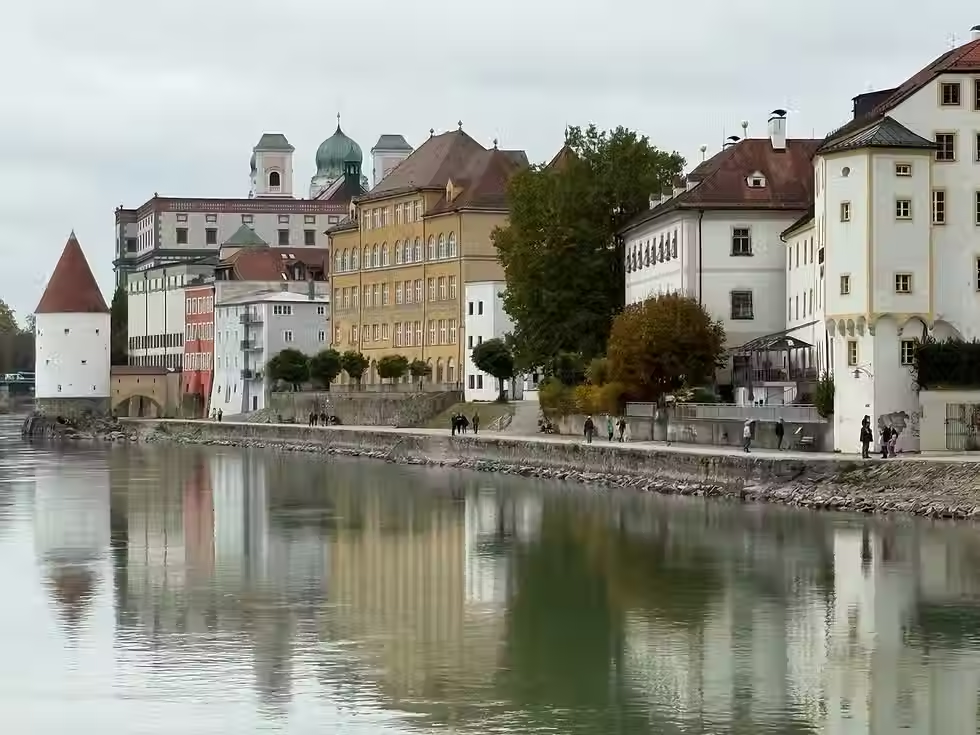
The walk along the Inn has a different feel from the busier Danube moorings. Follow the promenade past the small white Schaibling Tower, with the cathedral rising behind the riverfront buildings. Continue west toward the university for more open stretches of riverbank, or stay close to the Old Town for a shorter circuit.
Innstadt and Mariahilf
Across the Marienbrücke, Innstadt offers neighborhood streets and the view back toward the Old Town. Lederergasse leads toward the Roman Museum Kastell Boiotro, built around the remains of a late Roman fort. This part of Passau belonged to the Danube frontier long before the Baroque city took shape.
The pilgrimage church of Mariahilf stands on the hill above Innstadt. Its covered stairway is a substantial climb, rewarded by another view across the city. On a second day, combine the lower streets with either the museum or the uphill visit, depending on your interests and energy.
The Ilz and Wooded Slopes
On the northern side of the Danube, the lower Ilz and the wooded Oberhauser Leite bring the landscape close to the center. These are better choices for a longer walk than another circuit of the shopping streets. Hillside paths can be narrow and uneven; use an up-to-date marked route rather than treating them as an entirely level riverside stroll.
Tip: Cross one bridge and look back; the opposite bank often gives the clearest sense of Passau’s setting.
TASTE
Food & Drink
I particularly recommend the chocolates at Pralinenwerkstatt Greindl on Domplatz. It is an easy stop beside the cathedral for a small treat or something to take home. Beyond that personal recommendation, the following are regional foods to look for on menus around town.
Pralines: Handmade filled chocolates and truffles are Greindl’s specialty, with a changing selection at its Domplatz workshop.
Schweinsbraten: Bavarian roast pork, commonly served with gravy and dumplings, makes a substantial lunch after a morning walk.
Käsespätzle: Soft egg noodles with cheese, often finished with onions; a filling meat-free option when prepared without added meat.
Obatzda: A seasoned cheese spread for a lighter Bavarian Brotzeit, usually eaten with bread or a pretzel.
Apfelstrudel: Apple-filled pastry reflects the easy overlap between Bavarian and Austrian menus and suits a coffee stop.
Where a Meal Fits
Domplatz and Residenzplatz fit naturally around the cathedral visit, while the lanes nearer the river offer inns and cafés without much detour. A café terrace works well in warm weather, though an indoor table is welcome on a damp autumn day. Look at the menu before sitting down if you only want a snack.
For dinner, staying central keeps the evening simple after a fortress or river outing. The university city also has international choices, so a longer stay need not revolve around heavy Bavarian meals. Reserve if you have a particular restaurant in mind during a festival or busy weekend.
Tip: Buy chocolates toward the end of a hot day so they spend less time in a warm bag.
EXPERIENCE
Festivals & Events
Cathedral Music and European Weeks
The cathedral’s organ concerts are a practical addition to a city visit when the programme matches your date. The summer Festspiele Europäische Wochen extends the musical and cultural choice across Passau and the surrounding border region. Check the venue as carefully as the performance: some events take place well outside the city.
Kunstnacht
During the Kunstnacht, galleries, museums and other Old Town spaces take part in an evening devoted to art. It suits an overnight visit, with time for dinner and the atmosphere in the lanes rather than a hurried trip back to the station.
Maidult and Herbstdult
Passau’s spring and autumn Dult fairs combine beer tents, rides and fairground food at the Messepark, away from the historic center. Allow for transport there and back. They are a separate evening or half-day choice, rather than something you will happen across beside the cathedral.
Christkindlmarkt on Domplatz
The cathedral provides the setting for Passau’s Christmas market, with seasonal food and craft stalls. The published 2026 dates are 24 November–22 December. Dress for cold, damp evenings beside the rivers and keep the daytime programme short enough to enjoy the market after dark.
Use Passau’s official event listings for the current programme before booking around a festival.
Tip: An evening performance or art night is a stronger reason to stay over than adding another rushed museum.
GO FURTHER
Nearby Cities & Journeys
Regensburg
About 120 kilometers by road upstream, Regensburg pairs Passau’s Baroque streets with a largely medieval center, the Stone Bridge and a Gothic cathedral. It can be a day trip or the next overnight stop. During the current 2026 works, allow roughly 1½–2½ hours by replacement bus, depending on the service; check the full connection for your date.
My Regensburg-to-Passau outing covers the reverse approach and a focused one-day city walk.
Munich
Around 190 kilometers by road from Passau, Munich is better treated as an onward stay than squeezed into this two-day guide. Its larger museums, parks and neighborhoods need their own time. Current October 2026 connections take roughly 2½–3 hours by replacement bus and regional train, with at least one change on the sampled services.
The Bavarian Danube by Bicycle
My Regensburg–Passau cycling route covers roughly 150–160 kilometers. I rode it in three days in 2018, through quieter countryside and towns including Straubing, Deggendorf and Vilshofen. Parts were gravel or sandy farm tracks, and the scenery felt gentler than the Austrian section. Allow extra time for town visits and uphill detours to castle ruins.
Passau to Vienna Along the Danube
The Passau–Vienna ride continues roughly 330 kilometers through Austria. Around six or seven riding days leaves more room for the Schlögener Schlinge, Linz and the Wachau than a distance-led schedule. In September 2018, I usually rode 50–60 kilometers a day and stayed in family-owned Pensionen and small hotels.
Plan ferry crossings, overnight stops and bicycle transport as part of that separate journey. An extra night in Passau lets you enjoy the city before the ride begins, without using the first morning to collect equipment and rush through the cathedral.
Tip: Give a Danube cycling trip its own days rather than trying to fit it around a tightly packed city break.