

Munich
A major European city where royal history, serious culture, green spaces and everyday Bavarian life fit comfortably together.
LOCATION
Bavaria, Germany
POPULATION
Approximately 1.6 million
CURRENCY
Euro (€)
RECOMMENDED STAY
4 to 5 days
GETTING AROUND
Excellent MVV public transportation
BEST TIME
May to June; September to December
KNOWN FOR
Beer gardens, palaces, museums & outdoor life
DON'T MISS
English Garden, Residenz & Viktualienmarkt
INTRODUCTION
Why Visit
Munich has been part of my life for as long as I can remember. I grew up about 50 km north of the city and began visiting as a child with my parents and grandparents for shopping trips, the zoo, Circus Krone, the pedestrian center and, every September, Oktoberfest. As I got older, Munich became the place for concerts, festivals, nightlife and eventually long summer stays. I have experienced it not only as a visitor, but through different stages of life.
What I continue to appreciate most is how easy Munich feels despite being a major European city. It has serious museums, opera, concerts, restaurants, shopping, universities, international companies and a busy events calendar, yet it rarely feels overwhelming. The historic center is compact, public transportation reaches almost everywhere, cycling is excellent, and many neighborhoods are easy to explore on foot.
"What keeps bringing me back is not one famous sight, but how naturally Munich combines culture with everyday life. I can visit a major museum or palace, then cycle beside the Isar, sit in a neighborhood café or spend the evening at a concert."
Munich is often reduced to beer, Oktoberfest and expensive cars. Those things are certainly part of the city, but they are only a small part of the story. It is also a place of contemporary art, international restaurants, neighborhood cafés, riverside cycling, outdoor concerts and an unusually strong relationship with parks and public space. You can spend the morning in the Residenz, eat lunch at Viktualienmarkt, cycle beside the Isar, and finish the day at the opera, a beer garden or a concert in Olympic Park.
For a first visit, I recommend at least four full days. That gives you time for the historic center, one or two major museums, a palace or Olympic Park, the Englischer Garten or Isar, and at least one neighborhood beyond the Altstadt. Munich especially suits travelers who enjoy combining major cultural sights with time outdoors and the rhythms of everyday city life.

People relaxing beside the Isar River on a summer afternoon in Munich
EXPLORE MORE
Plan Your Visit
For me, the best trips leave room for both the places you planned to see and the unexpected discoveries along the way. These guides bring together practical advice, local food, events and ideas for exploring beyond the main sights, based on what I have learned from my own travels.

Practical Information
Munich is unusually easy to navigate for a city of its size. The U-Bahn, S-Bahn, trams and buses work as one integrated network, while walking and cycling are practical for many trips. A car is unnecessary for most visitors. Cards are widely accepted, but some cash remains useful. The main complication is ongoing construction around München Hauptbahnhof and the central rail network, so check routes before longer journeys and allow some flexibility.

Attractions & Museums
Munich combines royal history, major museums, performing arts and modern architecture within a city that is relatively easy to explore. I would make the Residenz a priority, then choose cultural stops according to your interests, whether that means the Deutsches Museum, Lenbachhaus, the Pinakotheken, BMW or an evening at the Nationaltheater. Leave time for the Altstadt itself, where churches, courtyards and historic squares are close enough to discover on foot.

Neighborhoods & Parks
Munich becomes much more interesting when you move beyond the Altstadt. Schwabing, Haidhausen, Maxvorstadt and Glockenbachviertel each reveal a different side of local life, while green space is woven deeply into the city. I especially enjoy cycling beside the Isar, wandering through the Englischer Garten and spending time in Olympic Park. Nymphenburg's grounds and the Hofgarten add more formal landscapes, making outdoor time easy to combine with sightseeing.

Food Experiences & Drinks
Munich's food scene reaches far beyond beer halls. Traditional Bavarian dishes are worth trying, but I also regularly eat Vietnamese, Afghan, Italian, Greek and other cuisines here. Some of my favorite experiences are simple ones: browsing Viktualienmarkt, buying excellent bread or pastries, sitting over cake in Schwabing or spending time in a beer garden. The full guide covers both local specialties and places I have personally enjoyed, from casual stops to special-occasion dining.
Festivals & Events
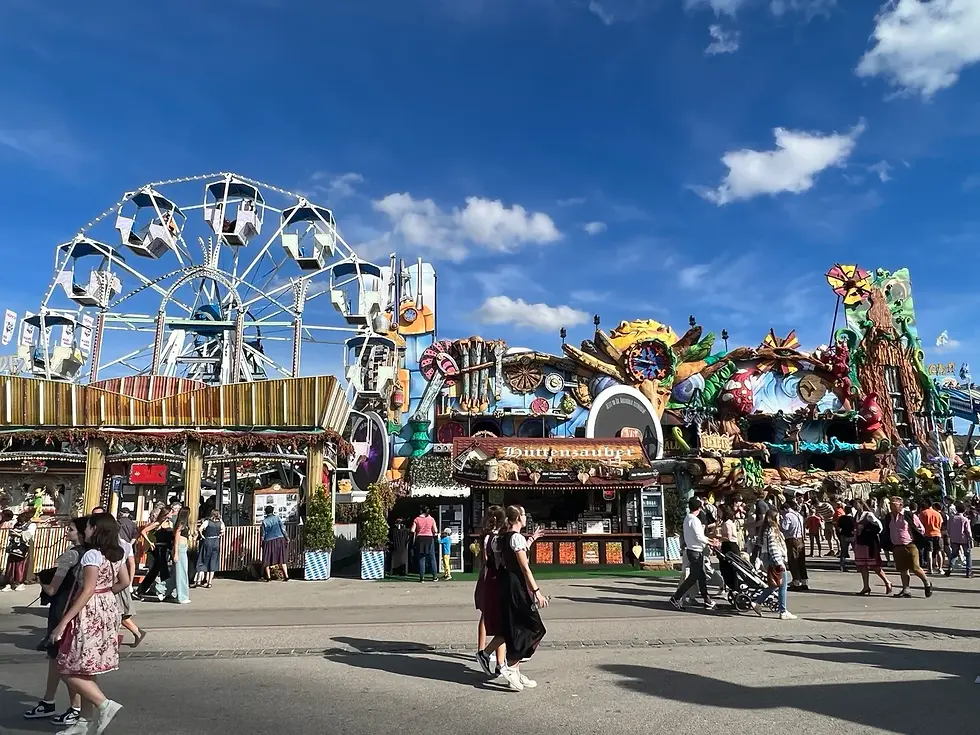
Events are part of Munich's rhythm throughout the year. Oktoberfest is the most famous, but I also enjoy the way summer brings concerts, festivals and outdoor culture to places such as Olympic Park and Odeonsplatz. December transforms the center with several very different Christmas markets, while Fasching adds a more local winter tradition. The guide highlights a selective mix of events I know or recommend rather than trying to catalogue everything happening in the city.
Trips & Journeys
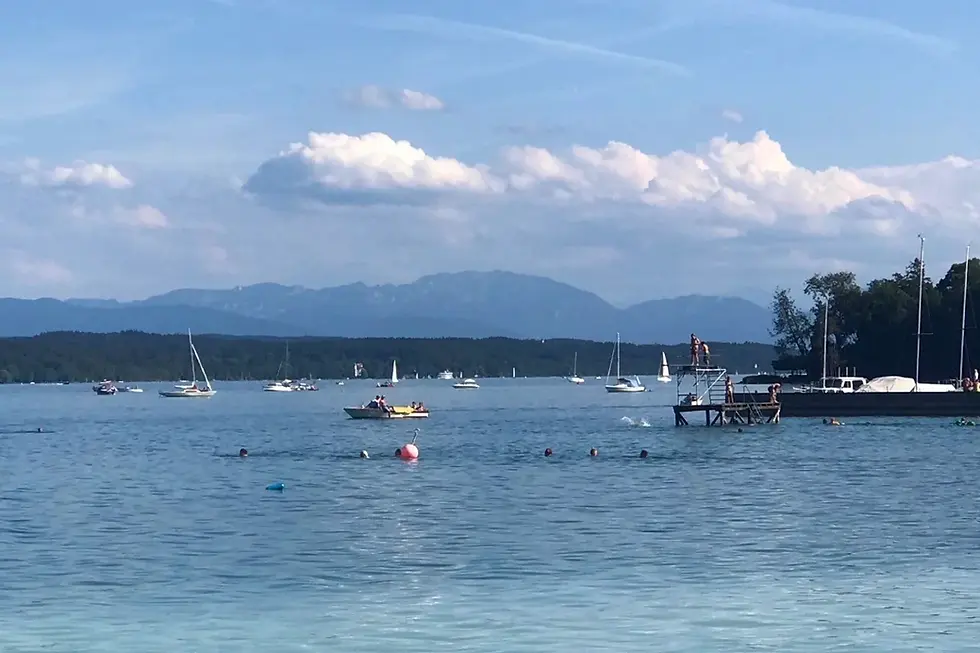
Munich is one of my favorite bases for exploring southern Germany and nearby Austria. Easy rail connections lead to historic cities such as Regensburg, Nuremberg and Salzburg, while lakes and Alpine landscapes can be reached within an hour or two. Some trips, including Lake Starnberg or Chiemsee, work very well in a day; others, such as Salzburg or the Füssen area, become more rewarding with an overnight stay. I focus on journeys I have personally taken and would repeat.
PLAN YOUR TIME
Suggested Itineraries
These four days build on one another and are how I would introduce Munich to a first-time visitor. Day 1 stays in the historic center; Day 2 adds parks, Olympic architecture and a neighborhood; Day 3 focuses on history, art and performing arts; Day 4 goes deeper with the Deutsches Museum and either more Altstadt time or Nymphenburg. Adjust individual museums to your interests, use indoor alternatives when the weather turns, and keep enough unscheduled time for cafés, meals and discoveries along the way.
ONE DAY
The Essential Munich
Start with Munich's historic heart, following a route that introduces the city's major landmarks without turning the day into a race. The center is compact, so much of the experience comes from walking between the sights and seeing how they connect.
Morning
Begin at Stachus and walk along Neuhauser Straße and Kaufingerstraße toward Marienplatz. This pedestrian route brings you naturally into the Altstadt, passing shops, churches and historic buildings along the way.
At Marienplatz, admire the Neues Rathaus before continuing to nearby Alter Peter. If the weather is clear, climb the narrow tower stairs for one of my favorite views across Munich's rooftops.
Then walk to Viktualienmarkt, browse the food stalls and have an informal lunch such as a Leberkäse or Schweinekrustenbraten roll. Most market stalls close on Sundays and public holidays, so choose a café or restaurant instead on those days.
Afternoon
Walk past the Hofbräuhaus toward Maximilianstraße, Munich's grand avenue, and continue to Max-Joseph-Platz and the Nationaltheater.
Make the Residenz the centerpiece of your afternoon. It may be my favorite palace visit anywhere in Europe. What began as a medieval residence became an enormous complex of state rooms, courtyards and collections, and I discover something new almost every time I return. Allow several hours rather than rushing through it.
Afterwards, continue through Odeonsplatz and into the Hofgarten for a quieter contrast to the palace.
Evening
Finish with a relaxed Bavarian dinner at a Wirtshaus, brewery restaurant or beer garden.
Afterwards, enjoy the Altstadt after dark rather than squeezing in another attraction.

The Residenz and Theatinerkirche while walking through the Hofgarten
TWO DAYS
Parks, Architecture & Neighborhoods
Day 2 shows a very different Munich: greener, more modern and closer to everyday city life. Move from the Englischer Garten to the architecture of the 1972 Olympics and BMW, then finish in Schwabing, the neighborhood I know most intimately.
Morning
Enter the Englischer Garten near the Eisbachwelle, where surfers ride a standing wave just beyond the historic center. It is one of those wonderfully unexpected Munich sights and a good introduction to how closely outdoor life is woven into the city.
Continue farther into the Englischer Garten on foot or by bicycle. The park is much larger than many visitors realize, and on warm days it fills with people cycling, reading, picnicking and simply spending time outside.
Stop around the Chinesischer Turm for lunch. In good weather, its large beer garden offers a classic Bavarian experience without leaving the park.
Afternoon
Take public transportation to Olympic Park. The sweeping tent roofs created for the 1972 Olympics are what I love most here; more than fifty years later, the architecture still looks remarkably modern. Walk through the park and up one of its hills for views across Munich. The Olympic Stadium and Olympic Tower are currently closed for renovation, so plan around the open grounds and check access before visiting.
Add the BMW Museum and BMW Welt if cars, engineering or design interest you. The museum is particularly well presented and easy to combine with Olympic Park.
Evening
Continue to Schwabing. Walk along Leopoldstraße toward Münchner Freiheit, then slow down for coffee, cake or ice cream. We rented apartments here for several summers, and this is one of the areas where Munich feels most familiar to me.
Stay for dinner and experience the neighborhood after the sightseeing day winds down.

Olympic Park's sweeping tent roof architecture in Munich
THREE DAYS
History, Art & Culture
Use Day 3 to explore parts of Munich that reveal more of its complicated history and cultural importance. Königsplatz and Maxvorstadt place major museums, universities and twentieth-century history close together, making it possible to go deeper without spending the day crossing the city.
Morning
Begin at Königsplatz, one of Munich's most monumental public spaces, and visit the NS-Dokumentationszentrum. It stands on the former site of the Nazi Party headquarters, making the location itself part of understanding Munich's central role in the rise of National Socialism. I consider this one of the city's most important museums, so allow at least two to three hours rather than treating it as a quick stop.
Afterwards, walk around Königsplatz and nearby Karolinenplatz before having lunch in Maxvorstadt. The surrounding universities, museums and cafés give this part of Munich a distinctly different atmosphere from the Altstadt.
Afternoon
Choose one museum according to your interests instead of trying to collect several. Lenbachhaus would be my first choice for its outstanding Blaue Reiter collection and approachable scale.
Alternatively, choose the Alte Pinakothek or Pinakothek der Moderne according to the period and type of art that interests you, or the Egyptian Museum if ancient history interests you. The point is to enjoy one collection properly rather than spending the afternoon moving between museum entrances.
Evening
Return to central Munich and see some of the historic buildings illuminated after dark. If possible, attend a performance. I think the Nationaltheater is one of the world's great opera houses, while Gärtnerplatztheater offers musicals, operetta, opera and dance in a more intimate setting. Combine the performance with dinner nearby.

Königsplatz with classical architecture in Munich's museum district
FOUR DAYS
Digging Deeper
By Day 4, you have already seen several sides of Munich, so I would resist adding another long checklist. Spend the morning with one of the city's great museums, then use the afternoon either to discover details you missed in the center or escape to the spacious grounds of Nymphenburg.
Morning
Spend the morning at the Deutsches Museum. It is enormous, and trying to see everything quickly becomes exhausting. Instead, choose three or four areas that genuinely interest you, using the museum’s current exhibition list to choose your priorities, and spend time with them. Many exhibits are interactive, which is one reason I think the museum works even for people who do not normally devote hours to museums.
Take a proper lunch break afterwards rather than immediately moving to the next attraction.
Afternoon
If you want more time in central Munich, return to the Altstadt and explore the smaller streets and sights, such as Asamkirche on Sendlinger Straße, churches, courtyards and shopping passages you passed during Day 1.
My alternative would be Nymphenburg. Take a tram or bicycle to the former summer residence of Bavaria's rulers. After a full museum morning, choose between the palace interiors and a longer park walk. I especially enjoy the enormous grounds, where formal gardens gradually turn into parkland, canals and smaller palace buildings. Give yourself time to walk rather than seeing only the main palace.
Add the Botanical Garden only if you still have time and energy.
Evening
For your final evening, return somewhere you enjoyed during the previous days rather than searching for another must-see. Have dinner, then walk from Odeonsplatz past Wittelsbacherplatz and through the pedestrian center as Munich settles into the evening.

Nymphenburg Palace reflected in its canal in Munich
My Tips for Your Visit
One mistake I see many visitors make is trying to see too much. Munich is not a city that rewards rushing. Some of the experiences I remember most vividly are not famous attractions at all: sitting outside with a coffee in Schwabing, spending an afternoon beside the Isar, browsing Viktualienmarkt without buying very much, or cycling across town simply because it was a beautiful day. See the major sights, but leave room for neighborhoods, parks, cafés and ordinary city life. If you leave feeling that you have experienced how people actually live here rather than simply photographed its landmarks, I think you have experienced Munich well.
