

Japan · Kansai
Nara
Deer, temple grounds and a day that made me want to return
Quick Facts
The Essentials
LOCATION
Nara Prefecture, Kansai, Japan
POPULATION
About 344,000
CURRENCY
Japanese yen (JPY)
Plan Your Time
RECOMMENDED STAY
1–2 days; I would return for two nights
GETTING AROUND
Kintetsu-Nara is closest to the park; walk centrally and use buses for Heijo Palace
BEST TIME
Spring and autumn for walking and seasonal color
The Highlights
KNOWN FOR
Free-roaming deer, ancient temples and Japan’s early capital
DON'T MISS
Nara Park and Todaiji, with time for the streets along the way
INTRODUCTION
Why Visit
Nara brings ancient temples, open parkland and shopping streets into a central area that works well for a day on foot. As Heijo-kyo, it was Japan’s capital for much of the period from 710 to 784. Government and Buddhism developed alongside each other here, which helps explain the scale of the temple grounds and the palace site west of today’s city center. My friend Jun also explained how the area south of Nara helped shape the early Japanese state.
Many visitors come for the novelty of seeing and feeding the deer. For me, they were only part of the attraction. I was especially looking forward to the World Heritage sights: Kofukuji and Todaiji around Nara Park to the east, and the extensive Heijo Palace site on the other side of the modern city.
We made Nara a day trip from Kyoto during our four-night stay there. Our first stop after arriving at JR Nara Station was Vie de France for coffee and morning buns, before walking along Sanjo-dori toward the park. The rain grew heavier later at Heijo Palace, just as we finished setting up a bike rental. That ride never happened.
For a first day, I would concentrate on the central streets, Kofukuji, Nara Park and Todaiji. There is enough here to make two nights worthwhile, especially for the museums, gardens and longer walks still on my list. I would happily return in better weather and give Heijo Palace the half-day it deserves.
Browse my Nara guide for ideas and practical tips, or visit Plan & Book to find accommodations, transportation and activities for your trip.

Deer resting at the base of a large tree, with another deer standing behind the trunk.
EXPLORE MORE
Plan Your Visit


OVERVIEW
Practical Information
Getting There
In this section you can find a range of information about how to travel to and from Nara. You can research and book flights, trains and buses, and ferries on Omio to find options that suit your specific trip. Please note that I may earn a commission through this link.
Nara has two separate railway stations. Kintetsu-Nara is closest to the historic center, about five minutes on foot from Kofukuji. From JR Nara Station, allow around 20 minutes along Sanjo-dori to Kofukuji and the western edge of Nara Park, with Todaiji farther into the park. Choosing Kintetsu saves roughly 15 minutes of walking to this first group of sights. Yamato-Saidaiji, another Kintetsu station, serves the western side of the Heijo Palace site.
We chose a JR local train from Kyoto because the journey was included in our Hokuriku Arch Pass and we wanted to see the neighborhoods along the way. There were rivers, bamboo-covered hills and houses close beside the tracks. For a quicker journey, the JR Miyakoji Rapid takes around 45–50 minutes between Kyoto and Nara. From Osaka, the JR Yamatoji Rapid takes around 50–55 minutes from Osaka Station, while Kintetsu connects Osaka-Namba and Kintetsu-Nara in about 40 minutes. We took a JR rapid service back to Kyoto.
A rechargeable IC card, such as ICOCA or Suica, is convenient for these JR local and rapid services and Kintetsu’s regular trains, including Express and Rapid Express. A Kintetsu Limited Express requires a separate reserved-seat ticket as well as the basic fare. If you are considering a rail pass, compare its price with the journeys you actually plan to make.
JR Nara Station was easy to navigate, with Japanese and English signs. The handsome old station building just outside now houses a visitor information center. From the station, Sanjo-dori leads east toward the historic center and park.

Getting Around
Walking works well for the central streets, Kofukuji and the main Nara Park sights. Heijo Palace is a separate excursion several kilometers west, best reached by bus, taxi or Kintetsu train to Yamato-Saidaiji. We took a bus there from the park area and tried to rent bikes once we saw the scale of the grounds. For local routes, use the Nara Kotsu English transport guide.
We walked roughly a mile along Sanjo-dori before continuing into the temple and park area. The park extends well beyond the busiest route to Todaiji, with wooded shrine approaches and hillside paths. On our wet day, mud and deer droppings made the paths messier than we had expected.
The Nara National Museum is generally closed on Mondays, with holiday and exhibition exceptions; our Monday visit ruled it out. Several Heijo Palace buildings also close on Mondays. Manyo Botanical Garden and Isuien generally close on Tuesdays, with exceptions. Check the individual calendars before choosing a museum-and-gardens day.
Where I would stay
We stayed in Kyoto, so these are the areas I would consider for a return visit rather than hotels I have tried:
Kintetsu-Nara, Higashimuki and Sarusawa Pond: My first choice for walking to Kofukuji and Nara Park, with shops and restaurants close by.
JR Nara and Sanjo-dori: A practical base when arriving or leaving on JR, with hotels near the station and a direct shopping-street walk into the center.
Seasonal Weather in Nara
THROUGH THE YEAR
When to Visit
Explore the guides below for practical tips, things to see and do, local food, events and ideas for trips beyond your destination.
SPRING
Add paragraph text. Click “Edit Text” to update the font, size and more. To change and reuse text themes, go to Site Styles.
Add paragraph text. Click “Edit Text” to update the font, size and more. To change and reuse text themes, go to Site Styles.
SUMMER
Add paragraph text. Click “Edit Text” to update the font, size and more. To change and reuse text themes, go to Site Styles.
Add paragraph text. Click “Edit Text” to update the font, size and more. To change and reuse text themes, go to Site Styles.

FALL
Add paragraph text. Click “Edit Text” to update the font, size and more. To change and reuse text themes, go to Site Styles.
Add paragraph text. Click “Edit Text” to update the font, size and more. To change and reuse text themes, go to Site Styles.
Add paragraph text. Click “Edit Text” to update the font, size and more. To change and reuse text themes, go to Site Styles.
WINTER
Add paragraph text. Click “Edit Text” to update the font, size and more. To change and reuse text themes, go to Site Styles.
Add paragraph text. Click “Edit Text” to update the font, size and more. To change and reuse text themes, go to Site Styles.
LOCAL LIFE
Neighborhoods & Parks
Sanjo-dori and the shopping streets
Shopping street · Reference point: 2-1 Shimosanjo-cho, Nara · Walk east from JR Nara Station toward the historic center (map)
Sanjo-dori made a calm start to the walk from JR Nara. It is an open-air shopping street, with covered arcades branching off near the center. We looked into shops and stopped at a knife store, then returned later to make our purchase.

Higashimuki Shopping Street, beside Kintetsu-Nara, and the Mochiidono arcade are useful covered stretches when it rains. Around Sarusawa Pond and the approach to Kofukuji, deer began appearing among the pedestrians. The transition from station streets and shopfronts to parkland happened gradually.

Naramachi
Historic merchant district · Reference point: Koshi-no-Ie, 44 Gangoji-cho · 20-minute walk from Kintetsu-Nara (map)
South of Sarusawa Pond, Naramachi is the old merchant quarter, with narrow lanes, traditional machiya townhouses, craft shops and cafés. This is where I would spend more time on a return visit, exploring the smaller streets after the large temple grounds.

Nara Park
Historic parkland · Kasugano-cho and surrounding areas, Nara · Western side: about 8 minutes from Kintetsu-Nara (map)
Often called the deer park, Nara Park is a much wider historic landscape of lawns, woodland, temple grounds and shrine approaches. The main route toward Nandaimon and Todaiji was packed with visitors, yet the next path over could be almost empty. I would look for those quieter parallel paths rather than follow the crowd all the way.
The deer have long been associated with Kasuga Taisha, while the neighboring Kasugayama forest was protected from hunting and tree-cutting in 841. Those connections help explain why nature and religious history feel so closely intertwined here. In better weather, I would follow the quieter wooded approaches toward the shrine and leave time to enjoy the trees, rather than rush between the best-known buildings.
Manyo Botanical Garden
Botanical garden · 160 Kasugano-cho, Nara · Bus to Kasuga Taisha Omotesando, then 3 minutes on foot (map)
Near Kasuga Taisha, Manyo Botanical Garden brings together plants associated with the ancient Manyoshu poetry anthology. Its wisteria is a particular draw in spring. I would combine it with the shrine approaches on a return visit. It generally closes on Tuesdays from June through March, with holiday exceptions, and opens daily in April and May.
Isuien Garden and Neiraku Museum
Garden and art museum · 74 Suimon-cho, Nara · 15-minute walk from Kintetsu-Nara (map)
Isuien lies near Todaiji and combines two gardens from different periods, using distant temple architecture and hills as part of the view. It is one of the places I would choose for a slower return visit. Admission also includes the Neiraku Museum, whose changing displays draw on a collection of East Asian art and tea-related objects.
The garden has uneven paths and stepping stones. Isuien usually closes on Tuesdays, plus maintenance periods in late September and from late December into January. Check Isuien’s visiting calendar before planning around a visit.
Yoshikien Garden
Pond, moss and tea-flower gardens · 60-1 Noborioji-cho, Nara · 15-minute walk from Kintetsu-Nara (map)
Next to Isuien, Yoshikien has separate pond, moss and tea-flower gardens, with free admission. It is another place I would like to see on a return visit. The garden normally closes for maintenance in late February; unlike Isuien, it does not have a weekly Tuesday closure.
LOCAL CULTURE
Festivals & Events
We did not attend a festival during our day trip, but these annual events are worth knowing about when choosing your dates:
Omizutori / Shuni-e: Todaiji’s ceremonies at Nigatsudo take place in early to mid-March and are known for their evening torches. The temple posts the access arrangements for each season.
Nara Tokae: Candlelit evenings in August bring a different atmosphere to the park and nearby historic areas. The organizer’s programme shows the locations and evening schedule.
Wakakusa Yamayaki: The ceremonial burning of Mount Wakakusa’s grass, accompanied by fireworks, normally takes place on the fourth Saturday in January. Weather can affect whether it goes ahead.
PLAN YOUR TIME
Suggested Itineraries
These are the routes I would plan after our rainy day trip, combining the places we saw with sights still on my list. Day one keeps to the central streets and park; day two adds a museum and garden before an afternoon at Heijo Palace. Choose a longer Mount Wakakusa hike in place of that second-day plan if the weather and your interests suit.
ONE DAY
Day 1: Nara’s central sights
Morning: Station streets and Kofukuji
Arrive from Kyoto or Osaka. From JR Nara Station, start with coffee and morning buns at Vie de France in VIERRA Nara, then follow Sanjo-dori. From Kintetsu-Nara, join the center directly through Higashimuki Shopping Street.
Continue past Sarusawa Pond to Kofukuji. Explore the grounds around Nanendo, or visit the Central Golden Hall or National Treasure Hall. The Five-Story Pagoda is enclosed for restoration.
Have an early lunch in the shopping streets before heading farther into the park. Nakatanidou is a convenient stop for yomogi mochi while you are in this area.
Afternoon: Kasuga Taisha and Todaiji
Follow the park’s wooded approaches to Kasuga Taisha, allowing time for the shrine and lantern-lined paths. Continue north through Nara Park toward Todaiji.
Aim to reach Todaiji’s Great Buddha Hall by mid-afternoon, before its seasonal closing time. For a shorter day, go directly to Todaiji and save Kasuga Taisha for a return visit.
If you prefer an indoor visit or a formal garden, replace the longer shrine walk with the Todaiji Museum, the open galleries at Nara National Museum, Isuien or Yoshikien, rather than adding all of them.
Evening: Nigatsudo or back to your base
For a longer day in clear weather, finish at Nigatsudo before sunset. Its terrace is uphill from the main Todaiji grounds, so allow time for the climb and the walk back.
Return to Kyoto or Osaka, or have dinner around Naramachi or the central shopping streets if staying overnight. Our own visit ended earlier: after the rain interrupted our Heijo Palace detour and we returned to the knife shop, we caught a JR rapid train to Kyoto around 4pm.

Deer and people carrying umbrellas beside a sloping street near Sarusawa Pond.
TWO DAYS
Day 2: Museum, gardens and Heijo Palace
Morning: Museum and a garden
Start at Nara National Museum at opening time, normally 9:30am; special-exhibition hours can differ. During the Buddhist Sculpture Hall renovation, choose the Ritual Bronzes Gallery and its smaller sculpture display, or an exhibition that interests you.
After a short museum visit, walk to nearby Isuien or Yoshikien and choose one garden. In wisteria season, you could visit Manyo Botanical Garden instead, allowing more time for the walk to the eastern side of the park.
Have lunch before travelling west. Aim to reach Heijo Palace by about 1–1:30pm so the afternoon has room for the distances between buildings.
Afternoon: Heijo Palace
Take a bus or taxi to Heijo Palace, or use Kintetsu to Yamato-Saidaiji for the western side of the site. This is a separate trip across the city from Nara Park.
Explore Suzakumon and the reconstructed audience-hall area, with time for an exhibition. In dry weather, a bicycle can help cover the broad grounds where riding is permitted.
For buildings such as the First Daigokuden, arrive before the 4pm last entry and 4:30pm closing. Several buildings close on Mondays, while others have different schedules.
Evening: Dinner or an onward train
Return to central Nara for dinner, or collect your bags and continue to Kyoto or Osaka.
If you would rather hike Mount Wakakusa, use this second day for the hill and more of the park instead of trying to fit the museum, gardens and Heijo Palace around it.
BEYOND THE CITY
Nearby Cities & Journeys
Planning a Kansai stay
Our four nights in Kyoto let us visit Nara without changing hotels. Osaka is another convenient base. I would still give Nara a full day of its own, and preferably two nights if your interests extend to the museums, gardens, longer park walks and Heijo Palace. For a two-night stay in Nara, I would check museum opening days before choosing the dates and bring proper hiking gear if you want to explore the surrounding hills.
Kyoto
Kyoto offers temple gardens, historic lanes and craft shops across a much larger city. I would give each city its own days, with time in Kyoto for the neighborhoods between the famous sights.
Osaka
Osaka has a different energy, with busy shopping arcades, riverside walks and plenty of places to eat well into the evening. Pair Nara’s temples and parkland with Osaka’s neighborhoods and food, whether as a day trip or the next stop on your journey.

Kobe
Kobe brings the harbor, former foreign-settlement streets and hills close to the center. On a wider Kansai trip, Kobe’s waterfront and hillside neighborhoods offer another side of the region. I would give it a separate day rather than add it to a visit to Nara.
My Tips for Your Visit
I would return to Nara for two nights, with a clear day for the gardens, shrine paths and Heijo Palace. The rain limited what we could do, but I still remember the bamboo-covered hills on the train ride, Todaiji’s impressive approach, good coffee and morning buns, and returning to the knife shop to make our purchase. Next time I would check the museum calendar before choosing the day, seek out the quieter paths beside the busy route to Todaiji and enjoy watching the deer without buying crackers.

LANDMARKS & SIGHTS
Attractions & Museums
FOOD CULTURE
Food Culture
There was nothing highbrow about our food stop in Nara: a simple chain bakery visit at the JR Nara train station called Vie de France that served up some really nice pastries and coffees. It served as our stop for breakfast before we ventured out to see the deer and temples, while rain was going to pour down on us. But sitting in the bakery was great, as it was a great place for people watching: tourists preparing for their day of sightseeing, elderly local ladies that gathered to chitchat with another, businessmen preparing to board a train for a work trip, and high school students deeply involved in digital worlds on their phones.
Nakatanidou and freshly made mochi
Mochi shop · 29 Hashimoto-cho, Nara · Sanjo-dori near the Higashimuki arcade (map)
For a local sweet, Nakatanidou makes yomogi mochi, soft mugwort-flavored rice cakes filled with sweet red-bean paste and dusted with roasted soybean flour. It is a stop to consider while walking through the central shopping streets, rather than somewhere we tried on this visit.
The rapid mochi pounding is part of production and happens according to demand, rather than to a fixed performance timetable. I would go for the mochi and treat seeing a fresh batch being made as a bonus.
Vie de France at JR Nara Station
Bakery and café · VIERRA Nara 2F, 1-1 Sanjohonmachi · Directly connected to JR Nara Station (map)


Kofukuji
Buddhist temple · 48 Noborioji-cho, Nara · 5-minute walk from Kintetsu-Nara (map)
Our walk brought us toward Nanendo, Kofukuji’s southern octagonal hall, before we continued through the park toward Todaiji. Kofukuji was the family temple of the powerful Fujiwara clan, and its open grounds provide an easy introduction to Nara’s former-capital history.
Nanendo was founded in 813, although the building standing today is a later reconstruction. Its exterior is the usual sight on a walk through the grounds; the interior is normally opened only on October 17. The Central Golden Hall was rebuilt and reopened in 2018. The Eastern Golden Hall and the National Treasure Hall, known for its Ashura sculpture, give you further ways to extend the visit according to your interests.
The Five-Story Pagoda was completely covered during our visit. Major conservation work is currently scheduled to finish in March 2034. The Central Golden Hall and National Treasure Hall remain available to visit while the tower is enclosed.
Todaiji and the Todaiji Museum
Temple and museum · 406-1 Zoshi-cho, Nara · City-loop bus to Todaiji Daibutsuden/Kasuga Taisha-mae, then 5 minutes on foot (map)
Todaiji’s imposing scale reflects its former role at the head of a national network of provincial temples. The Great Buddha, dedicated in 752, and its monumental wooden hall are the main reasons to give the temple proper time rather than stop at the deer-filled approach for a photograph.

The Todaiji Museum displays Buddhist sculpture and temple treasures that help explain the great hall and its history. The museum and a longer walk through these grounds are ideas for a return visit.
Nigatsudo terrace
Temple hall and city viewpoint · Todaiji grounds, 406-1 Zoshi-cho, Nara · Uphill from the Great Buddha Hall (map)
Above the main Todaiji grounds, Nigatsudo has a wooden terrace looking across Nara’s rooftops. This is one of the places I would make time for on a return visit, especially near sunset on a clear day.
The terrace is free to visit, and worship access is normally available around the clock. For sunset, I would arrive about half an hour beforehand and allow time for the uphill walk. Ceremonies can affect access; keep quiet after dark and leave tripods packed away around the hall and terrace.
Kasuga Taisha
Shinto shrine · 160 Kasugano-cho, Nara · Wooded approach on the eastern side of Nara Park (map)
The lantern-lined approaches to Kasuga Taisha lead into woodland on the eastern side of Nara Park. Stone lanterns line the paths, while bronze lanterns hang beneath the shrine’s vermilion corridors. The shrine’s long association with deer helps explain their place in Nara’s history.
Kasuga Taisha is on my list for a return visit. I would combine the shrine with Manyo Botanical Garden and a slower walk through the surrounding park. General worship hours extend from early morning to late afternoon, but the paid special-worship area normally closes at 4pm, so visit that part before continuing elsewhere.
Nara National Museum
Buddhist art museum · 50 Noborioji-cho, Nara · 15-minute walk from Kintetsu-Nara (map)
The Nara National Museum is high on my list for a return visit. Its focus on Buddhist art complements the temples, while the Ritual Bronzes Gallery adds a collection of ancient Chinese bronze vessels. We did not visit because we were there on a Monday.
The Buddhist Sculpture Hall is closed from September 14, 2026, with reopening expected around spring 2028. During the work, the Ritual Bronzes Gallery remains open with free admission, including a smaller selection of Buddhist sculptures on its second floor. Special exhibitions have their own schedules and admission arrangements.
Heijo Palace Site Historical Park
Palace remains and reconstructions · 3-5-1 Nijo-oji-minami, Nara · Bus to Suzakumon Hiroba-mae (map)
Heijo Palace adds the political and administrative side of Nara’s former-capital story. Much of the original palace has disappeared, but archaeological remains, reconstructed gates and the audience hall make the scale of the imperial complex easier to imagine. The broad grounds lie several kilometers west of Nara Park. I would give them a separate half-day rather than walk here from Todaiji.

We took a bus there later in the day and quickly realized how vast the site was. We started registering for rental bikes, but by the time the account was set up, the rain had become a proper downpour. We abandoned the ride, took a taxi back toward the station, returned to the knife shop and caught the train to Kyoto.
In better weather, I would explore the site by bicycle where permitted, stopping at the buildings and exhibitions. Many of the historic buildings close at 4:30pm, with last entry at 4pm, and several close on Mondays. The park’s building schedule distinguishes those closures from the facilities that stay open.
The deer, with a little distance
The deer certainly did not bow for me. The moment I bought the deer crackers, they were nipping at my belly, side and arms. I am honestly not sure I would feed them again. Watching them graze or rest under the trees was enjoyable in itself, and next time I would be quite happy doing that.
They are wild animals. If you choose to feed them, use only the designated shika senbei, offer them promptly and do not tease, touch or chase the deer. Keep your own food, maps and plastic bags out of reach, supervise children closely and give the animals space. Take extra care around males during the autumn rut.
What I would return for
The Nara National Museum, formal gardens, more shrine and temple grounds, and a walk up Mount Wakakusa are all on my list. We did not get to those parts of Nara on this visit. The hill’s gated walking routes normally open from the third Saturday in March to the second Sunday in December, 9am–5pm. Two nights would give me time for a clear-day hike and a proper visit to Heijo Palace.
Traditional Food
Nara’s regional foods include preserved vegetables, delicate noodles and sweets made from rice or kudzu starch. Some suit a quiet sit-down meal, while others travel well as a snack for the train. These choices introduce that variety, including traditions from the wider prefecture rather than only the streets around Nara Park.

Pressed sushi comes wrapped in persimmon leaves.
Kakinoha-zushi
Kakinoha-zushi is pressed sushi, traditionally topped with mackerel and wrapped in persimmon leaves. The individual parcels reflect a regional method of presenting and preserving fish. It is one of Nara’s specialties, although we did not try it during our visit.

Roasted green tea flavors this gentle rice porridge.
Chagayu
Chagayu is a rice porridge cooked with roasted green tea, a longstanding staple of the Nara region. The tea flavors the rice itself rather than being served only as a drink. Its soft texture and mild character contrast with richer restaurant dishes.

Fine Miwa noodles can be served cold or in warm broth.
Miwa somen and nyumen
Miwa somen are fine wheat noodles from the Nara region. They can be eaten cold as somen or served in warm broth as nyumen. Their slender shape and delicate texture distinguish them from thicker wheat noodles such as udon.

Sake lees give these pickles their distinctive flavor.
Narazuke
Narazuke are vegetables preserved in sake lees, giving them a rich, fermented flavor quite different from fresh vegetables. The preservation process is central to this regional specialty. They are generally eaten in small amounts alongside other foods rather than as a vegetable main dish.

Kuzu starch gives regional sweets their characteristic textures.
Yoshino kuzu sweets
Yoshino kuzu starch is used in regional sweets such as kuzumochi and kuzukiri. It can produce soft pieces or translucent, noodle-like strips, depending on the preparation. Their distinctive texture sets them apart from flour-based cakes or filled rice sweets.

Mugwort rice cakes contain sweet red-bean filling.
Yomogi mochi
Yomogi mochi are soft rice cakes flavored with Japanese mugwort and filled with sweet red-bean paste. Nakatanidou’s version in central Nara is dusted with kinako, roasted soybean flour. The freshly pounded dough gives these small sweets their soft, elastic texture.
THROUGH THE YEAR
When to Visit
Explore the guides below for practical tips, things to see and do, local food, events and ideas for trips beyond your destination.
SPRING
Spring (March–May)
Spring begins with chilly mornings and becomes warm enough for long garden and park walks. Showers can still interrupt an outdoor day.
Climate: Average highs rise from 14°C to 25°C (57°F to 77°F), with lows around 4–14°C (39–57°F).
Seasonal highlight: Cherry blossom in Nara Park is followed by wisteria at Manyo Botanical Garden, usually from mid-April into early May.
Outdoors and clothing: Wear layers and bring a light waterproof jacket. Clear days suit Mount Wakakusa and longer garden walks.
Add paragraph text. Click “Edit Text” to update the font, size and more. To change and reuse text themes, go to Site Styles.
SUMMER
Summer (June–August)
Summer is hot and humid. The early-summer rainy season brings wet spells, while July and August can feel especially warm in the open temple grounds.
Climate: Average highs are around 28–33°C (83–92°F), with lows around 18–24°C (65–75°F).
Seasonal highlight: Nara Tokae brings candlelight to the park and nearby historic areas in August.
Outdoors and clothing: Light clothing, water and a hat help in the heat. I would visit outdoors early and leave the hottest hours for a museum or lunch.
Add paragraph text. Click “Edit Text” to update the font, size and more. To change and reuse text themes, go to Site Styles.
AUTUMN
Autumn (September–November)
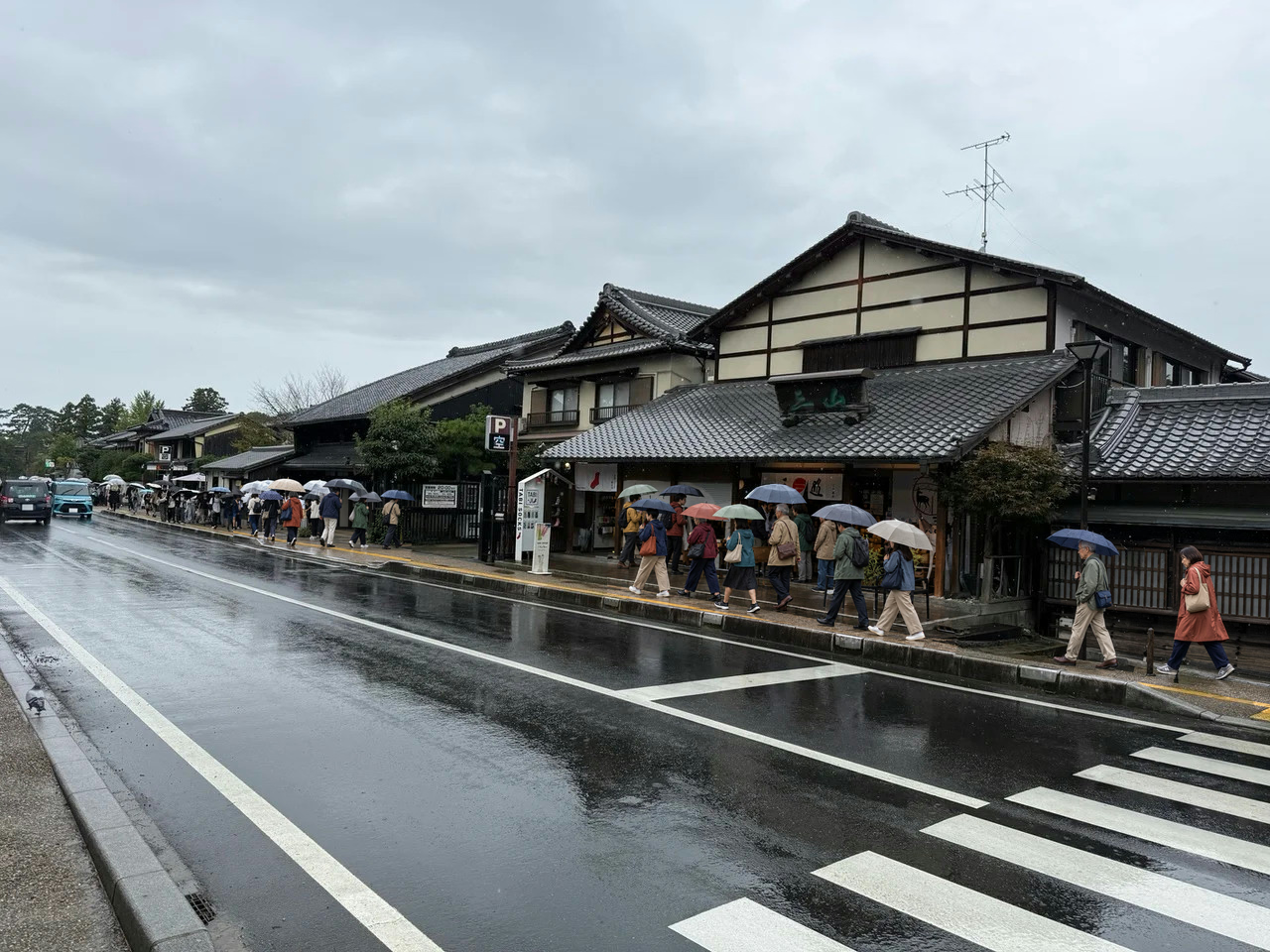
September can still feel summery and wet, with much cooler days by November. Our October visit came with heavy rain.
Climate: Average highs fall from 29°C to 17°C (84°F to 63°F), with lows falling from 20°C to 7°C (68°F to 45°F).
Seasonal highlight: Autumn color spreads through Nara’s gardens and the wooded paths around Kasuga Taisha.
Outdoors and clothing: Bring a waterproof jacket and shoes with grip. By November, a warmer layer is useful for mornings and evenings.
Umbrellas and wet shopfronts during a rainy Nara visit.
WINTER
Winter (December–February)
Winter is generally drier, with frosty mornings and occasional rain or snow. Outside major holidays and events, the temple grounds can be quieter.
Climate: Average highs are around 9–12°C (48–53°F), with lows around 1–3°C (33–37°F).
Seasonal highlight: Wakakusa Yamayaki lights up the hillside in January.
Outdoors and clothing: Bring a warm coat and layers for temple visits. Garden maintenance and Mount Wakakusa’s seasonal gates limit some winter walks.
Add paragraph text. Click “Edit Text” to update the font, size and more. To change and reuse text themes, go to Site Styles.