

Japan · Kansai
Kobe
Green hills, historic neighborhoods and life by the port
Quick Facts
The Essentials
LOCATION
Hyogo Prefecture, Kansai, Japan
POPULATION
About 1.49 million (city)
CURRENCY
Japanese yen (JPY)
Plan Your Time
RECOMMENDED STAY
A full day; one or two nights for a slower visit
GETTING AROUND
JR trains, subway and buses; walk the central neighborhoods
BEST TIME
Spring and autumn for gardens and city walks
The Highlights
KNOWN FOR
Kobe beef, harbor views and historic Western-style houses
DON'T MISS
Nunobiki Herb Gardens and Ropeway, followed by the waterfront
INTRODUCTION
Why Visit
Kobe is a rewarding city to explore from the hills down to the water. The green slopes behind the center give you a clear view of its setting, while the walk toward the harbor brings together Western-style houses, a city-center shrine, covered shopping streets and Chinatown. By the time you reach the waterfront, you have seen several sides of the city without spending the day crossing a huge urban area.
We visited from Osaka, keeping the same hotel and taking a morning train to Sannomiya. What stayed with me was the relationship between the hills and the bay: looking out over the city from the herb gardens, then looking back at those same lush slopes from a boat. In between, I enjoyed the produce stalls, shoe shops and small public sculptures as much as some of the more obvious sights.
For a first visit, I would give Kobe a full day and make Nunobiki Herb Gardens the main outing, with time to walk through Kitano and the center before finishing at the harbor. That worked well for us, although I would happily return for a night or two. Kobe particularly suits travelers who enjoy gardens and views alongside neighborhood walks, food stops and a little history.
Browse my Kobe guide for ideas and practical tips, or visit Plan & Book to find accommodations, transportation and activities for your trip.

Kobe’s dense cityscape and port spread below a green hillside under a clear blue sky.
EXPLORE MORE
Plan Your Visit




Practical Information
Getting There
In this section you can find a range of information about how to travel to and from Kobe. You can research and book flights, trains and buses, and ferries on Omio to find options that suit your specific trip. Please note that I may earn a commission through this link.
From Osaka, we took a morning JR train and reached Sannomiya in roughly 25 minutes. We stayed at the RIHGA in Osaka because we did not want to change hotels too often, and the short rail journey made Kobe an easy addition. I may earn a commission if you book through these hotel links.
By train: A JR Kobe Line Special Rapid connects Osaka Station with Sannomiya in about 20–25 minutes. Long-distance Shinkansen trains use Shin-Kobe, uphill from the center and close to the Nunobiki Ropeway. These are different stations, not interchangeable names for the same place.
By air and onward travel: Kobe Airport is connected to Sannomiya by the Port Liner. Kansai International Airport and Osaka Itami Airport also serve the region; compare the airport buses and rail connections for your arrival. The English Kobe access guide brings the options together.

Getting Around
We started uphill and then walked toward the harbor. This kept the route straightforward and meant we could return to Osaka from JR Kobe Station, rather than retracing our steps to Sannomiya. The stations felt easier to navigate than the enormous complexes in Osaka and Tokyo, although the day still involved plenty of walking.
To the ropeway: From Sannomiya, take the subway one stop to Shin-Kobe, about two minutes aboard, then walk roughly five minutes to the lower ropeway station. Allow extra time to get from the JR platforms to the subway. We used City Bus 2 to Nunobiki, followed by a short walk and an elevator ride; the subway is a simple alternative for this route.
Through the city: Walk from Nunobiki through Kitano, Ikuta Shrine, Motomachi and Nankinmachi toward the harbor. City buses and the subway can shorten the walk. The English local transport guide links to the network and sightseeing-bus information.
From the waterfront: JR Kobe Station is convenient after Harborland. It is a separate station from Shin-Kobe and Sannomiya, and it was the natural end to our day. There is no need to return to the station where you arrived if another connection suits your route.
IC cards: Suica, PASMO and ICOCA work on Kobe City buses and the subway, and at participating convenience stores. The city transport ticket guide explains the payment options.
Where I would stay
I have not stayed overnight in Kobe yet. A night or two in Kobe would give me more time for the gardens, neighborhoods and waterfront, instead of leaving in the afternoon.
Sannomiya: My practical first choice for rail connections, restaurants and easy access to different parts of the city. It also makes a convenient base for wider Kansai outings.
Motomachi: Close to the shopping arcades and Nankinmachi, with the waterfront within walking distance. I would consider it for a stay centered on food and exploring on foot.
Meriken Park and Harborland: Worth considering for harbor views and an evening waterfront walk. Check the walk to your chosen station, particularly if you arrive with luggage.
Seasonal Weather in Kobe
Our October day was clear and comfortable, which made both the gardens and the cruise especially enjoyable. The hills and open waterfront can feel cooler than the shopping streets below. The temperature ranges describe the changing monthly averages within each season, rather than the extremes you might encounter.
THROUGH THE YEAR
When to Visit
Explore the guides below for practical tips, things to see and do, local food, events and ideas for trips beyond your destination.
SPRING
Add paragraph text. Click “Edit Text” to update the font, size and more. To change and reuse text themes, go to Site Styles.
Add paragraph text. Click “Edit Text” to update the font, size and more. To change and reuse text themes, go to Site Styles.
SUMMER
Add paragraph text. Click “Edit Text” to update the font, size and more. To change and reuse text themes, go to Site Styles.
Add paragraph text. Click “Edit Text” to update the font, size and more. To change and reuse text themes, go to Site Styles.

FALL
Add paragraph text. Click “Edit Text” to update the font, size and more. To change and reuse text themes, go to Site Styles.
Add paragraph text. Click “Edit Text” to update the font, size and more. To change and reuse text themes, go to Site Styles.
Add paragraph text. Click “Edit Text” to update the font, size and more. To change and reuse text themes, go to Site Styles.
WINTER
Add paragraph text. Click “Edit Text” to update the font, size and more. To change and reuse text themes, go to Site Styles.
Add paragraph text. Click “Edit Text” to update the font, size and more. To change and reuse text themes, go to Site Styles.
Neighborhoods & Parks
Kitano
(Historic district · Weathercock House area, 3-13-3 Kitanocho · Sannomiya or Shin-Kobe, about 15 min on foot) (map)
Kitano gives the walk down from the gardens a historical connection to the harbor. After Kobe's port opened in 1868, foreign residents built Western-style houses on these slopes. Bay windows and verandas appear on several of the surviving homes, while the red-brick Weathercock House was built for a German merchant. These details help explain why this part of the city looks different from the shopping streets farther downhill.

We stayed outside, following the sloping streets past house exteriors and garden walls toward the center. That was enough to enjoy the neighborhood as part of our day. Small public sculptures, often figures of people, had also caught my attention on the way up to the ropeway. They made the walks between the larger sights interesting in their own right.
Sannomiya and Motomachi
(Shopping districts · Motomachi Shopping Street · JR/Hanshin Motomachi) (map)
The shopping streets connect the shrine and hillside neighborhoods with the lower city. Covered arcades, busy intersections and narrower lanes make this a good area to wander, with Motomachi and Chinatown close enough to explore together.
What I liked was how much everyday shopping remained alongside the visitor attractions. We passed produce stalls, shoe shops and other useful neighborhood businesses, stopping to look rather than heading straight for the harbor. A shop window or side street could easily change our pace, and that was part of the pleasure of this section of Kobe.

Nankinmachi
(Chinatown · 1-3-18 Sakaemachidori · Motomachi, about 5 min on foot) (map)
Nankinmachi, Kobe's Chinatown, runs beside part of the Motomachi shopping area. We dipped in and out, passing lanterns, food stalls and the ornate pavilion in its central plaza before returning to the arcade. The two areas make a natural combined walk, with quite different street scenes only a short distance apart.

The compact lanes can feel much busier than the surrounding shopping streets, especially around food counters and festival performances. We enjoyed browsing as part of the route rather than treating Chinatown as a separate expedition.
Meriken Park and Harborland
(Waterfront parks and shopping · Hatobacho and Higashikawasakicho · Motomachi or JR Kobe) (map)
The waterfront opens out after the close-packed streets. Meriken Park surrounds Port Tower and the Maritime Museum; Harborland, across the water, has shops, restaurants and the Ferris wheel. Together they give Kobe a spacious finish after the narrower lanes of Kitano and Motomachi.
There is also important recent history beside these views. The Port of Kobe Earthquake Memorial Park preserves a section of quay damaged in the Great Hanshin-Awaji Earthquake of January 17, 1995. It is an additional stop to consider for a concrete sense of the destruction behind the city's subsequent recovery.
After our cruise, we continued through the Harborland area to JR Kobe Station. It was a convenient end to the route and avoided retracing our steps to Sannomiya. On a return visit, I would like to see more of the waterfront after dark.
Festivals & Events
An event can change both the atmosphere and the practicalities of a Kobe visit, particularly around the central streets and waterfront. We did not attend these on our day trip. If one interests you, plan around its announced program and allow more time for crowds and local travel.
Kobe Festival
Kobe Festival usually takes place in May, bringing parades, samba teams and stage performances to the city center. It is a chance to see the streets used quite differently from an ordinary sightseeing day. Check the festival program before combining it with a walk through Sannomiya, as routes and venues can change.
Nankinmachi Spring Festival
The Nankinmachi Spring Festival celebrates Lunar New Year with Chinese cultural performances, including lion and dragon dances. Its setting is the same small Chinatown explored in the neighborhood walk, so expect a much busier experience and possible one-way pedestrian routes.
The lunar calendar and selected performance days change each year. Consult the organizer's festival page for the announced schedule rather than assuming a fixed week in January or February.
Kobe Luminarie
Kobe Luminarie began in December 1995 to remember the earthquake's victims and express hope for recovery. That origin gives the illuminations a significance beyond their appearance. Recent editions have taken place in the winter period around late January and early February, rather than the original December season.
Dates and locations are set for each edition, so check the current Luminarie program before booking a winter visit. I would treat it as a reason to plan a separate evening in Kobe rather than add it casually to a day trip.
PLAN YOUR TIME
Suggested Itineraries
This follows our day from the hills to the harbor, arriving at Sannomiya and leaving from JR Kobe Station. Allow for roughly 6 km (4 miles) of walking, including the downhill garden walk, plus any extra exploring. The gardens deserve a generous part of the morning. The second day is a suggested return-visit extension, not a day we followed ourselves.
ONE DAY
Day 1: From the Hills to the Harbor
Morning
Arrive at Sannomiya and take the subway one stop to Shin-Kobe, then walk to the Nunobiki Ropeway. We used City Bus 2 to Nunobiki instead. Ride to the top and spend the main part of the morning among the gardens, rose beds and viewing areas.
Walk downhill through the Glasshouse and The Veranda area to Kaze no Oka Mid Station, then ride down the rest of the way. The direct garden walk is about 1 km, but allow much longer for the planting and views. A return ride from the top is an option for less walking.
Continue through Kitano toward Ikuta Shrine, roughly 1.7 km before browsing stops. We enjoyed the historic house exteriors and small street details along the way.
Afternoon
Walk through the Sannomiya and Motomachi shopping streets, dipping into Nankinmachi. We stopped at Kanou for beef bowls, then continued toward Tower Road for our homemade-gelato discovery.
Head to Kobe Port Tower and Nakatottei Central Terminal. Our Gozabune-Atakemaru bay cruise lasted 45 minutes. Check departures before settling into the shopping walk, and remember that we saw the tower from outside rather than going up it.
Evening
After the cruise, continue through Harborland to JR Kobe Station, about 850 m from the terminal by our route. We actually returned to Osaka in the later afternoon and spent the evening there.
If you are staying in Kobe, finish with a waterfront walk and dinner around the harbor. This is an optional extension to our day-trip route, with time to see the lights come on over the water.

Red Kobe Port Tower beside waterfront buildings, with wooded hills behind it.
TWO DAYS
Day 2: City History and the Suma Coast
Follow Day 1 on your first day. For a second day, I would add one museum, a different stretch of waterfront and an afternoon on the Suma coast. This is a suggested extension for a return visit.
Morning
Start at Kobe City Museum for the city's history and its connections with the wider world. Then walk to TOTTEI Park to see the GLION ARENA KOBE architecture and the harbor from the pier. This means the public waterfront, not an arena-interior visit.
If shipping and port history interest you more, choose Kobe Maritime Museum instead of City Museum. Start with TOTTEI, then continue west toward Meriken Park for the museum. Keep the morning to one museum so there is time for the coast.
Have lunch around JR Kobe Station before heading west. Save another central-city viewpoint for the evening rather than adding it to this morning.
Afternoon
For a relaxed coastal walk: Take a JR train to Suma Station and spend the afternoon along Suma Beach. This is the easier option if you would rather stay by the water than make another hillside outing.
For hilltop views and a retro amusement park: Take a Sanyo Railway service that stops at Sumaura-koen Station for Sumaura Sanjo Yuen. Allow two to three hours. The ascent combines a ropeway, the bumpy Carlator conveyor ride and a chairlift. Small rides, a pedal monorail and a rotating café give the park an old-fashioned character. In clear weather, look toward Awaji Island and the Akashi Kaikyo Bridge.
Choose one Suma outing rather than rushing both. Check museum opening days and the hilltop park's operating information before setting out; weather can affect the rides. Sumaura involves stairs and a chairlift, so check access carefully if mobility is a concern.
Evening
Return to central Kobe for dinner. If you still have time and energy, finish with Port Tower or the Harborland Ferris wheel, or simply enjoy the waterfront lights. Neither viewpoint needs to be a fixed stop in an already full day.

The curved white facade of Kobe Meriken Park Oriental Hotel above blue harbor water.
Nearby Cities & Journeys
Kobe is easy to include in a wider Kansai itinerary. Osaka was our base for this day trip; we visited Nara from Kyoto during a separate four-night stay there. The suggestions below draw on those visits, with rail connections for travelers using Kobe as their base.
Kyoto
Give Kyoto at least a full day and focus on one area. The early walk we took toward Yasaka Shrine, Maruyama Park and Chion-in is a good starting point for the eastern side of the city. Arashiyama offers another day, combining river paths and hillside viewpoints with the bamboo forest. I particularly enjoyed the quieter riverside and park paths before reaching the busier bamboo area.
JR trains connect Sannomiya with Kyoto via Osaka; allow time to reach your chosen neighborhood after arrival. We spent four nights in Kyoto, and its scattered sights still left me with reasons to return. I would make it a separate stay if your wider trip allows.

Osaka
The short rail journey works in either direction, so Osaka is an easy separate outing from Kobe. For a day there, I would choose a couple of areas rather than cover the whole city: the everyday shops along Tenjinbashisuji, the castle grounds or the restaurant lanes around Fukushima. Those walks were among the parts of Osaka I most enjoyed, especially after the crowds in Dotonbori.
My Osaka neighborhood and food suggestions offer several ways to shape the day. Choose your rail connection around the area you want to reach, and consider staying for dinner before returning to Kobe.

Nara
Nara deserves its own day for the gardens and historic temple grounds as well as the famous deer. We arrived by local train from Kyoto and walked along Sanjo-dori, stopping at a bakery and a knife shop on the way toward the park. Heavy rain cut short parts of the visit, but the scale of the temple grounds made me want to return in better weather.
For ideas beyond the deer, see the walks and temple grounds in my Nara guide. From Kobe, compare a direct Rapid Express from Kobe-Sannomiya to Kintetsu-Nara with the JR route via Osaka. I would avoid combining Nara and Kyoto in a single outing: both reward more time than that leaves.
Closer to Kobe
For another visit, Arima Onsen and the Nada sake district are further possibilities around Kobe. We did not visit either on this trip. They would add something different to the central hills-to-harbor route, rather than another stop to squeeze into the same day.
My Tips for Your Visit
Keep some flexibility for a clear-weather day if you are visiting from Osaka. For me, the herb gardens and the view back from the water were the two highlights, and both benefited from good visibility. Check that the ropeway and boats are operating before setting out.
Give the walk through the center time of its own. The produce stalls, small sculptures and unusual gelato flavors are part of what I remember about Kobe. Those moments gave the route its character just as much as the bigger sights.
A day from Osaka was enough to enjoy the city and want to come back. Next time, I would stay a night or two and explore at a slower pace, with a second day for the museums or Suma coast.

Attractions & Museums
Food Culture
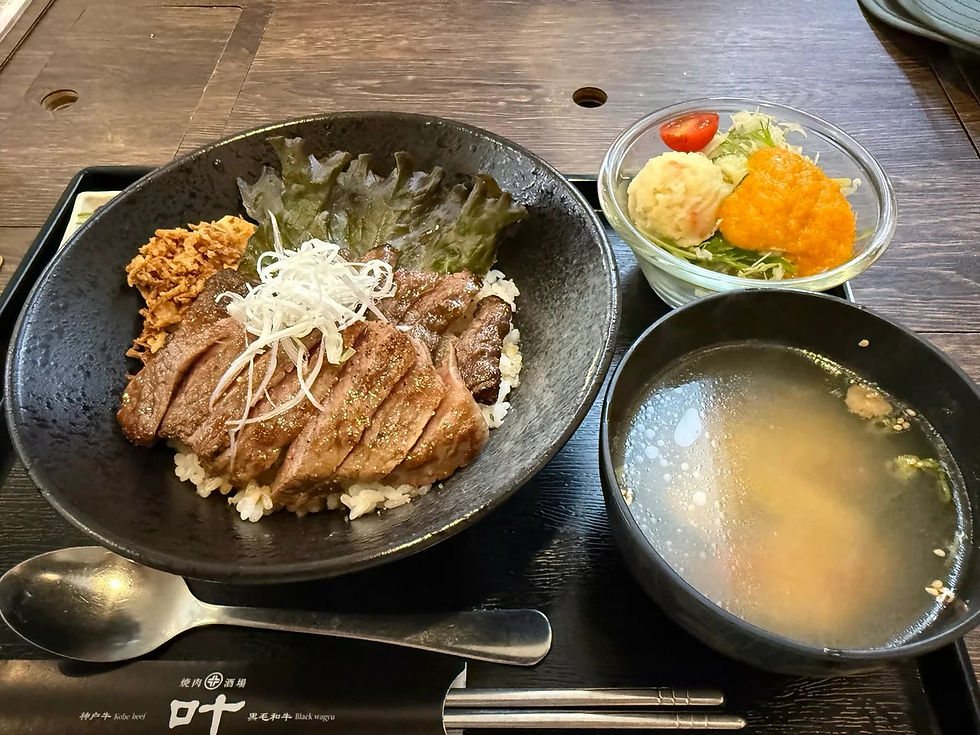
During our day trip to Kobe, we strolled along the covered shopping street in Motomachi and stopped at Yakiniku Sakaba Kanou for lunch. There we ordered inexpensive rice bowls listed as Kobe beef, served with soup and salad. It was a simple, satisfying lunch between the shopping streets and harbor, without making dining the main event. A longer steak or teppanyaki meal would have been a suitable option, had we spent the night in Kobe.
After lunch we turned down Tower Road and found a small coffee shop making its own gelato. I chose corn and a citrusy cheese flavor, exactly the kind of unexpected discovery I enjoy on a city walk. Beyond beef, Kobe’s port and Chinese community shape the food, and the Nada sake breweries offer another outing for a longer stay. We did not visit those breweries on this trip.
For authentic Kobe beef, check the restaurant’s exact branch in the official registered-restaurant directory and look for its registration certificate and bronze cattle statue. Confirm that the dish you order is specifically Kobe beef, as registered restaurants may also serve other beef. “Wagyu” or “A5” alone does not establish Kobe certification; you can ask to see the beef’s certificate of authenticity.
Yakiniku Sakaba Kanou
(Casual yakiniku restaurant · Okuura Building 1F, 2-5-6 Motomachidori · Motomachi west exit, about 3 min on foot) (map)
Nunobiki Herb Gardens and Ropeway
(Gardens and ropeway · 1-4-3 Kitanocho · Shin-Kobe, about 5 min on foot) (map)
Start here to understand Kobe's setting. The red gondolas rise above thick green hillsides, with the city and bay spreading out below, and the gardens give you a reason to stay after taking in the view. This was the highlight of the day for me, so I would allow a generous part of the morning rather than treating it as a quick lookout stop.
At the top, we explored the rose garden and viewing areas. We then took different routes down: one of us rode back from the top station, while I walked through the gardens to the middle station and took the ropeway for the remaining descent. That let us enjoy the same outing with different amounts of walking.
The downhill route passed formal planting beds, flower borders and the Glasshouse, with views appearing between the trees. Around The Veranda at Kobe, terraces overlooked the hillside beside reflecting water, and a large suspended hammock-net area offered another place to linger. The lush planting, almost tropical in places, was as memorable to me as the panorama.

The ropeway took us straight to the gardens, leaving more time to explore at the top. I also noticed a trail behind the top station that interested me for another visit, but it was not part of our route. Even the downhill garden walk has steep stretches, so do not assume the elevator approach makes the whole visit step-free. Check the date-specific operating schedule: evening opening does not always include the full garden walk.
Ikuta Shrine
(Shinto shrine · 1-2-1 Shimoyamatedori · Sannomiya, about 5–10 min on foot) (map)
Ikuta Shrine is a welcome pause between the hillside neighborhoods and the shopping streets. Its vermilion gate, open courtyard and row of torii sit among the buildings of central Kobe, so the setting remains very much part of the city. We reached it after walking down from Kitano, before continuing toward Motomachi.
The grounds also include the small wooded Ikuta Forest, associated with fighting during the 12th-century Genpei War. The shrine is dedicated to Wakahirume-no-Mikoto and is known for prayers for love and marriage. I liked this change of atmosphere within a day that otherwise moved between gardens, shopping streets and the port.

A Kobe Bay Cruise
(Sightseeing cruise · Nakatottei Central Terminal, 7-1 Hatobacho · Minato-Motomachi, about 7 min on foot) (map)
A cruise makes a good finish because it brings the day's geography together. From the water, the tower, waterfront buildings and green hills become one view; farther out, cranes, piers and airport infrastructure show how much of Kobe's waterfront is still a working port.
We boarded the red-and-gold Gozabune-Atakemaru at Nakatottei Central Terminal after lunch and gelato. Our 45-minute sailing gave us views of Kobe Port Tower, Harborland's Ferris wheel, the waterfront parks, a breakwater lighthouse and Kobe Airport. The Akashi Kaikyo Bridge was visible in the distance, rather than a close-up destination of the cruise. Looking back toward those almost tropical-looking slopes was a lovely counterpart to the morning's view from the gardens.
Use the cruise operator's English guide to check the vessel, sailing times and current route. This departure point is near Port Tower; do not confuse it with the separate dinner-cruise terminal across the water at Harborland.
Kobe Port Tower
(Observation tower · 5-5 Hatobacho · Minato-Motomachi, about 5 min on foot) (map)
The red latticework of Kobe Port Tower is one of the harbor's most recognizable sights. We saw it from the waterfront and our cruise, with the city's green hills rising behind it. Its slender shape stands out especially well against the larger waterfront buildings.
We did not go up the tower. An ascent would be an optional addition for another visit, rather than part of the day described here. If it interests you, allow time for it before your boat departure or return in the evening; the tower's English website has current admission and rooftop information.
Traditional Food
Kobe’s best-known food is its carefully certified beef, but the city also has everyday snacks and meals that need neither a large budget nor a long reservation. The selection below includes those less formal traditions alongside sake from Nada. Some specialties belong to the surrounding region, so they are useful discoveries rather than claims of city-only origins.

Certified Kobe beef is more specific than the term wagyu.
Kobe beef
Kobe beef is a certified designation for qualifying Tajima beef from Hyogo, not a synonym for all wagyu or A5 beef. It is often served as steak or teppanyaki. Confirm the particular dish is Kobe beef, as registered restaurants may also offer other beef.

Steamed pork buns are a familiar Nankinmachi snack.
Butaman
Butaman are steamed pork buns associated with Kobe’s Nankinmachi neighborhood. A soft outer dough encloses the savory pork filling, making them a compact street snack. They reflect the Chinese influences that are part of this port city’s food culture.

Fried rice and noodles share the same plate.
Sobameshi
Sobameshi combines fried rice and noodles in the same dish and is associated with Nagata in western Kobe. The two starches provide contrasting textures within a filling, informal meal. It represents everyday local cooking rather than the elaborate steak meals often associated with the city.

Nada’s breweries are part of Kobe’s food and drink culture.
Nada sake
Nada, east of central Kobe, is an important sake-producing area with a concentration of breweries. Sake is made from rice, but different breweries and styles produce a range of flavors. We did not visit the breweries on this trip.

A miso-based dipping sauce gives gyoza a Kobe connection.
Miso-dare gyoza
Miso-dare gyoza are pan-fried dumplings eaten with a miso-based dipping sauce, a characteristic Kobe preparation. The sauce distinguishes them from dumplings served only with soy sauce and vinegar. Fillings and the precise sauce recipe vary between kitchens.

Soft octopus dumplings come from neighboring Akashi.
Akashiyaki
Akashiyaki are soft, egg-rich octopus dumplings dipped in dashi rather than coated in a thick sauce. They originate in neighboring Akashi in Hyogo, not Kobe itself. Their delicate batter and broth distinguish them from the more familiar takoyaki.
THROUGH THE YEAR
When to Visit
Explore the guides below for practical tips, things to see and do, local food, events and ideas for trips beyond your destination.
SPRING
Spring (March–May)
March starts cool, while May can feel pleasantly warm. Blossoms and fresh green growth make this an appealing time for the hillside gardens.
Average lows and highs: Lows of 6–17°C (43–63°F) and highs of 14–24°C (57–75°F).
Seasonal highlight: Spring flowers in Nunobiki Herb Gardens, with cherry blossoms around the city earlier in the season.
Outdoors and clothing: A light jacket and layers suit the change between sunny streets and the ropeway heights. Comfortable shoes with grip help on the sloping garden paths.
Add paragraph text. Click “Edit Text” to update the font, size and more. To change and reuse text themes, go to Site Styles.
SUMMER
Summer (June–August)
Summer is hot and humid, with the early-summer rainy period followed by the hottest weather in July and August. A long downhill walk still takes effort in these conditions.
Average lows and highs: Lows of 21–26°C (70–79°F) and highs of 27–32°C (81–90°F).
Seasonal highlight: Green hillsides and the Suma coast offer a different summer outing beyond the city-center route.
Outdoors and clothing: Breathable clothing, sun protection and shoes that cope with showers are useful. Keep the most exposed walking to the cooler parts of the day and check ropeway or boat operations when storms are forecast.
Add paragraph text. Click “Edit Text” to update the font, size and more. To change and reuse text themes, go to Site Styles.
FALL
Fall (September–November)
September can still feel summery; October and November bring a more comfortable walking season. Autumn color comes later than the first drop in temperature.
Average lows and highs: Lows of 11–23°C (52–73°F) and highs of 18–29°C (64–84°F).
Seasonal highlight: Autumn foliage in the Rokko foothills and around Nunobiki, usually later in the season.
Outdoors and clothing: Light layers work well for a day moving between hilltop gardens and the bay. Bring a warmer layer for a late cruise or waterfront evening, and check conditions during autumn storm spells.
WINTER
Winter (December–February)
Winter is relatively mild by Japanese standards, but the harbor wind and hilltop setting can make sightseeing feel colder than the central-city temperature suggests.
Average lows and highs: Lows of 3–6°C (37–43°F) and highs of 9–12°C (48–54°F).
Seasonal highlight: Kobe Luminarie brings memorial illuminations during its announced winter run; dates and locations vary by edition.
Outdoors and clothing: A warm coat and wind-resistant outer layer are useful on the waterfront. Check the ropeway's seasonal maintenance and operating notices before making the gardens your main plan.
Add paragraph text. Click “Edit Text” to update the font, size and more. To change and reuse text themes, go to Site Styles.
Small things that help
Carry some yen for smaller purchases. Cards were useful throughout our Japan trip, although some independent businesses still needed cash. I also found it helpful to prepare a question in Google Translate before approaching someone, particularly for directions or menus. Keep any rubbish with you when there is no bin.