

Yokohama
Waterfront walks, Chinatown evenings and a relaxed base for Tokyo
LOCATION
Kanagawa Prefecture, Kanto, Japan
POPULATION
About 3.75 million in the city
CURRENCY
Japanese yen (JPY)
RECOMMENDED STAY
Two sightseeing days, with longer stays for Tokyo or Kamakura outings
GETTING AROUND
Rail between districts, walking along the central waterfront, and buses for Sankeien
BEST TIME
Spring and autumn for walking, with an indoor alternative for wet days
KNOWN FOR
Its international port, Minato Mirai skyline and Chinatown
DON'T MISS
A waterfront walk and an evening in Chinatown
INTRODUCTION
Why Visit
Yokohama gave us a waterfront city to come home to after busy days in Tokyo. Often described as Japan’s second-largest city by population after Tokyo, it is part of the wider Tokyo metropolitan area but remains a separate city in Kanagawa Prefecture. Expect a busy, substantial place, with much more to it than the waterfront most visitors see first.
We spent four nights here on our first visit, after a cruise from Vancouver to Japan. Our base was the InterContinental Yokohama Grand, the tall, sail-shaped hotel in Minato Mirai, rather than the separate Pier 8 hotel. It was a great location for walking, and our room had views north toward Tokyo. Rain changed several of our plans, but I liked the broad promenades, the skyline and the ease of finding something to do indoors. I would happily use it as a Tokyo base again.
The port opened to foreign trade in 1859, transforming a small settlement into an international trading city. That history still helps explain the places you see today: the old warehouses by the water, Chinatown’s restaurants and shops, and the Western-style buildings in the hills above the harbor. Minato Mirai, where redevelopment of the former industrial waterfront began in 1983, adds shopping complexes, museums and modern towers to this older port landscape.
We walked from our hotel toward the Red Brick Warehouse, explored the enormous shopping complexes, spent an evening eating in Chinatown and swapped a wet outdoor day for the Yokohama Museum of Art. I also made time for the giant Ferris wheel and two roller coasters at Cosmo World. Those changes of pace made Yokohama enjoyable even when the weather was uncooperative.
Yokohama offers far more than you can pack into one day. A full day gives you a good introduction to the waterfront and Chinatown. Two days leave room for museums, Sankeien Garden and a slower walk. Our four-night stay also included trips into Tokyo, so I would not treat it as four days needed for Yokohama itself. The garden and coastal outing we missed are good reasons for me to return.

A promenade curves beside the harbor toward the sail-shaped InterContinental Yokohama Grand.
EXPLORE MORE
Plan Your Visit


Practical Information
Where to stay
Minato Mirai worked well for us: waterfront walks, shopping, food and the art museum were close together, and rail links made Tokyo practical. The InterContinental Yokohama Grand gave us a distinctive place to return to after a day out. For a first sightseeing visit, I would compare this area with the hotels around Yamashita Park and the historic waterfront. Staying near Yokohama Station prioritizes transport and dining, with a train ride to much of the harbor sightseeing.
Arriving or leaving by cruise ship
Yokohama has several cruise terminals, so check the one named on your booking. Osanbashi and Shinko Pier are beside the central sightseeing waterfront; a nearby hotel can make a pre-cruise or post-cruise stay both convenient and enjoyable. Shinko Pier is at Yokohama Hammerhead. Daikoku Pier is farther away and needs a planned transfer, so a hotel that looks close to the harbor is not necessarily close to your ship.
Confirm the exact arrival or departure pier with your cruise line, especially if the itinerary changes. We were supposed to dock in Yokohama but ended up at Tokyo International Cruise Terminal instead. With all our luggage, we preferred a taxi to dealing with public transport and paid around US$85 to reach our Yokohama hotel. That was the fare for our journey, not a current transfer estimate. Allow for luggage, terminal access and your cruise line’s boarding instructions rather than assuming you can walk.
Getting here and choosing a station
Yokohama Station is a major interchange, but it is not the same place as Minatomirai Station. For the waterfront, compare Minatomirai, Sakuragicho, Bashamichi or Nihon-odori with your actual hotel or first stop. Motomachi-Chukagai is useful for Chinatown, Motomachi and the approach to Yamate. A slightly longer train journey can save a transfer or a long walk at the other end.
From Tokyo, JR services connect Tokyo and Shinagawa with Yokohama. The Tokyu Toyoko Line from Shibuya runs through to the Minatomirai Line. Check the destination and stopping pattern rather than assuming every service is direct. A through train to Minatomirai saved us a change at Yokohama one evening. For airports, compare current rail and airport-bus routes with your hotel; Haneda is closer than Narita.
A few lessons from our stay
Save a restaurant’s building, floor and entrance, not just its address. We underestimated the station complex while searching for dinner and eventually settled for sandwiches near a concert hall.
Allow some flexibility when traveling into Tokyo. Our trains were delayed and crowded one morning; waiting for a later train made the journey more comfortable.
Carry some yen as well as a card. At Cosmo World I paid cash for ride tickets. Check the payment arrangements for the places you plan to visit.
Read what you are signing. A coffee stop at the hotel became a charged buffet after a misunderstanding. Ask the price and what is included before accepting the service.
Match outdoor plans to the forecast, and check museum calendars. A rainy day is only a useful museum day if the museum is open.
Attractions and Museums
The harbor and Red Brick Warehouse
A waterfront walk is the best introduction. We set out from the hotel toward the Red Brick Warehouse, with cruise ships, open water and the skyline along the way. The two former customs warehouses were completed in 1911 and 1913. Today they combine shops, restaurants and cultural events, with broad outdoor spaces around them.
Give this area some unplanned time. We came across Oktoberfest near the warehouses and explored several floors of nearby World Porters, stopping for dim sum and a cream-filled doughnut. The waterfront is extensive, with plenty of reasons to pause rather than simply walk from one attraction to the next.
Cosmo World and Cosmo Clock 21
Cosmo World sits right in the waterfront landscape. Its giant Ferris wheel, Cosmo Clock 21, rises 112.5 metres and gives you views across the harbor and city skyline during a roughly 15-minute circuit. I rode it, the Vanish roller coaster and a spinning coaster, which made a fun detour from walking and shopping.
Entry to the park is free and attractions are paid individually, so you can choose a ride or two without committing to a full theme-park day. There are arcades as well. Check the operating calendar and individual ride availability, particularly in poor weather.
Yokohama Air Cabin
This cable car links Sakuragicho with Unga Park, beside World Porters, and offers a scenic way into the waterfront district. It is a paid alternative to the walk, rather than something you need to use to get around. We saw it but did not ride it. Check operations on windy or stormy days.
Yokohama Museum of Art
The art museum became our answer to a rainy day. A Marie Antoinette exhibition drew a long queue, and I found watching the people almost as entertaining as looking at the exhibition. We also saw work by Japanese women artists and international artists. Those were the displays during our visit; check the current exhibitions before deciding how much time to allow.
MARK IS Minatomirai is nearby, which made lunch afterward easy. The museum is normally closed on Thursdays, with other closures possible between exhibitions or around holidays.
Cupnoodles Museum Yokohama
This museum explores instant noodles and the ideas behind their invention, with hands-on activities as well as displays. It is an appealing option if you enjoy food history or are traveling with children. I photographed the exterior, but we did not go inside. Check activity bookings and ticket arrangements before turning up, especially if you want to make your own cup of noodles.
Mitsubishi Minatomirai Industrial Museum
The industrial museum offers a different kind of indoor visit, with engineering and technology exhibits covering land, sea, sky and space. It is a researched option rather than somewhere we visited. Its opening calendar is more limited than you might expect, including regular Tuesday and Wednesday closures and an early weekday closing time, so plan it toward the start of the day and check before going.
Japan Coast Guard Museum Yokohama
Beside Red Brick Park, this small museum displays a recovered North Korean spy vessel and material about the 2001 confrontation with Japan’s Coast Guard. It is a specific and unusual stop for visitors interested in maritime affairs and recent history. We knew about it but did not visit; it fits as an optional detour rather than an essential part of everyone’s waterfront day.
Landmark Tower and Marine Tower
Landmark Tower remains one of the skyline’s defining features, and we enjoyed exploring the surrounding shopping complexes. Its 69th-floor Sky Garden observation deck is currently closed for major renovations, with reopening planned for 2028 or later and the date still to be confirmed. Do not build a current itinerary around going up.
Yokohama Marine Tower, by Yamashita Park, is another of the city’s recognizable landmarks and an alternative for a high-level view when it is open and the weather is clear. We planned to visit but did not go up. Even without an ascent, it is a natural landmark at the far end of a waterfront walk.
Neighborhoods Parks and Outdoors
Getting your bearings
For a first visit, think of central Yokohama as a series of connected districts rather than one compact center. Yokohama Station sits to the northwest of the main sightseeing waterfront. Minato Mirai spreads around Sakuragicho and the modern harbor. Continue southeast toward the Red Brick Warehouse, Osanbashi and Yamashita Park, with Chinatown a little inland. Beyond that, Motomachi sits below the hillside district of Yamate. Sankeien is farther south and needs its own journey.
Minato Mirai
This was the area we explored most. Broad waterfront paths, green spaces and the skyline give it a more open feel than many big-city districts. Queen’s Square, Landmark Plaza, MARK IS and World Porters offer shops and restaurant floors, but their scale and architecture also made them interesting places to wander. Some buildings connect directly; reaching others still involves outdoor stretches.
The historic waterfront and Yamashita Park
The walk from the Red Brick Warehouse toward Osanbashi and Yamashita Park connects the working harbor with the older visitor waterfront. Yamashita Park gives you space to slow down beside the water before heading inland to Chinatown or continuing toward Marine Tower. Kannai and the streets around Nihon-odori add historic civic buildings and a different streetscape from Minato Mirai’s towers.
Chinatown
We went in the evening, when illuminated signs, gates and lanterns gave the streets plenty of color. The neighborhood grew alongside the international port after 1859, as Chinese traders and other migrants established businesses and a community here. It remains one of the most enjoyable contrasts with the open waterfront.
Walk a few streets before choosing where to eat. A food stall, an ornate restaurant facade and a lantern-lined lane each offer a different view. Use designated eating areas where provided and keep shop entrances clear rather than taking the busy street scene as permission to eat anywhere.
Yamate and Motomachi
These are worthwhile additions to the areas we visited. Yamate’s former foreign-settlement district has Western-style buildings, gardens and hillside streets that help explain another part of Yokohama’s international history. Motomachi, below the hill, makes a natural continuation for shops, cafes and a slower afternoon walk.
Harbor View Park adds gardens and an elevated view toward the harbor and Yokohama Bay Bridge. It overlaps with Marine Tower in showing the port, but the experience is different: a hillside park and neighborhood walk rather than a tower panorama. I would pair the park with Yamate, and make the tower ascent optional rather than pay for every available view. We did not explore this hillside route on our trip.
Sankeien Garden
Fellow cruise passengers from Yokohama recommended this traditional Japanese garden, with historic buildings brought from different parts of Japan. I am a sucker for gardens and parks, so it was high on my list, but the rain defeated our plans. Give it a proper morning or afternoon, including the bus journey, rather than adding it as a quick stop on the central waterfront walk.
Yokohama Station
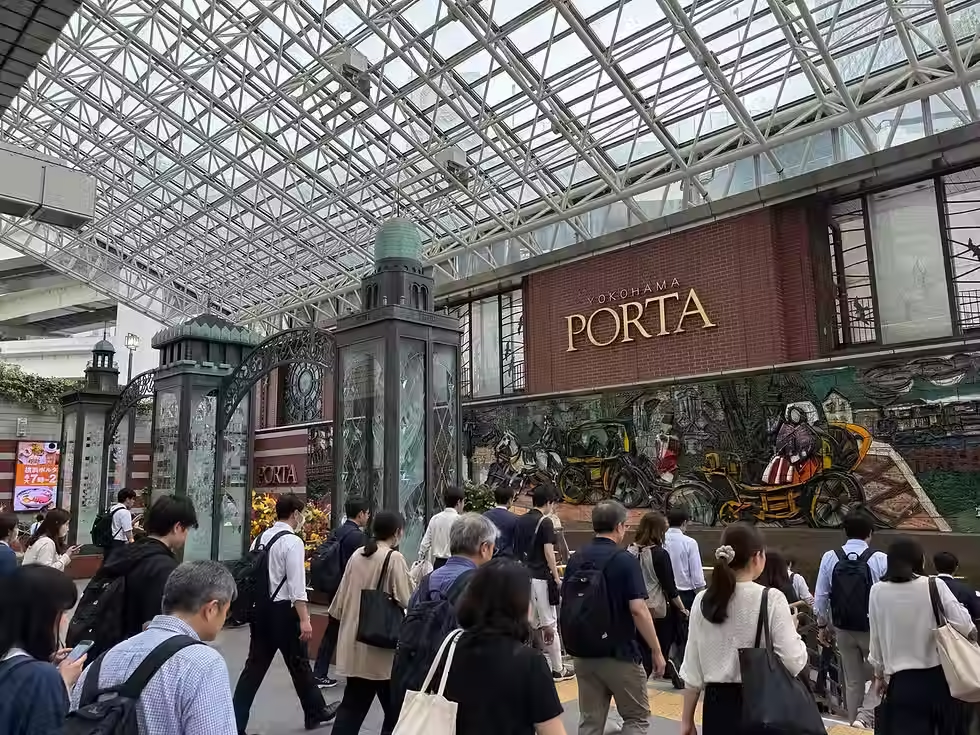
The station area deserves more than a hurried transfer. Its department stores, underground shopping areas, food halls and restaurant floors felt like a small city of their own. We enjoyed exploring, even after failing to find two restaurants recommended by locals. It is a useful evening option, but save a building and floor map before you go.
Food and Drink
An international port city at the table
Yokohama showed us a food scene that reaches well beyond Japanese dishes: Chinese, Indian, Korean, Italian, French and Mexican restaurants are all part of the choice. You can eat in Chinatown, waterfront malls, station complexes and small neighborhood places, or pick up something simple from a convenience store. I would use the neighborhood and the kind of meal you want to narrow the search rather than chase a long list of reservations.
Chinatown is the obvious place for Chinese dishes and snacks. Around Minato Mirai, restaurant floors make it easy to compare menus when the weather is poor. Yokohama Station offers an enormous choice, from department-store food halls to sit-down restaurants. A basement food hall is particularly useful when you want to browse before deciding what to eat.
Five local dishes to look for
Shumai: These small steamed dumplings are a Yokohama specialty, particularly associated with Kiyoken and its railway bento boxes.
Sanma-men: A local noodle soup topped with stir-fried vegetables and meat in a lightly thickened sauce; despite the name, it is not a fish dish.
Iekei ramen: Yokohama’s hearty ramen style combines pork-bone and soy-sauce broth with thick noodles, commonly served with spinach and nori.
Spaghetti Napolitan: This Japanese-style tomato-flavored pasta dish has a strong Yokohama connection through Hotel New Grand.
Gyunabe: Beef and vegetables cooked together in a pot recall the port city’s early encounters with Western eating habits after Japan opened to foreign trade.
What we enjoyed
In Chinatown we had a pork-filled pineapple bun, hot-and-sour soup and dim sum. We also ate dim sum in World Porters and had a good Indian lunch at MARK IS after the art museum, served by a team from Mumbai. Those experiences made it easy to vary our meals without traveling far.
The everyday discoveries were just as memorable. I tried the much-discussed 7-Eleven egg sandwich and understood the appeal of its creamy filling, but for me it was “soft on soft”: soft bread around a soft filling. I preferred the curry bread, with its crisp exterior and gravy-like curry inside. Convenience stores and bakery counters are useful options for breakfast or an uncomplicated meal, as well as places to try something unfamiliar.
Two station recommendations we did not find
Locals suggested Katsuretsuan for katsu and Tenichi for tempura. We got lost in the station’s many levels and did not eat at either, so these remain recommendations passed on to us rather than restaurants I can personally review. For anyone following them up, Katsuretsuan’s Sotetsu JOINUS branch is on B1 near the west exit, while Ginza Tenichi is in 8F Rose Dining at Yokohama Takashimaya. Check the store directories and current service times before setting out.
Festivals and Events
Oktoberfest at the Red Brick Warehouse
Oktoberfest was under way when we were there, with breweries from the Munich area and locals lining up to get in. It made me feel almost at home. Well, not quite Munich, but it was fun to see that enthusiasm in Yokohama. The old warehouses make an attractive setting, and the event adds another reason to spend time on the waterfront in autumn.
Port celebrations and dragon boats
The opening of the port remains part of the city’s identity, with celebrations around the anniversary in early June. The Yokohama Port Opening Festival brings events to the waterfront, while the Yokohama Dragon Boat Race brings teams and spectators to the water by Yamashita Park. These are good occasions to see the harbor as a place people gather, rather than simply a backdrop for sightseeing. Check each year’s dates and program; related celebrations do not all take place on the same day.
Chinatown celebrations
Lunar New Year brings performances and a festive atmosphere to Chinatown, with larger crowds than on an ordinary evening. The Mid-Autumn Festival is another celebration to look for in the neighborhood’s calendar. I would check the program before planning around a particular procession or performance. Reserve a sit-down meal if your visit coincides with a major celebration.
Jazz around the city
Yokohama’s jazz culture offers another reason to explore beyond the main attractions. The annual Yokohama Jazz Promenade brings performances to venues and streets around the city in autumn. It could make an enjoyable evening addition to a sightseeing trip, but check which performances need tickets rather than assuming the whole program is free.
Nearby Cities and Journeys
Tokyo
Tokyo is an enormous collection of neighborhoods, from temple streets and department-store food halls to skyscraper views and tiny restaurants tucked into back lanes. Rail made it practical for us to spend the day there and return to Yokohama’s waterfront in the evening. Group sights by neighborhood, choose a manageable part of the city and resist trying to see everything at once.
The trade-off is the extra travel at the beginning and end of the day. If your trip is almost entirely about Tokyo, staying there may be more convenient. For us, Yokohama’s change of pace made the journey worthwhile.
Kamakura
Kamakura offers temples, gardens, wooded hills and a coast, making it a different kind of day from either Yokohama or Tokyo. For a first visit, I would choose a small group of sights: the Great Buddha at Kotoku-in, Hasedera and the area around Tsurugaoka Hachimangu are a good starting point. The Enoden railway can be part of the outing, but avoid adding every coastal stop just because it looks close on a map.
Allow roughly an hour each way from the Yokohama waterfront, depending on your starting station and connections. Kamakura was recommended to us on the cruise, but rain kept us from going. The route below is how I would approach a return visit, rather than one we personally tested.
PLAN YOUR TIME
Suggested Itineraries
Use the first two days for a fuller introduction to Yokohama. Add Kamakura if you have another day, and use the rainy-day plan as a substitute when needed. These suggested routes draw on our experience and the places we still want to see.
ONE DAY
Day 1 Minato Mirai and the waterfront
Morning
Arrive at Sakuragicho and walk toward Minato Mirai, or take the Air Cabin to Unga Park for a scenic start. If you choose the cable car, make a short loop back toward the InterContinental Yokohama Grand before continuing along the water.
Enjoy the skyline, the giant Ferris wheel and the waterfront paths. Choose Cosmo Clock for a view if conditions are good; Landmark Tower’s Sky Garden is currently closed.
Afternoon
Choose one main stop: rides and arcades at Cosmo World, the Cupnoodles Museum with any activity bookings arranged, or the Japan Coast Guard Museum beside Red Brick Park. Of these three, we visited Cosmo World.
Continue to the Red Brick Warehouse for lunch, shops and the old port buildings. World Porters offers another large restaurant selection if it suits your route better.
Walk toward Yamashita Park and Marine Tower if time, energy and weather allow. The waterfront is extensive, so shorten the route rather than rush the stops you enjoy.
Evening
Head into Chinatown for illuminated streets, a few smaller discoveries and dinner. Leave room for a snack as you explore.
Return from Motomachi-Chukagai or the station that best serves your hotel.
TWO DAYS
Day 2 Gardens hillside streets and station dining
Morning
Take municipal bus 8 from Sakuragicho to Sankeien-iriguchi, then walk about five minutes to the garden. Leave a generous morning for the grounds and historic buildings, and check the current timetable and opening calendar before leaving.
This is the garden visit we hoped to make after the recommendation from fellow cruise passengers. We were rained out, so I would save it for one of the clearer days.
Afternoon
Take bus 8 back toward Yokohama, getting off at Yamashitacho for the approach to Yamate. Explore a few Western-style buildings and gardens, such as Berrick Hall and Ehrismann Residence, rather than trying to enter every house.
Continue to Harbor View Park for the harbor and Bay Bridge outlook, then come down to Motomachi for a cafe stop and shopping. Expect slopes and walking; shorten the route if the garden has already filled most of your day.
Evening
Take the Minatomirai Line from Motomachi-Chukagai to Yokohama Station for dinner and a look around the shopping complex.
If the local recommendations appeal, look up Katsuretsuan in Sotetsu JOINUS B1 or Ginza Tenichi in Yokohama Takashimaya 8F Rose Dining. We did not manage to find them on our visit. Save the floor maps first, or simply choose a restaurant whose menu looks good.
THREE DAYS
Day 3 Optional Kamakura excursion
Morning
Take the Minatomirai Line to Yokohama, then the JR Yokosuka Line to Kamakura, about 25 minutes from Yokohama Station. Allow roughly an hour from the waterfront overall, then use the Enoden to Hase for Hasedera and the Great Buddha at Kotoku-in, adjusting the order to opening times and crowds.
Give the temple grounds time rather than treating the morning as a sequence of quick photo stops.
Afternoon
Return toward central Kamakura for lunch, then walk to Tsurugaoka Hachimangu. Browse the approach streets and choose a quieter side street when the main route feels crowded.
If the weather is clear and you prefer the coast, substitute a beach walk for another temple rather than adding it to an already full day.
Evening
Return to Yokohama for dinner, or eat early in Kamakura before traveling back. Check your return connection and leave the evening flexible.
FOUR DAYS
Day 4 Rainy day alternative
Morning
Choose the Yokohama Museum of Art or Mitsubishi Minatomirai Industrial Museum according to your interests and their opening calendars. If the industrial museum is your priority, go early because it closes relatively early on weekdays.
We visited the art museum on a wet day and followed it with lunch at MARK IS. That combination worked well without trying to cross the whole city in the rain.
Afternoon
Explore MARK IS, Queen’s Square and Landmark Plaza for shops, cafes and architecture, or continue to World Porters for restaurants and arcades. Some sections connect indoors, but the whole route is not covered.
Use the train for longer moves. The Air Cabin can add a short ride if it is operating and visibility makes it worthwhile; wind or severe weather may interrupt service.
Evening
Have dinner in one of the restaurant complexes and make a short waterfront loop if the rain eases. Otherwise, settle in somewhere comfortable rather than trying to rescue every outdoor plan.
My Tips for Your Visit
Yokohama was an easy place to enjoy even when the weather kept rearranging our plans. I liked the waterfront, the evening food in Chinatown and the everyday discoveries between the bigger sights. I would use it as a Tokyo base again, while leaving clearer-weather time for Sankeien, Yamate and the places we missed. Give the city time of its own. It offers much more than somewhere to sleep before the next train or cruise.
