

Milan
The Duomo, design, neighborhood walks and evenings beside the Navigli
LOCATION
Milan, Lombardy, Italy
POPULATION
Roughly 1.4 million
CURRENCY
Euro (EUR)
RECOMMENDED STAY
2–3 full city days; add a day for Lake Como
GETTING AROUND
Walk within districts; use the metro, trams and buses between them
BEST TIME
Spring and early autumn; book ahead for major events
KNOWN FOR
The Duomo, La Scala, fashion, design and the Navigli canals
DON'T MISS
The Duomo interior and rooftops, Galleria and Navigli
INTRODUCTION
Why Visit
I have visited Milan many times, initially to meet travel-industry clients. I usually arrived by train from Rome or Munich, although I have also flown in. Its grand historic buildings, busy shopping streets and newer neighborhoods give it a very metropolitan character.
I particularly enjoy walking the center. Over the years, I have found it increasingly pleasant, with more pedestrian areas and everything from small boutiques to large department stores. I have visited the Duomo and climbed onto its roof, walked through the Galleria Vittorio Emanuele II and explored Castello Sforzesco. I still have not managed to get tickets for a performance at La Scala.
Paid Link Browse Milan experiences.
We have had lovely meals in Milan, including one overlooking Piazza del Duomo. A wonderful Italian friend who has since passed away took us to some of those restaurants. Those meals are part of what I remember about the city.
The Navigli canals were an unexpected discovery. The smaller buildings, bridges and restaurants feel almost like a village within the city, with a little touch of Venice. Another memorable evening involved riding electric scooters with a friend; Milan’s cobblestones certainly made themselves felt.
Two or three full days give you time for the main sights and a few neighborhoods. Stay longer for art, shopping or Lake Como, or make Milan part of a train journey through northern Italy.

Glass-vaulted interior, ornate façades and busy cafés inside Galleria Vittorio Emanuele II
EXPLORE MORE
Plan Your Visit




PLAN YOUR TIME
Suggested Itineraries
Allow two or three full days for Milan. Follow the first two routes for the main sights, add an art day, then use a fourth day for northern neighborhoods or a separate Lake Como excursion. Arrange museum visits around reservations and Monday closures.
ONE DAY
Day 1: The Duomo, Galleria and Central Streets
Book the Duomo as your main visit, then explore the surrounding streets on foot.
Morning
Visit the Duomo interior and rooftop terraces with a ticket covering both; choose an early rooftop slot in summer.
Allow time for Piazza del Duomo and the cathedral’s façade before moving on.
Afternoon
Walk through Galleria Vittorio Emanuele II to Piazza della Scala.
Continue into Brera for lunch and a walk around Via Fiori Chiari and Piazza del Carmine.
Evening
Have dinner in Brera or the center, staying close to the day’s route.
If you have booked La Scala, leave time to reach the theater; otherwise stroll back through the central squares.

Visitors on the cathedral steps overlooking Piazza del Duomo, an equestrian monument and historic arcaded buildings in daylight.
TWO DAYS
Day 2: The Castle, Parco Sempione and Navigli
Spend the morning around the castle, then head south to the canals; move the museum visit off Monday.
Morning
Explore Castello Sforzesco and choose one or two collections.
Visit the Museo Pietà Rondanini for Michelangelo’s unfinished sculpture.
Afternoon
Walk through Parco Sempione toward the Arco della Pace and have lunch nearby.
Take local transport to the Darsena, then follow the smaller streets beside Naviglio Grande.
Evening
Stop for an aperitivo around Navigli, checking what food is included.
Choose dinner beside the canal or on a quieter side street, then take an evening walk along Naviglio Grande.

Illuminated waterfront restaurants reflected in Milan’s Darsena at blue hour
THREE DAYS
Day 3: The Last Supper and Brera
Use a third day for art, arranging the two visits around reservations; both museums normally close on Mondays.
Morning
Visit The Last Supper at your reserved time, reaching the ticket office at least 30 minutes early.
Allow time around Santa Maria delle Grazie; without Last Supper tickets, begin your reserved Brera visit instead.
Afternoon
Head to Brera for lunch and the Pinacoteca, if booked for the afternoon.
Browse the nearby galleries and boutiques; keep this part of the day in the neighborhood.
Evening
Try saffron risotto or cotoletta at dinner in Brera.
Finish with a short walk through Piazza del Carmine and the surrounding streets.
FOUR DAYS
Day 4: Monumental Cemetery, Chinatown and Porta Nuova
This optional northern-city route combines sculpture, food streets and contemporary architecture; the cemetery normally closes on non-holiday Mondays.
Morning
Allow around 90 minutes at Cimitero Monumentale for the Famedio and funerary sculpture; much of the visit is outdoors.
Continue toward Via Paolo Sarpi for Chinatown’s shops and a street-food lunch.
Afternoon
Walk or use local transport to Piazza Gae Aulenti and Porta Nuova’s public spaces.
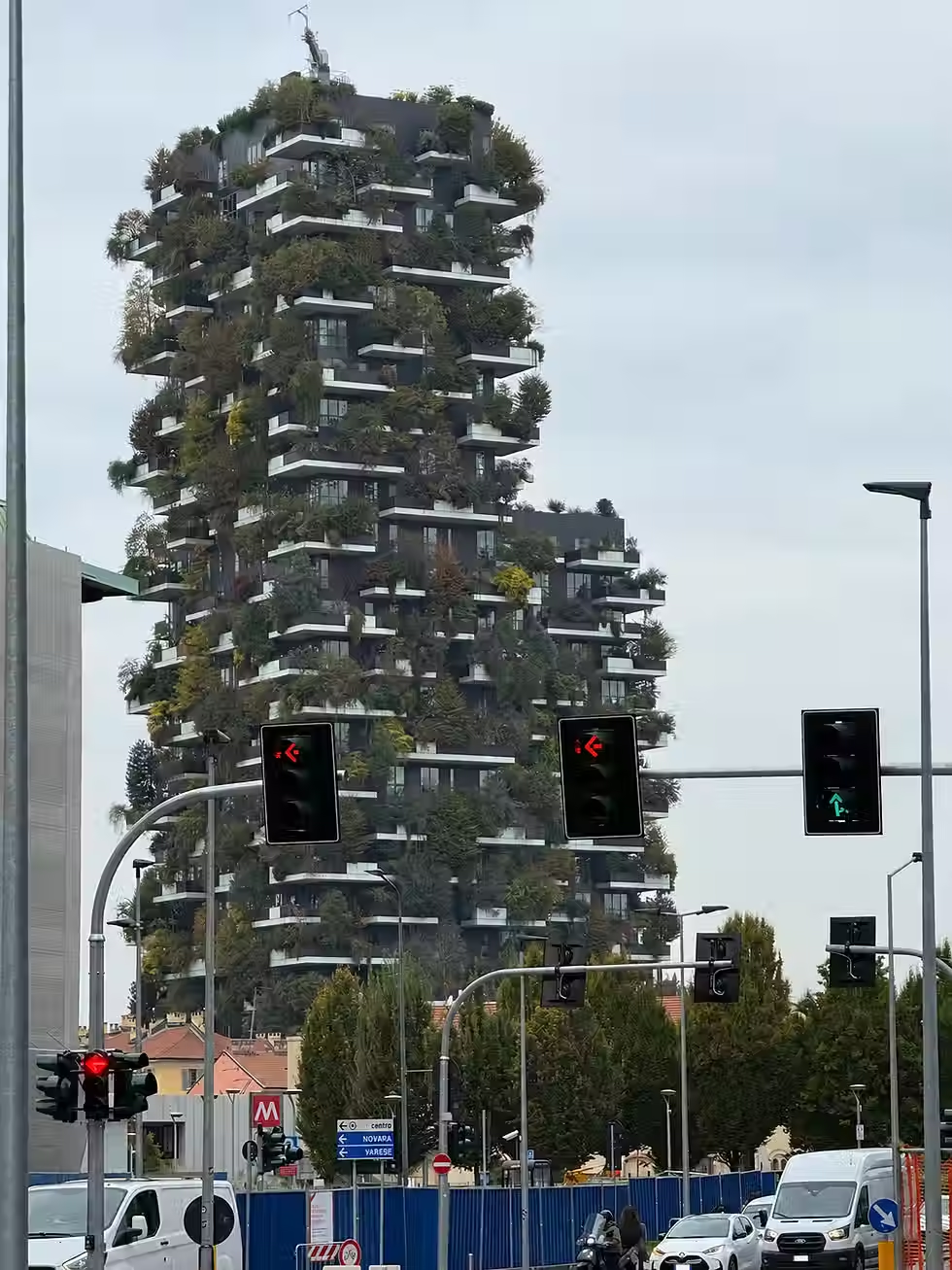
Continue past Bosco Verticale into Isola, with time for cafés and independent shops.
Evening
Have dinner in Isola to keep the evening close by.
Take a final walk around Porta Nuova, or shorten the evening for an onward train.
My Tips for Your Visit
Milan has been part of many of my Italian journeys, often beginning at Centrale on a visit to travel-industry clients. The Duomo roof and Galleria are memorable, and I also remember the meals with friends and discovering the Navigli.
For a first visit, I would allow two or three full days, book the art that matters most and leave time to explore on foot. The canals were a real surprise for me, and they are one of the places I would include again. A performance at La Scala is still something I have not managed to fit in.
Add Lake Como if you have another day, or continue by train to your next Italian city.


OVERVIEW
Practical Information
Arriving at Milano Centrale
Milano Centrale is worth a look before you hurry to the metro. Ulisse Stacchini’s monumental station opened in 1931, but its planning began before Mussolini came to power: the foundation stone was laid in 1906 and the design selected in 1912. I have arrived here many times and enjoy the scale of its halls. RFI’s station history gives the background.
Three airports, different transfers
Check your airport code before choosing a transfer; Linate, Malpensa and Bergamo serve different sides of the region.
Linate (LIN): Metro M4 reaches San Babila in about 12 minutes; Centrale requires a connection.
Malpensa (MXP): Malpensa Express trains serve Centrale and Cadorna; choose the route and terminal that match your journey.
Bergamo Orio al Serio (BGY): airport coaches run to Centrale; leave extra time for road traffic.
Arriving by road or coach
For a road trip, arrange parking before reaching Milan and check Area B, Area C and local restricted-zone rules for your vehicle; a hotel booking does not automatically permit entry. Long-distance coaches use stops including Lampugnano, so check your actual terminal before planning the onward connection.
Getting around and buying tickets
On my last visit in October 2025, I found the ticket machines confusing. ATM contactless payment is an alternative on its metro, trams and buses. Each traveler needs a separate card or device; use the same one throughout, tap out of the metro and follow tap-out instructions on surface routes. ATM contactless does not cover suburban or other operators’ trains, even where ordinary integrated tickets are valid.
Where to stay
I have stayed near Centrale several times and found better hotel prices there than in the most central areas, although Milan has often felt expensive to me.
Centrale: convenient for trains and airport coaches, but allow a metro ride to the main sightseeing areas.
Duomo and Brera: good for walking to sights, restaurants and shops; compare the higher central rates with what you save in travel time.
Porta Nuova and Isola: useful for modern architecture and a neighborhood evening, with metro journeys to the historic center.
Navigli: canals and aperitivo on your doorstep, but check recent noise reviews if you prefer early nights.
Art, Heat and the Event Calendar
1991–2020 averages for Milano Linate airport; the dense historic center can be warmer. Ranges span the three monthly averages in each season, not temperature extremes. Wet days have at least 1 mm (0.04 in) of precipitation, which can include snow.
Spring (March–May)
Spring warms steadily from cool mornings to mild or warm afternoons, while rainfall increases toward May.
Average lows 4–13°C (40–55°F) and average highs 15–24°C (60–75°F); 5–9 wet days per month.
Seasonal highlight: Milano Design Week and the Salone del Mobile take place in April.
Outdoors and clothing: Wear layers and comfortable walking shoes between design districts, with a light rain jacket for open squares and canal walks.
Summer (June–August)
Summer afternoons are hot and nights stay warm, with occasional rain throughout the season.
Average lows 17–19°C (63–67°F) and average highs 28–31°C (83–87°F); 4–7 wet days per month.
Seasonal highlight: Estate al Castello offers a summer program at Castello Sforzesco, typically from June into early September.
Outdoors and clothing: Cross exposed Piazza del Duomo early, carry water and sun protection, and favor shaded park paths during the hottest hours.
Fall (September–November)
September can still be warm, but temperatures fall steadily and rainfall increases toward November.
Average lows 5–15°C (41–59°F) and average highs 12–26°C (54–78°F); 5–8 wet days per month.
Seasonal highlight: September’s Milano Fashion Week presents the following year’s women’s spring and summer collections.
Outdoors and clothing: Pack a rain-resistant jacket and waterproof shoes for wet streets and walks beside the Navigli canals.
Winter (December–February)
Winter brings cool days and nights near freezing; rain is possible, though the season is relatively dry.
Average lows 0–1°C (31–33°F) and average highs 7–10°C (45–50°F); 5–6 wet days per month.
Seasonal highlight: The Oh Bej! Oh Bej! Christmas market takes place in early December around the feast of Sant’Ambrogio.
Outdoors and clothing: Wear a warm coat and gloves for open spaces around the Duomo and Castello Sforzesco, especially after dark.
Climate sources: temperature and station records. Historical averages are a planning guide, not a forecast.
Tip: Compare hotel prices against the design, fashion and trade-fair calendar before fixing your dates.
LANDMARKS & SIGHTS
Attractions & Museums
The Duomo and rooftop terraces
I have visited the cathedral and climbed onto its roof, and would make both priorities on a first trip. The terraces bring you close to the marble spires and carved details, with views across Milan. Choose a ticket covering both visits and allow time for security. The lift reaches the first terrace level; upper sections involve stairs, so check the official accessibility guidance if needed.
Galleria Vittorio Emanuele II and La Scala
Walk through the Galleria from Piazza del Duomo to Piazza della Scala, looking up at the glass roof and down at the mosaics. I have not yet managed to attend a La Scala performance. The theater museum is a separate visit; views into the auditorium depend on rehearsals, performances and other activity.
Castello Sforzesco and Parco Sempione
I have visited this brick fortress, associated with the Visconti and Sforza dynasties. Its museums include decorative arts, musical instruments and Michelangelo’s unfinished Rondanini Pietà. Pick the collections that interest you, check the castle’s visitor information and continue into Parco Sempione toward the Arco della Pace; the museums normally close on Mondays.
Brera and The Last Supper
The Pinacoteca di Brera is a major painting collection in the heart of Brera. Leonardo’s The Last Supper is at the Cenacolo Vinciano beside Santa Maria delle Grazie, across town. Both require reservations and normally close on Mondays. For The Last Supper, arrive at the ticket office at least 30 minutes before your slot or lose admission; the viewing lasts 15 minutes.
Tip: Reserve The Last Supper first if it is a priority, then arrange the rest of your museum day around that time.
LOCAL LIFE
Neighborhoods & Parks
The historic center and Brera
I enjoy walking from the Duomo and Galleria into the smaller shopping streets. Brera adds galleries, boutiques and restaurants around Via Fiori Chiari, Via della Madonnina and Piazza del Carmine. Allow time to browse even if you are not visiting the Pinacoteca.
Parco Sempione
Continue through the castle into Parco Sempione for lawns, shaded paths and the Arco della Pace. This is an easy outdoor break between museum visits; on a hot day, use the tree-lined paths rather than crossing the most exposed squares.
Porta Nuova and Isola
Piazza Gae Aulenti and Porta Nuova’s towers show Milan’s newer side. Walk through the public gardens toward Bosco Verticale, then continue into Isola for cafés and smaller streets. The planted towers are residential buildings, best appreciated from the surrounding public spaces.
Via Paolo Sarpi and Chinatown
Via Paolo Sarpi is a pedestrian-friendly street of groceries, bakeries, shops and places for a quick meal. It pairs well with the nearby Cimitero Monumentale, whose sculpture and elaborate tombs make it a substantial visit of its own.
An evening around the Navigli
The canals were one of Milan’s pleasant surprises for me. Begin at the Darsena and follow Naviglio Grande past smaller buildings, bridges and restaurants. It feels almost like a little village within Milan, particularly away from the busiest stretches of the waterfront.
Tip: Walk the center and Brera together, then save the Darsena and Naviglio Grande for late afternoon and dinner.
FOOD CULTURE
Food and Drink
I have enjoyed meals with friends in Milan, including one overlooking Piazza del Duomo. These local dishes are a good starting point when reading a menu:
Risotto alla milanese: creamy rice flavored and colored with saffron.
Ossobuco: braised veal shank, often served with saffron risotto.
Cotoletta alla milanese: a breaded veal cutlet, traditionally cooked in butter.
Mondeghili: Milanese meatballs traditionally made with cooked meat.
Panettone: rich, fruit-studded bread associated with Christmas in Milan.
Markets, street food and aperitivo
Mercato Centrale at the main station brings food counters together under one roof, useful before or after a train journey. Along Via Paolo Sarpi, Chinatown’s bakeries, dumpling shops and bao counters make an easy street-food lunch.
Around the Darsena and Naviglio Grande, aperitivo comes with a canalside setting. The food included can range from a small snack to a larger spread, so read the menu before deciding whether it will replace dinner.
Tip: Try a Milanese dish at a sit-down meal and use Chinatown or Mercato Centrale for a quicker lunch between sights.
LOCAL CULTURE
Festivals & Events
Design Week
Milan Design Week fills different districts with exhibitions and installations alongside Salone del Mobile. Choose two or three nearby areas for a day, checking which events require registration; accommodation needs early attention.
Fashion and major exhibitions
Fashion weeks, trade fairs and temporary exhibitions can shape a visit and push up hotel demand. Runway shows are not automatically open to the public; check admission for the actual event rather than relying on the wider festival name.
La Scala
For an opera, ballet or concert, choose the performance and available seats from the official La Scala program before planning dinner. A theater museum ticket is a separate visit and does not admit you to a performance.
Summer at the Castle
Estate al Castello brings an outdoor summer program to Castello Sforzesco, with admission arranged for each event; the castle museum ticket does not replace an event ticket.
Sant’Ambrogio and Christmas
The Oh Bej! Oh Bej! fair traditionally takes place near the castle around the 7 December feast of Sant’Ambrogio. Seasonal stalls, panettone and illuminated central streets give a winter visit its own character; check the current edition’s dates.
Tip: Check event admission and hotel availability together, especially for Design Week or a particular La Scala performance.
BEYOND THE CITY
Nearby Cities & Journeys
Lake Como via Varenna
Varenna–Esino is about 72 km (45 mi) from Milano Centrale by rail, with direct regional trains taking about 65 minutes. Walk down to the lake for Varenna’s waterfront; add Bellagio only if the boat timetable leaves enough time for the return. Allow for the uphill walk back to the station.
Genoa
Genova Piazza Principe is about 154 km (96 mi) from Milano Centrale by rail, with the fastest direct trains taking around 1 hour 40 minutes. I have made this journey repeatedly. The working port, narrow caruggi and hillside views give Genoa a different character; an overnight stay leaves more time to explore.
Venice
The Milan–Venice rail route is about 268 km (167 mi), with direct high-speed trains taking roughly 2½ hours to Venezia Santa Lucia, depending on the service. Book Venezia Santa Lucia for the islands; Mestre is on the mainland. Venice deserves a separate stay for its canals, neighborhoods and art.
Tip: Keep Lake Como as a full-day excursion and treat Genoa or Venice as onward stops if you can stay overnight.