

Kobe
Green hills, historic neighborhoods and life by the port
LOCATION
Hyogo Prefecture, Kansai, Japan
POPULATION
About 1.49 million (city; 2025 census)
CURRENCY
Japanese yen (JPY)
RECOMMENDED STAY
A full day; one or two nights for a slower visit
GETTING AROUND
JR trains, subway and buses; walk the central neighborhoods
BEST TIME
Spring and autumn for gardens and city walks
KNOWN FOR
Kobe beef, harbor views and historic Western-style houses
DON'T MISS
Nunobiki Herb Gardens and Ropeway, followed by the waterfront
INTRODUCTION
Why Visit
Kobe is a rewarding city to explore from the hills down to the water. The green slopes behind the center give you a clear view of its setting, while the walk toward the harbor brings together Western-style houses, a city-center shrine, covered shopping streets and Chinatown. By the time you reach the waterfront, you have seen several sides of the city without spending the day crossing a huge urban area.
We visited from Osaka, keeping the same hotel and taking a morning train to Sannomiya. What stayed with me was the relationship between the hills and the bay: looking out over the city from the herb gardens, then looking back at those same lush slopes from a boat. In between, I enjoyed the produce stalls, shoe shops and small public sculptures as much as some of the more obvious sights.
For a first visit, I would give Kobe a full day and make Nunobiki Herb Gardens the main outing, with time to walk through the center and finish at the harbor. That worked well for us, although I would happily return for a night or two. Kobe particularly suits travelers who enjoy gardens and views alongside neighborhood walks, food stops and a little history.

Kobe’s dense cityscape and port spread below a green hillside under a clear blue sky.
EXPLORE MORE
Plan Your Visit




Practical Information
Plan around the right stations
Sannomiya, Shin-Kobe and JR Kobe serve different parts of this route. Sannomiya is the central hub we used on arrival; Shin-Kobe is the Shinkansen station near the ropeway; JR Kobe is convenient for Harborland at the end of the day. Arriving and leaving through different stations saves a walk back across the center. The official Kobe transport guide helps you choose the connection that suits your starting point.
From Osaka, we took a morning JR train and reached Sannomiya in roughly 25 minutes. We stayed at the RIHGA in Osaka because we did not want to change hotels too often, and the short rail journey made Kobe an easy addition.
Start uphill, then explore on foot
From Sannomiya we took City Bus 2 to Nunobiki, followed by a short walk and an elevator ride to the ropeway base station. The subway to Shin-Kobe offers another approach.
After the gardens, we continued through Kitano and the central shopping streets toward the harbor. The stations felt easier to navigate than the enormous complexes in Osaka and Tokyo, but the route still involved plenty of walking. Use public transportation to shorten the city section if you would rather save your energy for the gardens. Even a downhill garden walk includes slopes and steps.
Choose a clear-weather day
Clear weather made a real difference on our October visit. Both the hilltop views and the cruise depend on it, so I would keep some flexibility if visiting from Osaka. Before setting out, check that the ropeway and boats are operating.
If you stay overnight, Sannomiya is a practical area to consider for transport, while the waterfront puts you near the harbor for an evening walk. I have not stayed in Kobe yet; one or two nights would mainly give me more time in the places covered here, without the afternoon return journey.
Small things that help
Carry some yen for smaller purchases. Cards were useful throughout our Japan trip, although some independent businesses still needed cash. I also found it helpful to prepare a question in Google Translate before approaching someone, particularly for directions or menus. Keep any rubbish with you when there is no bin.
Attractions & Museums
Nunobiki Herb Gardens and Ropeway
Start here to understand Kobe's setting. The red gondolas rise above thick green hillsides, with the city and bay spreading out below, and the gardens give you a reason to stay after taking in the view. This was the highlight of the day for me, so I would allow a generous part of the morning rather than treating it as a quick lookout stop.
At the top, we explored the rose garden and viewing areas. Joe then rode back down from the top station, while I walked through the gardens to the middle station and took the ropeway for the remaining descent. That let us enjoy the same outing with different amounts of walking.
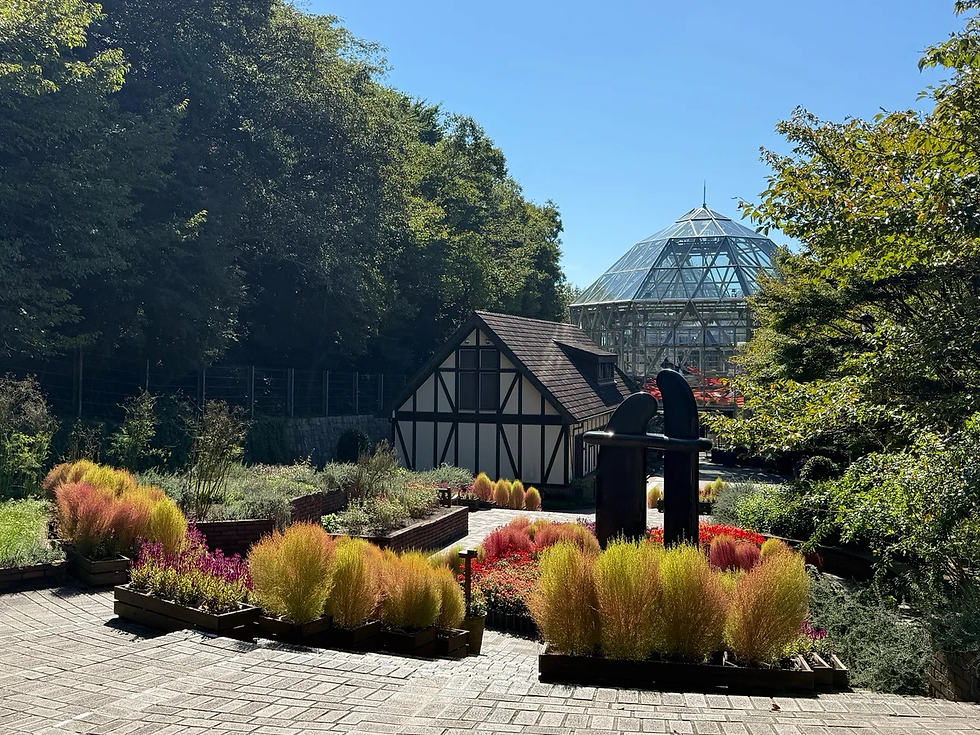
The downhill route passed formal planting beds, flower borders and the glasshouse, with views appearing between the trees. Around The Veranda at Kobe, terraces overlooked the hillside beside reflecting pools, and a large hammock-net area offered another place to linger. The lush planting, almost tropical in places, was as memorable to me as the panorama.
The ropeway took us straight to the gardens, leaving more time to explore at the top. I also noticed a trail behind the top station that interested me for another visit, but it was not part of our route. If you plan a separate hike, check the garden access arrangements rather than assuming you can enter from a trail.
Ikuta Shrine
Ikuta Shrine is a useful pause between the hillside neighborhoods and the shopping streets. Its vermilion gate, open courtyard and row of torii sit among the buildings of central Kobe, so the setting remains very much part of the city. We reached it after walking down from Kitano, before continuing toward Motomachi.
The grounds also include the small wooded Ikuta Forest, associated with fighting during the 12th-century Genpei War. The shrine is dedicated to Wakahirume-no-Mikoto and is known for prayers for love and marriage. On this route, I would leave time to look around the grounds before returning to the busier streets.
The waterfront and a bay cruise
A cruise makes a good finish because it brings the day's geography together. From the water, the tower, waterfront buildings and green hills become one view; farther out, cranes, piers and airport infrastructure show how much of Kobe's waterfront is still a working port.
We boarded the red-and-gold Gozabune-Atakemaru at Nakatottei Central Terminal after lunch and gelato. Our 45-minute sailing gave us views of Kobe Port Tower, Harborland's Ferris wheel, the waterfront parks, a breakwater lighthouse and Kobe Airport. The Akashi Kaikyo Bridge was visible in the distance, rather than a close-up destination of the cruise.
Check the operator's route and sailing information when planning your afternoon, and choose a departure that leaves room for the walk through town. Allow extra time if you also want to go up Port Tower; that was not part of our visit.
Neighborhoods & Parks
Kitano
Kitano gives the walk down from the gardens a historical connection to the harbor. After Kobe's port opened in 1868, foreign residents built Western-style houses on these slopes. Bay windows and verandas appear on several of the surviving homes, while the red-brick Weathercock House was built for a German merchant. These details help explain why this part of the city looks different from the shopping streets farther downhill.
We stayed outside, following the sloping streets past house exteriors and garden walls toward the center. That was enough to enjoy the neighborhood as part of our day; if an interior interests you, choose one and allow additional time. Small public sculptures, often figures of people, had also caught my attention on the way up to the ropeway. Leave room for those details when walking here.
Sannomiya, Motomachi and Chinatown
The shopping streets connect the shrine and hillside neighborhoods with the lower city. Covered arcades, busy intersections and narrower lanes make this a good area to wander, with Motomachi and Nankinmachi, Kobe's Chinatown, close enough to explore together.
What I liked was how much everyday shopping remained alongside the visitor attractions. We passed produce stalls, shoe shops and other useful neighborhood businesses, stopping to look rather than heading straight for the harbor. Nankinmachi runs beside part of the Motomachi shopping area, so we dipped in and out, passing lanterns and the ornate pavilion in its central plaza before returning to the arcade.
Allow more time here than the map suggests. A shop window, a side street or somewhere to eat can easily change the pace, and that is part of the pleasure of this section of Kobe.
Meriken Park and Harborland
The waterfront opens out after the close-packed streets. Meriken Park surrounds Port Tower and the Maritime Museum; Harborland, across the water, has shops, restaurants and the Ferris wheel. Choose how much time to spend here around the cruise, a waterfront walk or a meal.
There is also important recent history beside these views. An additional stop in Meriken Park is the Port of Kobe Earthquake Memorial Park, which preserves a section of quay damaged in the Great Hanshin-Awaji Earthquake of January 17, 1995. It gives a concrete sense of the destruction behind the city's subsequent recovery.
After our cruise, we continued through the Harborland area to JR Kobe Station. It was a convenient end to the route and avoided retracing our steps to Sannomiya.
Food & Drink
A Kobe beef lunch that fits the day
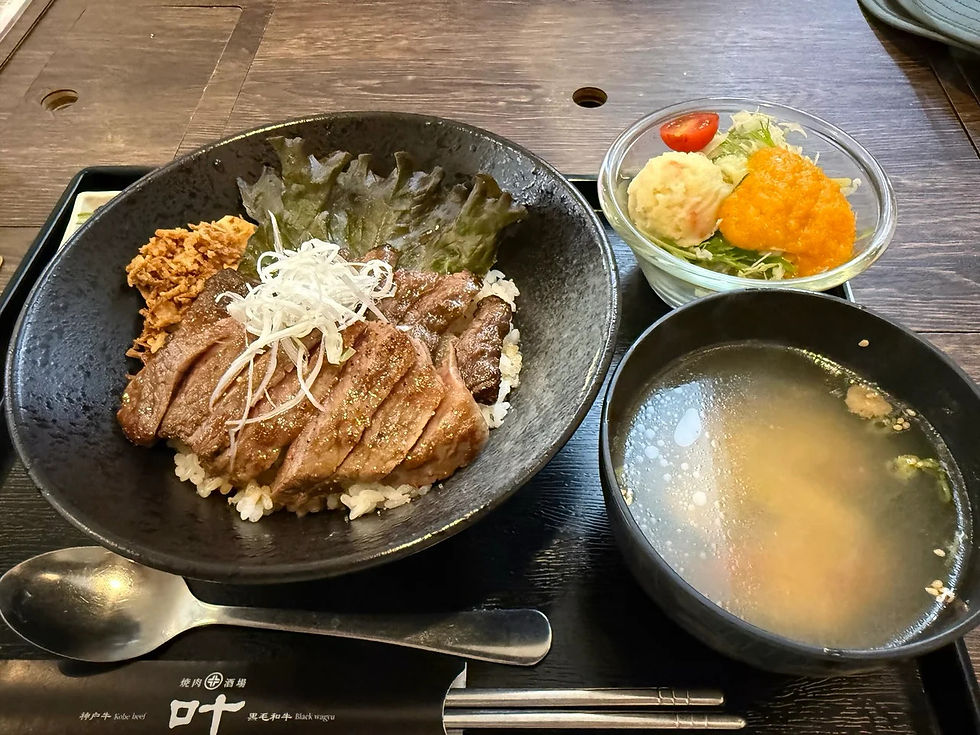
You can make a beef meal a main event or keep it simple between sightseeing stops. For this route, an informal lunch worked well. At Kanou in Motomachi, we had inexpensive rice bowls topped with thin slices of Kobe beef, served with soup and a salad. It gave us a sit-down break before continuing toward the harbor.
If you would prefer a longer steak or teppanyaki meal, give it proper space in the itinerary. I would shorten the shopping walk or stay later in Kobe rather than squeeze a substantial meal between the gardens and a fixed boat departure.
Leave room for a small stop
The shopping streets and Nankinmachi also reward a little curiosity. After lunch, we continued along the arcade and turned down Tower Road, where a small coffee shop made its own gelato. I chose corn and a citrusy cheese flavor, an unexpected combination and exactly the sort of discovery I enjoy while walking through a city.
Food photographs and display models help when browsing menus in Japan, although flavors and textures can still surprise you. Give yourself time to look before deciding where to stop, and keep some room for a café, a snack or something you have not tried before.
Festivals & Events
An event can change both the atmosphere and the practicalities of a Kobe visit, particularly around the central streets and waterfront. We did not attend these on our day trip. If one interests you, plan around its announced program and leave more time for crowds and local travel.
Kobe Festival
Kobe Festival usually takes place in May, bringing parades, samba teams and stage performances to the city center. Check the current route and venues before combining the festivities with a walk through Sannomiya.
Nankinmachi Spring Festival
Nankinmachi Spring Festival celebrates Lunar New Year, usually in January or February, with Chinese cultural performances including lion and dragon dances. Its setting is the same small Chinatown explored in the neighborhood walk, so expect a much busier experience; organizers may introduce one-way walking routes.
Kobe Luminarie
Kobe Luminarie began in December 1995 to remember the earthquake's victims and express hope for recovery. That origin gives the illuminations a significance beyond their appearance. Check the announced program before planning a visit, as dates and locations can vary.
Nearby Cities & Journeys
Kobe is easy to include in a wider Kansai itinerary. Osaka was our base for this day trip; we visited Nara from Kyoto during a separate four-night stay there. The suggestions below draw on those visits, with rail connections from Kobe for travelers using it as their base.
Kyoto
Give Kyoto at least a full day and choose one area. The early walk we took toward Yasaka Shrine, Maruyama Park and Chion-in is a good starting point for the eastern side of the city. Arashiyama offers another day, combining river paths and hillside viewpoints with the bamboo forest. I particularly enjoyed the quieter riverside and park paths before reaching the busier bamboo area.
JR trains connect Sannomiya with Kyoto via Osaka; allow time to reach your chosen neighborhood after arrival. We spent four nights in Kyoto, and its scattered sights still left me with reasons to return. I would make it a separate stay if your wider trip allows.
Osaka
The short rail journey works in either direction, so Osaka is an easy separate outing from Kobe. For a day there, I would choose a couple of areas rather than cover the whole city: the everyday shops along Tenjinbashisuji, the castle grounds or the restaurant lanes around Fukushima. Those walks were among the parts of Osaka I most enjoyed, especially after the crowds in Dotonbori.
Choose a rail connection for the neighborhood you want to reach. Leave time for dinner if you want to experience the restaurant streets in the evening before returning to Kobe.
Nara
Nara deserves its own day for the gardens and historic temple grounds as well as the famous deer. We arrived by local train from Kyoto and walked along Sanjo-dori, stopping at a bakery and a knife shop on the way toward the park. Heavy rain cut short parts of the visit, but the scale of the temple grounds made me want to return in better weather.
From Kobe, look for a direct Rapid Express between Kobe-Sannomiya and Kintetsu-Nara, or compare the JR route via Osaka. Check the rail options and museum opening days before setting out. I would avoid combining Nara and Kyoto in a single outing: both reward more time than that leaves.
Closer to Kobe
For another visit, Arima Onsen and the Nada sake district are further possibilities around Kobe. We did not visit either on this trip.
PLAN YOUR TIME
Suggested Itineraries
This follows our day from the hills to the harbor, arriving at Sannomiya and leaving from JR Kobe Station. Allow for roughly 6 km (4 miles) of walking, including the downhill garden walk, plus any extra exploring along the way. The distances and times below are Google Maps walking estimates, not allowances for sightseeing, meals, shopping or queues. Give the gardens far longer than their 15-minute walking estimate, and check the boat departures before settling into the afternoon.
ONE DAY
A day from the hills to the harbor
Morning
- Arrive at Sannomiya and take the bus toward the ropeway. Allow time to find the bus stop and walk from the bus to the ropeway. Ride to the top and spend the main part of the morning in the gardens and viewing areas.
- Walk through the gardens to the middle station, then ride down: 1 km / 15 minutes of walking without stops. Allow much longer to enjoy the planting, glasshouse and views. Joe rode down from the top instead, which is an option if you want less walking.
- Continue through Kitano and down Hunter-zaka toward Ikuta Shrine: 1.7 km / 24 minutes. Add time for the neighborhood and shrine grounds; a historic house interior would need an additional allowance.
Afternoon
- Walk through the shopping streets toward Motomachi, dipping into Chinatown along the way. The walk to our lunch stop was about 1.1 km / 16 minutes. We stopped at Kanou for beef bowls.
- Continue along the arcade and turn down Tower Road: 450 m / 7 minutes. This was the part of our walk where we stopped for homemade gelato.
- Head toward Port Tower and the bay-cruise dock: 500 m / 7 minutes. Our Gozabune-Atakemaru sailing lasted 45 minutes. Fit any extra waterfront stops around the day's departures.
Late afternoon and evening
- After the cruise, continue through Harborland to JR Kobe Station: 850 m / 12 minutes. We returned to Osaka in the later afternoon and spent the evening there.
- If you are staying longer in Kobe, leave time for a waterfront walk and dinner around the harbor. This is an optional extension to our day-trip route.

Red Kobe Port Tower beside waterfront buildings, with wooded hills behind it.
TWO DAYS
Two days: city history and the Suma coast
Follow the one-day route above on your first day. For a second day, I would add a museum, a different stretch of waterfront and an afternoon on the Suma coast. This is a suggested extension for a return visit, rather than a day we followed ourselves.
Morning
- Start at Kobe City Museum for the city's history and its connections with the wider world. Then walk to TOTTEI Park to see the GLION ARENA KOBE architecture and the harbor from the pier.
- Continue west along the waterfront toward Meriken Park and Harborland. If shipping and port history interest you more, choose Kobe Maritime Museum instead of City Museum and visit it after TOTTEI. Keep the morning to one museum so there is time for the coast.
- Have lunch around JR Kobe Station before heading west. Save Port Tower or the Harborland Ferris wheel for later if you would like another viewpoint.
Afternoon
- For a relaxed coastal walk: take a JR train to Suma Station and spend the afternoon along Suma Beach. Choose this option if you would rather stay by the water than make another hillside outing.
- For hilltop views and a retro amusement park: take a Sanyo Railway service that stops at Sumaura-koen Station for Sumaura Sanjo Yuen. Allow two to three hours. The ascent combines a ropeway, the bumpy Carlator conveyor ride and a chairlift. Small rides, a pedal monorail and a rotating café give the park an old-fashioned character. In clear weather, look toward Awaji Island and the Akashi Kaikyo Bridge, also called the Pearl Bridge.
Choose one Suma outing rather than rushing both. Check museum opening days and the hilltop park's operating information before setting out; weather can affect the rides. Sumaura involves stairs and a chairlift, so check access carefully if mobility is a concern.
Evening
Return to central Kobe for dinner. If you still have time and energy, finish with Port Tower or the Harborland Ferris wheel, or simply enjoy the waterfront lights. Neither viewpoint needs to be a fixed stop in an already full day.

The curved white facade of Kobe Meriken Park Oriental Hotel above blue harbor water.
My Tips for Your Visit
My main advice is to decide what deserves your time before filling the gaps. For me, that was the herb gardens and a view of the city from the water. Taking transport uphill and then walking toward the harbor made the day straightforward, while returning from JR Kobe Station avoided unnecessary backtracking.
Leave some flexibility between those two outings. The produce stalls, small sculptures and unusual gelato flavors are part of what I remember about Kobe, and none needed a reservation or a long detour. Those moments gave the walk through the center its character.
A day from Osaka was enough to enjoy the city and want to come back. Next time, I would stay a night or two and give the gardens, Kitano and waterfront more time. Kobe's mix of lush hills, port history and everyday streets is worth exploring at a slower pace.
