
Nuremberg to Bayreuth
Baroque splendor, Wagner history and relaxed Franconian city life
Quick Facts
Route
Starting Point
Nuremberg, Germany
End Point
Bayreuth, Germany
Getting Around
Regional train; walking and bus to the Eremitage
Planning
Suggested Duration
1 full day; overnight for a performance
Best Time of Year
May–early October for gardens; festival dates vary
Known For
Baroque theaters, landscaped gardens and music
Highlights
Places Along the Route
- Nuremberg, Germany
- Bayreuth, Germany
Don't Miss
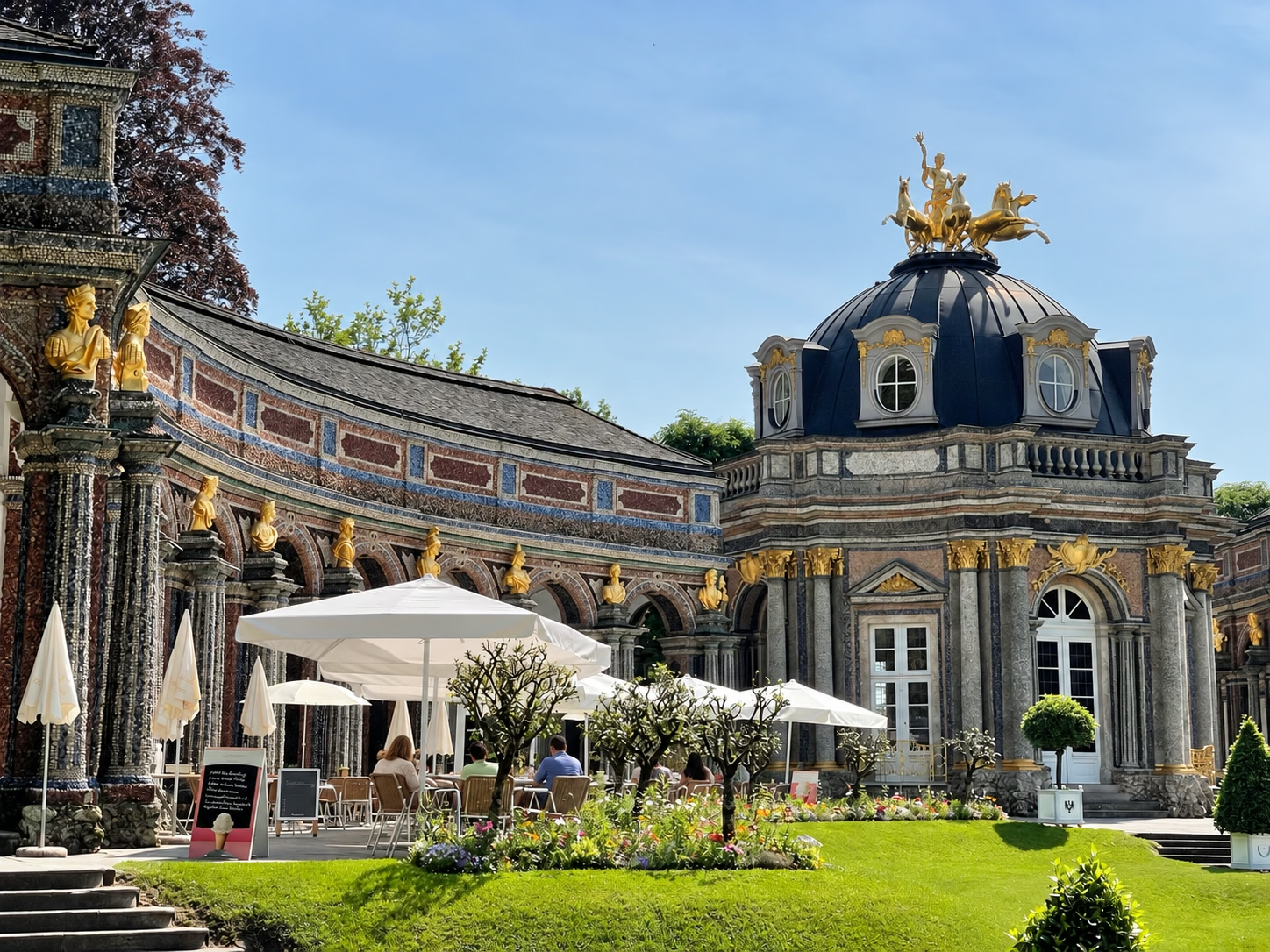
The Margravial Opera House and Eremitage
OVERVIEW
Why Make this Journey
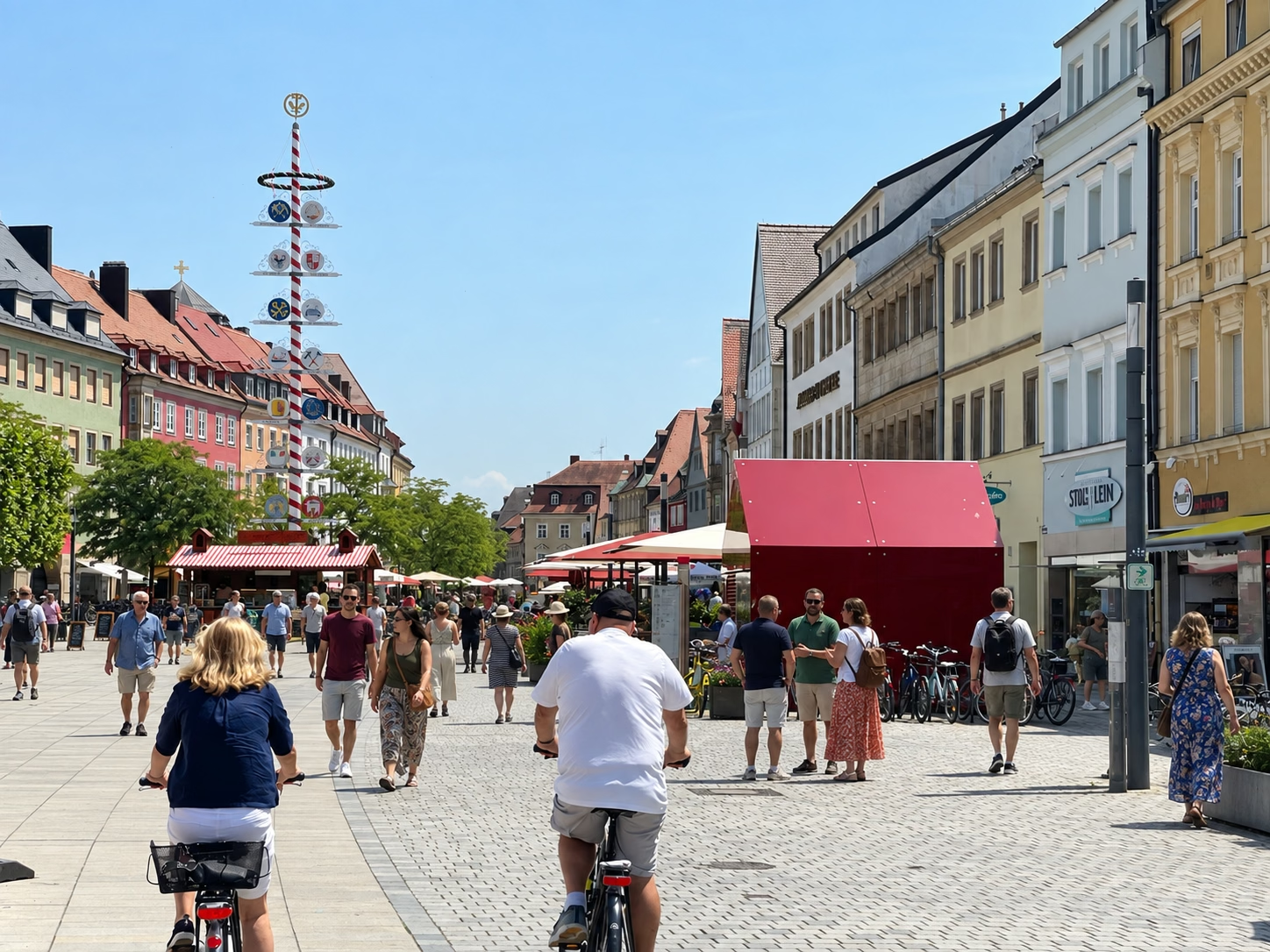
Bayreuth feels more personal to me than a typical sightseeing stop. I first came here because a high-school friend studied at the university and introduced me to another student who lived in the city. We all became close friends, and although neither now lives in Bayreuth, I have returned several times to visit one friend’s mother. What continues to appeal to me is the city’s manageable scale. Its broad pedestrian center is attractive without feeling staged, with shops, cafés and restaurants woven into everyday life. Yet Bayreuth also has an extraordinary concentration of culture: the gilded Margravial Opera House, the New Palace and Hofgarten, Richard Wagner’s home and grave, and the gardens and water features of the Eremitage. It works very well as a day trip from Nuremberg, especially if you choose one major museum and one garden complex. During the Wagner Festival or for another concert, staying overnight lets you enjoy the city after the daytime visitors have left.
The rail journey from Nuremberg runs through the Hersbruck and Pegnitz corridor. Pottenstein, Gößweinstein and the other Franconian Switzerland stops shown in the illustration belong to a different excursion, not the direct train described here. Check the DB regional network and your chosen connection.

Illustrated route from Nuremberg to Bayreuth through Franconian Switzerland, passing Pottenstein, Gößweinstein and hillside castles.
EXPLORE
Places & Experiences

Arrive in the Center
Bayreuth’s main station is within easy walking distance of the historic center. Allow about 10–15 minutes to reach Opernstraße and the pedestrian zone. The compact center is one of the city’s strengths: most of its central sights can be explored on foot, with plenty of cafés, shops and restaurants along the way.
Begin around Opernstraße and the broad pedestrian section of Maximilianstraße. This is not a preserved medieval center on the scale of Bamberg or Rothenburg. Bayreuth’s character comes instead from its mixture of elegant 18th-century buildings, churches, everyday shopping streets and cultural venues. It feels like a living regional city rather than an open-air museum.
See the Margravial Opera House
The most important sight in the center is the Margravial Opera House, built between 1744 and 1748 for Margravine Wilhelmine. Its elaborate wooden interior is one of Europe’s best-preserved Baroque court theatres and has been a UNESCO World Heritage Site since 2012. The relatively restrained exterior gives little indication of what awaits inside.
Allow approximately one hour for the theatre and adjoining museum. Entry is timed at busy periods, so reserving a ticket is sensible. Concerts are still held here, and attending one is a particularly memorable reason to spend the night. Visitor information
Walk Through the New Palace and Hofgarten
Continue to the New Palace, which was built after the earlier residence burned down in 1753. Its interiors reflect the distinctive Bayreuth Rococo style shaped by Margravine Wilhelmine. If you are interested in palace interiors, allow around an hour; otherwise, view the exterior and concentrate on the adjoining Hofgarten.
The Hofgarten is free, open throughout the day and provides a pleasant green connection between the palace and Haus Wahnfried. Its avenues, canal and mature trees make it a good place to slow down between the city’s major sights. New Palace and Hofgarten information
Visit Haus Wahnfried and Wagner’s Grave
Richard Wagner had Haus Wahnfried built beside the Hofgarten between 1872 and 1874. It now forms the center of the Richard Wagner Museum, which covers the composer’s life, work and influence as well as the history of the Bayreuth Festival.
Wagner and his wife Cosima are buried in the garden behind the house. Even visitors who do not want to tour the full museum can walk through the Hofgarten to see the villa and understand how closely Wagner’s presence is woven into Bayreuth. The museum also addresses the more troubling parts of that legacy, including Wagner’s antisemitism and the festival family’s later relationship with National Socialism. Richard Wagner Museum information
Stop for a Franconian Lunch
Return to the pedestrian center for lunch at a traditional inn, café or beer restaurant. Bayreuth has a strong Upper Franconian brewing culture, so a local beer is part of the experience for those who drink.
Look for Bayreuther Bratwürste, which are longer than the small sausages associated with Nuremberg. They are traditionally served in pairs with mustard. Other regional choices may include Schäufele, roast meats, dumplings, Blaue Zipfel or a Franconian Brotzeit. The center also has plenty of contemporary and international choices if you do not want a heavy lunch. Bayreuth food traditions
Spend the Afternoon at the Eremitage
For a first visit, I would make the Eremitage the main afternoon destination. This large park on the eastern edge of Bayreuth combines woodland paths, formal gardens, grottos, fountains, an orangery and palace buildings. It feels quite different from the compact city center and demonstrates how ambitious Bayreuth’s margravial court once was.
The park is open throughout the year and can be visited free of charge, although the palace tour requires a ticket and operates seasonally. The water features operate seasonally, generally from May to mid-October, but restoration work can limit which fountains are running. Check the palace administration's current notices before visiting. Allow at least 90 minutes for a satisfying walk and closer to two hours if you tour the Old Palace.
Bus 303 connects central Bayreuth with the Ochsenhut stop near the Eremitage. A car makes the visit easier, but it is not essential. Check the return schedule before beginning your walk, particularly on Sundays and holidays. Eremitage visitor information
Choose Additional Sights Carefully
Trying to include every major attraction will make the day feel rushed. These are best treated as alternatives rather than automatic additions:
Bayreuth Festival Theatre: Wagner’s purpose-built opera house stands on the Green Hill north of the station. The exterior and grounds are worth seeing, but the interior is best experienced on a scheduled tour or during a performance. It opened with the first Bayreuth Festival in 1876.
Ecological-Botanical Garden: The University of Bayreuth maintains an extensive scientific garden with plants from different climatic regions. It is especially appealing to serious garden lovers, but it lies south of the center and has limited public visiting periods. Check the current schedule before going.
Fantaisie Palace: Located west of Bayreuth in Donndorf, Schloss Fantaisie contains Germany’s first museum devoted to garden art and is surrounded by a landscaped park. It can be reached by regional bus, but a car is more convenient. For a day trip, choose it instead of the Eremitage rather than attempting both. Fantaisie Palace information

Quiet cobblestone street lined with historic sandstone buildings in central Bayreuth beneath a clear blue sky.
How to Get There
By train: Regional trains normally connect Nürnberg Hauptbahnhof with Bayreuth in approximately 55–75 minutes. Some connections are direct, while engineering work can require a change or replacement service. Check the live timetable before departure.
By car: Allow approximately 75–90 minutes in normal traffic, primarily using the A9. A car is helpful if you want to combine the center with the Eremitage or Fantaisie Palace, but it is unnecessary for a city-focused visit.
From the station: The pedestrian center is roughly a 10–15-minute walk. The Festival Theatre lies in the opposite direction, north of the station.
Getting Around Bayreuth
Explore the historic center, New Palace, Hofgarten and Haus Wahnfried on foot.
Use local buses for the Eremitage, university botanical garden and Festival Theatre.
Regional buses serve Fantaisie Palace, although departures may be limited.
A car offers the greatest flexibility for the outlying palaces and gardens.
Comfortable shoes are important because the Eremitage contains extensive paths and some uneven surfaces.
How Much Time to Allow
Minimum: Six hours in Bayreuth for the center, one major interior and lunch.
Recommended: Eight to nine hours for the center, Margravial Opera House, Hofgarten, Wahnfried and the Eremitage.
With an overnight stay: Add the Festival Theatre, botanical garden, Fantaisie Palace, a brewery experience or an evening performance.
Who Will Enjoy This Trip?
Bayreuth is particularly rewarding for travelers interested in music, opera, Baroque architecture, palaces, gardens and smaller German cities with an active cultural life. It also suits visitors who want a varied day without the crowds and scale of a major city.
Choose another Franconian town if your priority is medieval walls and narrow lanes. Bayreuth’s particular strengths are the Margravial Opera House, music history and gardens; the opera house alone is a strong reason to come.
Is an Overnight Stay Worthwhile?
An overnight stay is not necessary for the standard sightseeing itinerary. Bayreuth works very well as a day trip from Nuremberg.
Stay overnight if you are attending the Wagner Festival, Bayreuth Baroque, a concert at the Margravial Opera House or another evening event. It is also worthwhile if you want to explore both the Eremitage and Fantaisie Palace without rushing. During the Wagner Festival, reserve accommodation well ahead and expect substantially higher demand.
What Makes Bayreuth Special?
Bayreuth brings together two distinct cultural legacies. Margravine Wilhelmine transformed the city into an important 18th-century center of architecture, theatre and garden design. A century later, Richard Wagner made Bayreuth internationally famous by building the Festival Theatre specifically for the performance of his works.
The result is unusual: a manageable Franconian university city with a UNESCO-listed Baroque theatre, one of the world’s most famous opera festivals, several palaces and extensive historic gardens.
Costs
This can be a reasonably priced day trip:
Regional transportation is usually the largest basic expense.
Walking through the center, Hofgarten and Eremitage park is free.
Museum and palace admissions are moderate, with combination tickets sometimes available.
Lunch ranges from inexpensive bratwurst or café food to full restaurant dining.
Costs rise sharply if the visit includes a major festival performance or an overnight stay during the Wagner Festival.
Events Worth Planning Around
Bayreuth Festival: The city’s defining event, normally held from late July through August at the Festival Theatre and devoted to Wagner’s works. Performances and accommodation require advance planning. Official festival website
Bayreuth Baroque Opera Festival: Usually held in early September, with performances centered on the Margravial Opera House.
Bürgerfest: A large summer street festival that fills the center with music, food and entertainment, generally held in July.
Sommernachtsfest: An atmospheric summer evening festival held in the Eremitage gardens.
Christmas Market: The pedestrian center is decorated for Advent, making Bayreuth an attractive seasonal trip from Nuremberg.
Pedestrians and cyclists moving through Bayreuth’s sunny pedestrian center lined with shops, cafés and historic buildings.