

Vienna See & Do
Move from imperial palaces and opulent churches to major art collections, city history, music and playful modern landmarks.
OVERVIEW
Sights Worth Exploring
Vienna offers more than anyone can comfortably see in a short stay. I would begin with the historic center, choose a palace and a few museums, and make time for a performance or the Prater. The suggestions below bring together places I have visited and useful context for choosing between them. My strongest recommendation is to spend enough time at fewer stops rather than turning the city into a checklist.
LANDMARKS & SIGHTS
Attractions to Explore
Vienna’s landmarks tell a story that stretches from imperial palaces and elaborate churches to more recent expressions of the city’s character. Alongside Stephansdom, the Hofburg and Schönbrunn, I have included the Prater for its longstanding amusement traditions, the Donauturm for its views across Vienna and Hundertwasser’s architecture for its color and unconventional forms. Together, these are places that have helped me appreciate the city’s history, creativity and playful side over several visits.
CATHEDRAL
Stephansdom
Stephansdom anchors Vienna's historic center both visually and geographically. I have visited repeatedly, including early in the morning when the interior was still relatively quiet. On an earlier visit I also explored the catacombs beneath the cathedral. Even without a tour, stepping inside provides an immediate sense of Vienna's religious and civic history.
Tip: Visit early when possible. Cathedral, tower and catacomb access have separate arrangements; check before visiting.
IMPERIAL PALACE
Schönbrunn Palace
Schönbrunn deserves far more time than visitors sometimes give it. Beyond the palace itself, the enormous grounds include formal gardens, fountains, wooded paths, viewpoints and Tiergarten Schönbrunn. We spent our latest visit primarily outdoors, and I could easily see devoting almost an entire day to the complex.
Tip: Allow several hours even if you don't plan to tour the palace interior.
IMPERIAL COMPLEX
Hofburg
The Hofburg is less a single attraction than an enormous imperial district woven into central Vienna. Walking through its courtyards connects the Spanish Riding School, Austrian National Library and surrounding museums with the Ringstraße and historic center. I find the scale most impressive when exploring the entire area on foot.
Tip: Treat the Hofburg as a district to explore rather than one quick stop.
CHURCH
Karlskirche
Karlskirche is one of Vienna's most distinctive churches and one I have visited several times. Its monumental dome and columns dominate Karlsplatz, and an elevated interior viewing area gave me an unusual perspective during an earlier visit. Even from outside, the church and reflecting pool create one of Vienna's great architectural settings.
Tip: Combine it with the neighboring Wien Museum and check current admission and access arrangements.

The Gothic interior of St. Stephen's Cathedral in Vienna
CHURCH
Peterskirche
Peterskirche can almost disappear among the streets of the Innere Stadt until you step inside. The relatively compact exterior gives little warning of the elaborate Baroque interior. It is exactly the kind of church that makes wandering Vienna rewarding: you can encounter extraordinary architecture without planning another major attraction.
Tip: Step inside while exploring the pedestrian streets around Stephansplatz.
CHURCH
Jesuitenkirche
The Jesuitenkirche was another unexpected discovery during my walk through central Vienna. Its interior is remarkably elaborate, with decoration that competes with much better-known churches. Because it sits away from the most obvious tourist route, my visit felt calmer than many of the major religious sights around Stephansplatz.
Tip: Look up: much of the visual impact comes from the ceiling and upper interior.
ARCHITECTURAL LANDMARK
Hundertwasserhaus
I first saw Hundertwasserhaus around age twelve and returned more than three decades later. The irregular forms, vegetation, color and rejection of straight architectural lines still make it immediately recognizable. The building is still residential, so view it from outside and respect residents' privacy. Kunst Haus Wien, nearby, offers a museum visit focused on his work.
Tip: Combine it with nearby Kunst Haus Wien for more Hundertwasser context.

Schönbrunn Palace seen from its entrance forecourt
Prater amusement park
The Prater is a real highlight for me. I have loved roller coasters and ghost trains since childhood, and on my latest visit we spent around three hours on rides after approaching through the green park along the Hauptallee. It is worth allowing time for both parts of the experience.
Wiener Looping was short but excellent, and I enjoyed the theming of the ride called G’sengte Sau.
Megablitz brought back memories of earlier visits, especially the forces in its spiraling turns.
Hotel Psycho stood out among the horror attractions; I also liked the lovingly detailed Geisterschloss.
We rode a Ferris wheel too. Choose rides according to your interests and budget rather than trying to do everything. Individual rides have their own prices and operating times.
Donauturm
The tower takes more effort to reach than the central sights, but its view helped me understand Vienna's relationship with the Danube, Donauinsel and Alte Donau. Combine it with Donaupark and check the weather before making the journey for a panorama.
Spittelau's Hundertwasser Facade
I also noticed the colorful waste-incineration plant beside Spittelau station. Its facade, redesigned by Hundertwasser, adds an unusual architectural stop beyond the historic center. View it from the surrounding public areas; this is a working facility rather than an extension of the Hundertwasserhaus visit.
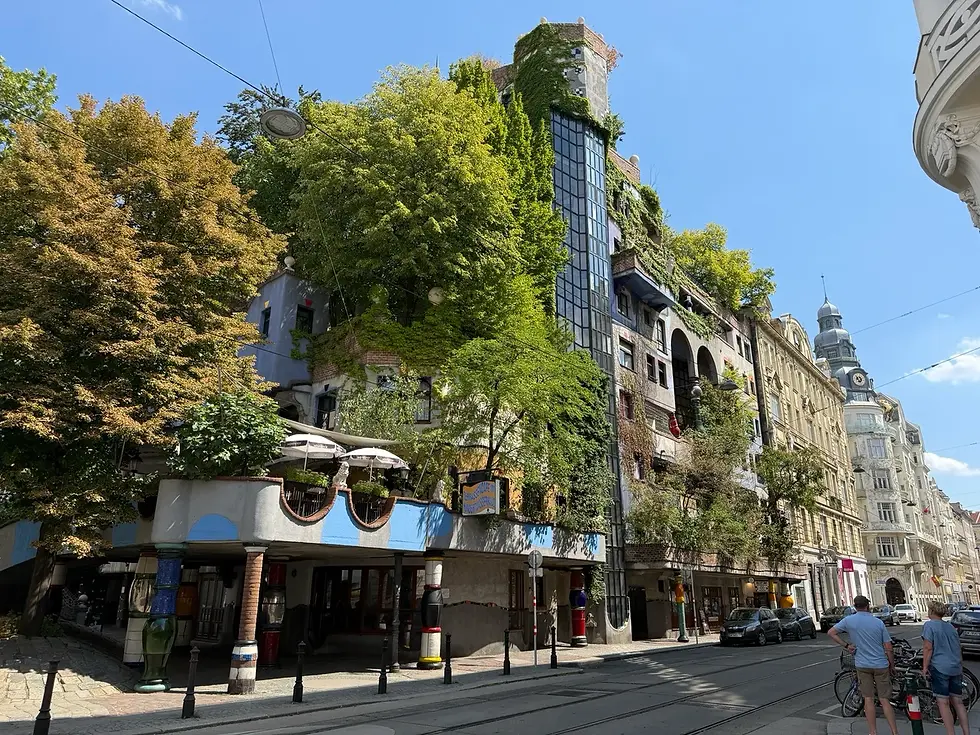
Colorful Hundertwasserhaus facade in Vienna
ART & CULTURE
Museums & Cultural Experiences
Museums and live performances have shaped many of my visits to Vienna. I have explored the city’s history at the Wien Museum, enjoyed art at the Albertina and Belvedere, and found a different perspective through design at the MAK. A New Year’s concert at the Musikverein remains another fond memory. The places below offer several ways into Vienna’s cultural life, with my personal impressions to help you decide which collections, exhibitions and performances deserve time in your visit.
CITY HISTORY
Wien Museum
For a first visit to Vienna, I now consider the Wien Museum one of the best places to begin. Its modernized building on Karlsplatz covers the city's development through history, politics, society and art without feeling like an endless encyclopedia. The architecture itself is interesting, and upper levels provide excellent views toward Karlskirche.
Tip: Start here early in your trip. The permanent exhibition is free; check separate arrangements for temporary exhibitions.
ART MUSEUM
Albertina
The Albertina combines a central location with a substantial art collection and temporary exhibitions. On my latest visit, I particularly enjoyed the second floor, although displays change. Its location beside the Hofburg also makes it easy to incorporate into a day exploring the historic center without requiring a separate trip across Vienna.
Tip: Give yourself time beyond the headline exhibition; explore the upper floors.
Other Major Art Collections
If art is a priority, also consider the Kunsthistorisches Museum for its Old Masters and historic collections, or the MuseumsQuartier for institutions such as the Leopold Museum and mumok. These add different choices to the places described from my own visits. Select one collection that particularly interests you rather than adding several museums to an already full day.

The MAK was a wonderful surprise during our most recent visit to Vienna
DESIGN & APPLIED ARTS
MAK
The Museum of Applied Arts offers a very different experience from Vienna's imperial collections. We visited during our latest stay and saw an exhibition I found excellent. The focus on design, decorative arts and applied creativity makes the MAK a useful counterpoint to traditional painting galleries and palace interiors.
Tip: A strong choice when you want something different from classical fine art.
ART MUSEUM
Belvedere
The Belvedere combines art, architecture and gardens in a way that makes the overall setting as important as the museum itself. I have visited the Klimt collection previously and returned to the grounds early one morning on my latest trip. The elevated Upper Belvedere also gives a surprisingly attractive view back toward central Vienna.
Tip: Visit the gardens early, before the main flow of museum visitors arrives.

A giant pink bunny invites visitors into Vienna's Albertina
ART COLLECTION
Heidi Horten Collection
The Heidi Horten Collection sits conveniently near the Staatsoper and Burggarten. My reaction was mixed: I found the ground-floor display considerably more interesting than the rest of what was on show during my visit. That makes it a more personal recommendation than an essential Vienna museum, but it can work well for visitors interested in modern and contemporary art.
Tip: Prioritize it according to the current exhibition rather than automatically visiting.
CONCERT HALL
Musikverein
Vienna's musical reputation becomes much more meaningful when you actually attend a performance. I once went to a New Year's concert at the Musikverein, and the combination of the hall, the music and the season remains one of my strongest cultural memories of Vienna. Check the program well before traveling if a concert matters to you.
Tip: Book important performances early, especially during holiday periods.
PERFORMING ARTS
Vienna's Theater Tradition
My connection with Vienna's performing arts goes back to my first trip around age twelve, when I saw The Phantom of the Opera. That performance had a lasting impact and helped spark my continuing interest in theater and concerts. Vienna remains a city where I strongly recommend making at least one live performance part of a longer stay.
Tip: Look beyond opera; Vienna offers theater, musicals, concerts and dance.

The Burgtheater across from Vienna's city hall
Final Thoughts
What keeps me interested in Vienna is the variety. Seeing The Phantom of the Opera here as a child helped start my love of live performance, while the Prater’s roller coasters and ghost trains still give me reasons to return. Choose museums around your interests, give Schönbrunn enough time and consider an evening performance. I found the Wien Museum especially useful for understanding the city. You do not need to see every famous collection to have a rewarding visit; for me, a few hours at the Prater belong just as much as a palace or art museum.