
Vienna Prater
Historic rides, shared memories and Vienna’s playful side
INTRODUCTION
A historic park that is easy to enjoy
What I love about Vienna’s Prater is that it is a historic park with so much going on. There are roller coasters and ghost trains, but also restaurants, beer gardens, a miniature railway, a museum and genuine green space. It is popular with families, and you can put together a visit that suits very different interests.
To me, it feels a bit like Oktoberfest without the crowds. I have found it much more manageable, with an easygoing mix of rides, food and places to wander. With free entry and good public-transport connections, it is easy to drop in and choose what you want to do.
The Prater in numbers
Visitors: Roughly 7 million visits a year is a useful sense of scale. Vienna’s Chamber of Commerce records 7 million for 2023.
Attractions and food: Around 250 establishments run by about 80 operators, including rides, other attractions and restaurants. This is a combined total, rather than a count of rides alone.
Size: The Wurstelprater amusement area covers about 26 hectares (64 acres), within the much larger Prater of roughly 600 hectares (6 square kilometers).
Sources: Vienna Chamber of Commerce’s 2025 tourism report and Prater’s official factsheet (2023).
At a Glance
Location: Leopoldstadt, Vienna’s second district
History: Former imperial hunting grounds, opened to the public in 1766
Two sides: The Wurstelprater amusement area and the wider Green Prater
Time needed: We spent about three hours on a ride-focused visit; add time for the museum, a meal or the park
Admission: Free entry to the grounds; attractions charge separately
Main season: March 15 to October 31; individual opening times vary
Getting there: Praterstern is a convenient public-transport arrival point
More than 250 years of public enjoyment
The Prater began as imperial hunting grounds. In 1766, Emperor Joseph II opened the area to the public and allowed food and drink businesses to settle here. Inns, coffee sellers and stalls were followed by swings, carousels and bowling alleys. The amusement area developed into the Wurstelprater, alongside the much larger parkland.
Its history includes Vienna’s World Exhibition in 1873, followed by the arrival of the Wiener Riesenrad in 1897. Large parts of the Prater were destroyed during the Second World War and rebuilt afterward. I love that this long history remains part of a place people still use for an ordinary day out.
Learn more at the Pratermuseum
The Pratermuseum is a good place to learn about that history. Historic carousel figures, puppets, early amusement machines, posters and photographs show how the Prater has changed. Its new building opened in 2024 at Prater 92 on Straße des Ersten Mai, close to the Riesenrad. Check the museum’s own opening days before adding it to your plans.
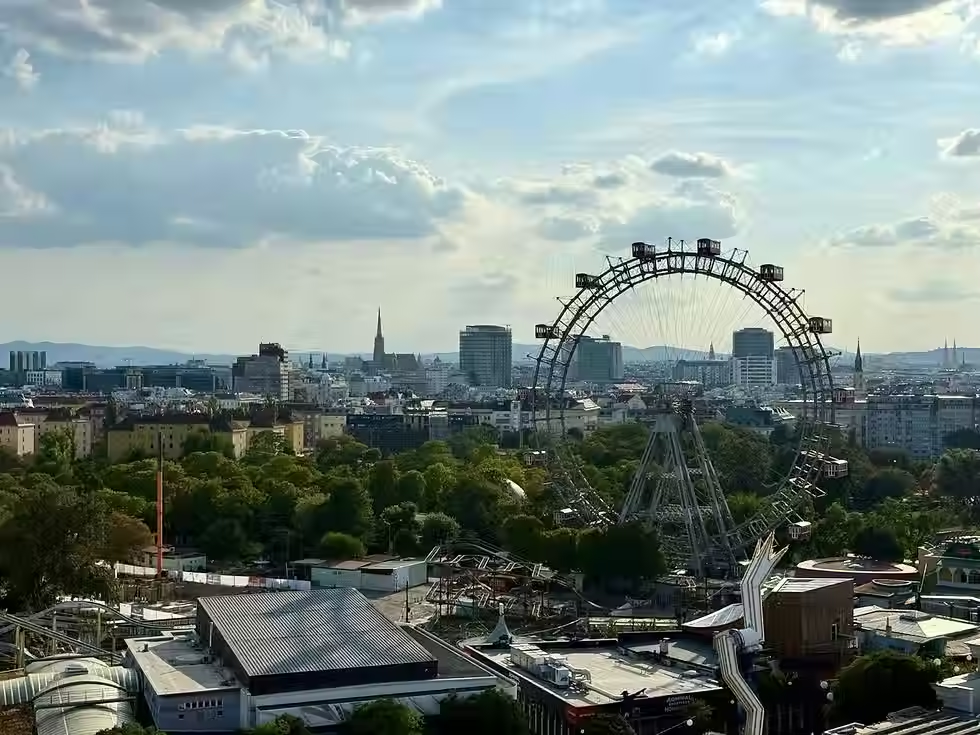
Wiener Riesenrad with red cabins above Prater rooftops and trees, with Vienna’s skyline beyond.
Classics shared by generations
I love it when historic attractions are kept alive and continue entertaining generation after generation. From great-grandparents to the youngest visitors, they create shared experiences and familiar stories. The Prater has plenty of these classics, and I would make time for them alongside the newer thrill rides.
Wiener Riesenrad
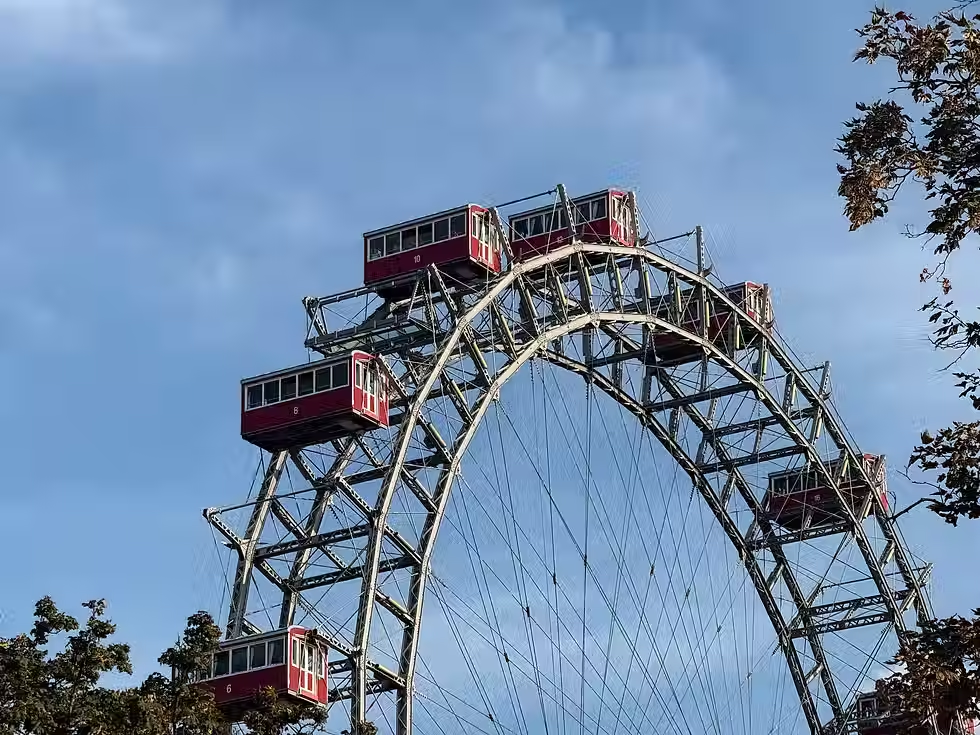
First and foremost is the historic Wiener Riesenrad. Built in 1897, it was severely damaged by fire during the Second World War. After rebuilding, it resumed operation in 1947 with 15 cabins instead of the original 30. Its survival and reconstruction are part of what make it such a meaningful Prater landmark.
The ghost-train tradition
Wien Museum’s history records ghost trains at the Prater from 1933. Today’s attractions have their own histories: the Geisterschloss operator dates its opening as Geistermühle to 1955, followed by later changes and additions. I found it particularly lovingly put together. That care is a large part of the appeal of an older ghost train for me.
Liliputbahn, Hochschaubahn and Toboggan
The historic Liliputbahn has been part of the Prater since 1928. Its miniature trains run through woods and meadows and along the Hauptallee. The wooden Wiener Hochschaubahn, also called Zwergerlbahn, opened in 1950. Its artificial mountain scenery and little garden gnomes belong to a different era of fairground design. Check its current operation before planning a ride.
The wooden Toboggan slide first opened in 1913. Destroyed during the war, it was rebuilt in 1947 and later restored again. The Prater’s current listing confirms that it welcomes riders again. Its story shows how much work can go into keeping these attractions alive.
Kasperltheater
The Original Wiener Praterkasperl continues the Prater’s puppet-theater tradition. It is another way for families to share the place, with familiar characters and stories alongside the rides. Check the current programme for performances at the Prater, as the company also appears at other venues.

A winged monster crowns the Geisterschloss facade, with RollerBall’s green track rising behind it.
Views, speed and the bigger thrills
The Prater also has plenty for people who enjoy being lifted high above the ground, spun around or sent through a loop. The different rides deliver that excitement in very different ways.
Praterturm, Black Mamba and Tornado
The Praterturm is a chair-swing ride on a 117-meter tower, with wide views over Vienna. It can be an option for families with children who enjoy heights and meet the ride rules. The current listing specifies a minimum height of 125 cm and adult accompaniment for children aged 7–10; check the conditions before joining the queue.
Black Mamba whirls its passengers through changing directions on swinging arms, while Tornado swings high and sends riders diving headfirst. These are more intense choices, each with its own age and height restrictions.
My roller-coaster favorites
I have always enjoyed roller coasters and ghost trains. On a more recent August visit, we spent about three hours at the Prater and went on four ghost trains, four roller coasters and a Ferris wheel.
The Wiener Looping is a little short, but I thought it was excellent. Die gesengte Sau was another great coaster, with real care put into its design and theming. On Megablitz, which I have ridden several times over the years, the forces in its tight, spiraling turns are what impress me most.
Among the ghost trains, Hotel Psycho was very good and felt like a proper horror ride. It offers a more intense choice alongside the older Geisterschloss. Check the experience and restrictions carefully when choosing for younger visitors.
Garlic, Langos and my first visit
I first came to Vienna when I was around twelve, on a cycling trip along the Danube from Passau. One of my strongest memories of the Prater in the early 1990s is the Langos, generously covered in garlic. I went on so many rides that I felt a little queasy, and I also remember eating plenty. The food is as much a part of that childhood memory as the rides themselves.
Returning through the park
On our more recent visit, we took a tram toward the Hauptallee and walked through the park before reaching the rides from the back. Vienna was in the middle of a heatwave, and the green park was looking rather brown and dry. That approach let us combine the park with the amusement area.
Afterward, we used the U-Bahn and a bus to get to dinner in another neighborhood. It was very easy to make the Prater part of a wider day in Vienna.


Food, family outings and the Green Prater
Restaurants, beer gardens and food stalls
You can make food a substantial part of a Prater visit. There are restaurants for a sit-down meal, beer gardens for a longer break and stalls for something quick. Vienna’s food guide includes the gardens at Schweizerhaus and Luftburg, alongside sausage stands and Langos sellers.
The Rollercoaster Restaurant carries the fairground idea right to the table: food and drinks travel along a rail system. It is one of the more playful options for a meal. These are choices to consider alongside the rides, rather than reasons to rush through lunch and move on.
Minigolf and indoor skydiving
There is also minigolf and indoor skydiving at WINDOBONA, where you fly in a wind tunnel with an instructor. Check the booking arrangements and participation requirements for the activities you choose. Families can mix quieter attractions, food and play with the bigger rides.
Make time for the park itself
The Green Prater has real expanses of meadows, woodland and paths, with the Hauptallee running through it. It gives you space for a walk, a picnic or a slower afternoon. This wider setting is an important part of the Prater’s appeal.
My money-saving tip: Vienna City Card
We bought a three-day Vienna City Card for our Vienna visit. Its Prater voucher booklet included plenty of two-for-one ride offers and other discounts. I definitely recommend collecting the booklet before you start buying ride tickets.
The official 2026 guide lists the Prater booklet offer for March 15–October 31. Present your City Card to collect it free: current pickup arrangements are Monday–Thursday at the Riesenradplatz information counter, and Friday–Sunday at the Pratermuseum (Prater 92), during opening hours. Check each voucher’s conditions and compare the current card price with the rides and transport you plan to use.
Planning your visit
Choose the visit you want. A few rides, a museum stop, lunch and a park walk are different ways to spend your time. Our three-hour visit focused mainly on rides.
Check opening times separately. The grounds are accessible year-round, while attractions and restaurants keep their own schedules. Winter and bad weather can limit the choice.
Check the museum’s schedule. The Pratermuseum has limited opening days and a winter break.
Set a ride budget. Each attraction charges separately. Bring some cash, since card payment is not universal.
Use public transport. Praterstern is served by U1 and U2, with a short walk to the amusement area. Check the official arrival information for your route.
Allow for breaks. Our August visit was very hot. Carry water and leave time to sit down, especially when combining rides with a longer day of sightseeing.
Match activities to your group. Height, age and participation rules differ. For specific access needs, check directly with the attraction you want to visit.
The historic Wiener Riesenrad has its own tickets and schedule. Use the Prater’s visitor FAQ for current seasonal, admission and payment information. Practical information checked on October 4, 2026.
Final Thoughts
I love the Prater because its history is still part of a living place. Classic attractions can give great-grandparents and young children something to share, while newer rides bring a different kind of excitement. I will always be drawn to the coasters and ghost trains, but the food, museum and green parkland make this a much wider outing. For me, it has some of the pleasure of Oktoberfest in a more manageable setting.