

Salzburg Travel Tips
Plan Salzburg confidently with seasonal guidance, train and airport access, buses, mountain weather, visitor crowds and practical local advice.
OVERVIEW
Before You Go
I usually reach Salzburg by train from Munich, and the busiest services can be packed well before departure. Once there, I walk through the center and use buses for places such as Hellbrunn and the Untersbergbahn. The key decisions are whether to stay overnight, which attractions to reserve and how far beyond the city you want to travel. Ask your accommodation for its Guest Mobility Ticket before buying local transport tickets.
THROUGH THE YEAR
When to Visit
Choose the season around what you want to do. Advent is the period I associate with our annual Christmas-market trips; summer brings the Salzburg Festival and access changes around its venues. For a visit built around lakes or mountains, check boat, lift and attraction schedules before choosing dates. City museums and cafés make Salzburg possible year-round, but the same excursion plan will not work in every season.
Climate averages: GeoSphere Austria, Salzburg Freisaal, 1991–2020; these are city averages, not mountain conditions. The ranges below show the monthly average daily lows and highs across each season, not temperature extremes. Wet days mean at least 1 mm (0.04 inch) of precipitation.
SPRING
March–May
Chilly mornings give way to milder afternoons by May, but wet days are common. Higher paths can retain snow well after the city feels springlike.
Climate: Average monthly lows 1–9°C (34–47°F); highs 11–20°C (52–69°F). About 11–14 wet days per month.
Seasonal highlight: The Easter and Whitsun Festivals can affect hotel availability. Mirabell gardens and the Altstadt suit city walks; check Hellbrunn’s seasonal opening before adding the trick fountains.
Outdoors and clothing: Bring layers, a waterproof jacket and grippy shoes. Check the mountain forecast separately and avoid assuming city weather describes higher trails.
Check Easter and Whitsun dates; snow can linger on high paths.
SUMMER
June–August
Summer days are warm, but frequent rain and thunderstorms make a waterproof layer useful. Mountain conditions can change quickly.
Climate: Average monthly lows 12–14°C (54–57°F); highs 24–25°C (75–77°F). About 14–15 wet days per month.
Seasonal highlight: The Salzburg Festival runs in July and August. During my July 2026 visit, preparations prevented our planned cathedral visit, so check venue access and reserve accommodation early.
Outdoors and clothing: I prefer Getreidegasse early or later in the day. Carry water and a rain jacket, and check thunderstorm forecasts before lake or mountain excursions.
Festival access changes; reserve rooms and check mountain weather.
FALL
September–November
September can still be mild, while November is much colder. Rain remains common and shorter days limit longer excursions.
Climate: Average monthly lows 1–10°C (34–50°F); highs 9–20°C (49–69°F). About 11–12 wet days per month.
Seasonal highlight: A September visit introduced me to Rupertikirtag, with nostalgic rides and stalls around the cathedral squares. It usually takes place around September 24; check exact dates.
Outdoors and clothing: Pack a warmer waterproof jacket and shoes with grip. Later in autumn, confirm boat timetables, mountain attraction hours and lift maintenance before booking an excursion.
Autumn 2026 update, checked 6 October: Untersbergbahn is closed for maintenance from 2 November until provisionally 13 December 2026. Check the operator’s current opening information before planning a summit trip.
Rupertikirtag, shorter excursion hours and lift maintenance.
WINTER
December–February
Winter is cold, with nights below freezing and a mix of rain, snow or ice possible. Mountain conditions are much harsher than those in the city.
Climate: Average monthly lows −3–−2°C (26–28°F); highs 4–7°C (39–45°F). About 11–13 wet days per month.
Seasonal highlight: Our Christmas-market trips from Munich worked well with a late-morning arrival, an afternoon around Domplatz and Residenzplatz, then dinner before the train home. Stay after dark for the lights, checking the return train first.
Outdoors and clothing: Bring a warm coat, gloves and grippy boots. For Untersberg, check weather and operating notices separately: snow and ice can limit walking beyond the cable-car station.
Market lights after dark; check trains and icy mountain conditions.

Salzburg’s Rupertikirtag with old fashioned amusements and food stalls
Travel Essentials
Map out the Altstadt and Mirabell on foot, then plan Hellbrunn or a mountain outing separately. If arriving by train, allow time to reach the center from Hauptbahnhof. Check festival dates before choosing a hotel: during my July 2026 visit, preparations affected access around the cathedral.
Getting There
From Munich, regional trains generally take about two hours; some long-distance services are faster. I have found the regional trains particularly crowded, so arrive at the platform early if finding a seat matters. Check the exact train and ticket conditions before traveling: a regional ticket does not automatically cover a Railjet or Eurocity service.
From Salzburg Hauptbahnhof, walk toward Mirabell and continue across the river to the Altstadt, or take a city bus to reduce the walking. From Salzburg Airport, route 2 serves the main station and route 10 serves the city center. Check your hotel’s nearest stop rather than automatically traveling through the station.
For a stay focused on Salzburg itself, a car adds parking costs without helping much in the pedestrian center. If you are driving as part of a longer regional trip, obtain your hotel’s access and parking instructions before entering the Old Town.
Paid Link Browse Salzburg transport.
Getting Around
Getreidegasse, the cathedral squares and the foot of the fortress are close enough to combine on foot. Mirabell and Mozart-Wohnhaus are across the Salzach. Use buses for Hellbrunn and the Untersbergbahn; check the Salzburg Verkehr journey planner for your starting point and date, particularly during roadworks or festivals.
The Festungsbahn is a funicular to Hohensalzburg Fortress, while the Mönchsberg lift rises through the rock beside the Museum der Moderne. Both save an uphill walk, but paths beyond their upper stations can still have gradients or uneven surfaces. They are sightseeing transport, so check the relevant pass inclusions separately from ordinary buses.

Outdoor café seating and historic pastel buildings on a sunny square in Salzburg.
Money & Payments
Carry some euros for market stalls, small purchases and businesses that do not accept your card. At cafés and restaurants, read the menu before ordering, especially around the busiest Old Town squares. I enjoy historic dining rooms, but the setting and the meal can put them in a different price category from a quick snack.
For a simple meal before a train, I have used the kebab shops around Hauptbahnhof. For a special dinner, I enjoyed Gasthof Goldgasse in July 2026. Decide which meals you want to plan around, then compare transport and attraction passes separately; an overnight guest may already have the local transport needed.
Weather & What to Pack
Check Salzburg’s city forecast and the forecast for your chosen mountain separately. During my winter Untersberg visit, the summit was an icy, snow-covered landscape. A clear or mild morning in Salzburg does not tell you whether a mountain path will be suitable.
For city sightseeing, keep a rain layer with you and use a museum visit when the weather turns. For a cable-car outing, check the operator’s webcam, operating notices and last descent before leaving. Eisriesenwelt is not an automatic wet-weather alternative: reaching the cave includes outdoor uphill walks as well as the steps inside.
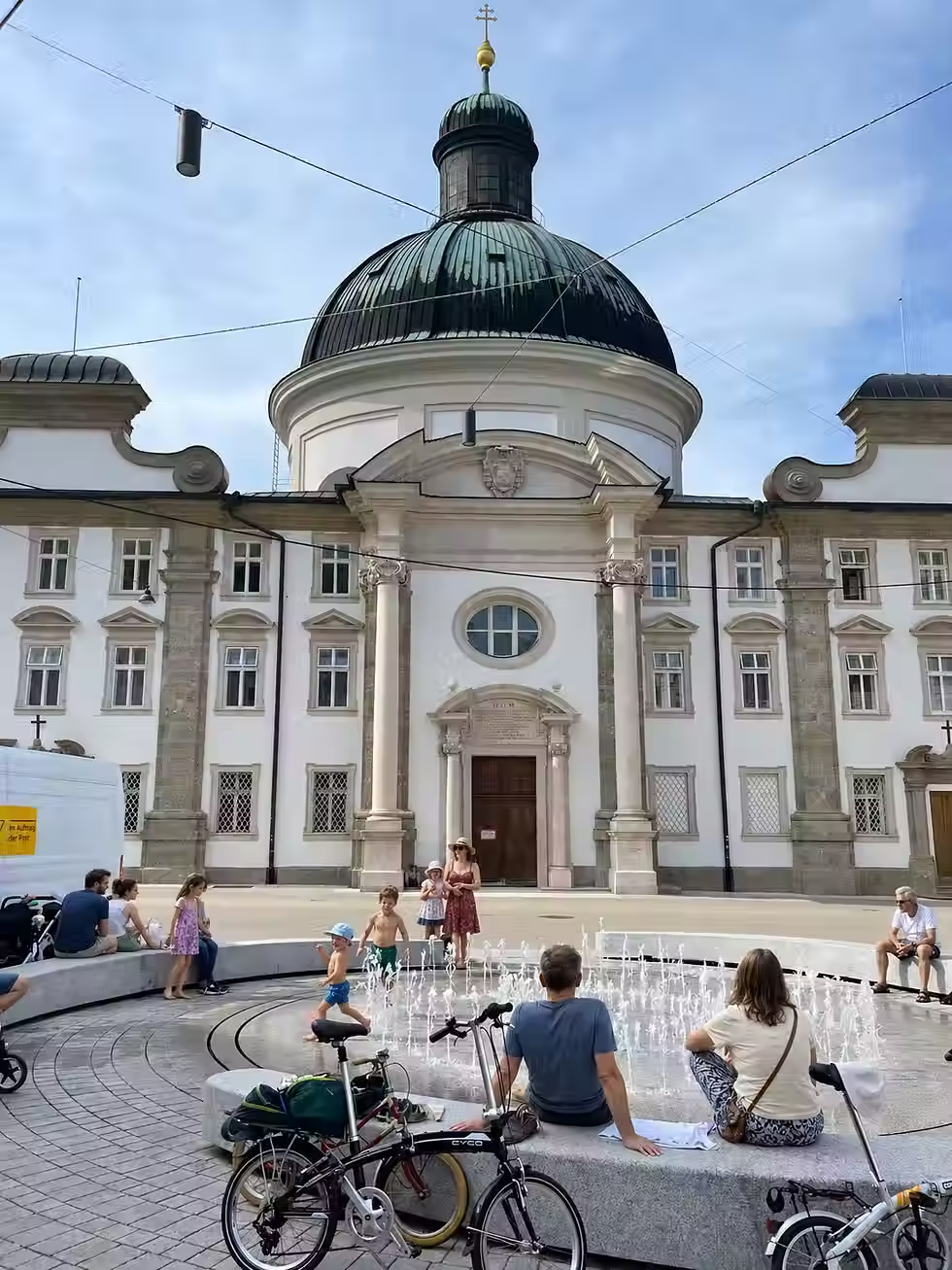
Visitors and playing children beside the fountain in front of Salzburg’s Kollegienkirche.
Local Customs & Etiquette
Keep narrow passages in Getreidegasse clear when stopping for photos or looking into shops, and watch for cyclists along the Salzach paths. The cathedral and St. Peter’s are places of worship, so check sightseeing access and avoid interrupting services. At restaurants, ask for the bill when you are ready; if you wish to tip, tell the server the total you want to pay.
Good to Know
Overnight guests in the province of Salzburg receive a Guest Mobility Ticket through their accommodation. Ask whether it can be issued before arrival so you can use it for the covered part of your journey. It covers regional public transport, not general admission to attractions or mountain lifts.
The separately purchased Salzburg Card combines sightseeing admissions with transport benefits, including the Festungsbahn, Mönchsberg lift and Untersbergbahn. Compare the attractions you will actually visit with the card’s price and validity period. For these lifts, the return trip must also fall within the card’s validity.
For excursions, check coverage beyond Salzburg carefully. The Guest Mobility Ticket covers bus 150 to Bad Ischl, but onward travel to Hallstatt needs an additional ticket. On bus 840 toward Berchtesgaden, coverage ends at the Austrian–German border. Do not assume that a Salzburg pass covers a whole cross-border day trip.
Plan your visit: Guest Mobility Ticket coverage · Salzburg Card conditions.
Final Thoughts
For a short visit, I would plan the route from the station through Mirabell and the Altstadt, then choose one main interior visit and the fortress. Stay overnight if you want another museum or a quieter start the following morning.
Keep Hellbrunn, the lakes and mountain excursions as separate planning decisions. Check the relevant opening schedule, transport coverage and return connection before leaving Salzburg, especially when crossing into Germany.