

Munich Travel Tips
Plan your Munich stay with practical advice on seasons, transportation, airport and rail access, payments, weather and local customs.
OVERVIEW
Before You Go
Munich is one of the easier major European cities to explore independently. Public transportation is excellent, the historic center is walkable, cycling is practical and regional trains make trips into Bavaria straightforward. There are still a few things worth understanding before you arrive, from changing seasons and airport connections to ticketing, Sunday closures and the continued usefulness of cash. A little preparation makes an already manageable city even easier to enjoy.
THROUGH THE YEAR
When to Visit
Munich changes noticeably through the year, and I would choose when to visit as much for the atmosphere as the weather. Spring brings the city outdoors again, summer revolves around parks, cycling and beer gardens, early autumn begins with Oktoberfest, and December is transformed by Christmas markets. January and February are much quieter. There is no bad season for museums and culture, but weather, crowds and major events can significantly change the experience.
Climate averages: DWD, München-Stadt, 1991–2020. The ranges below show the monthly average daily lows and highs across each season, not temperature extremes. Wet days mean at least 1 mm (0.04 inch) of precipitation.
SPRING
March–May
March can still feel wintry, while April and May bring milder afternoons. Rain and cool spells remain possible as the parks turn green.
Climate: Average monthly lows 2–9°C (35–49°F); highs 10–19°C (50–67°F). About 9–12 wet days per month.
Seasonal highlight: Frühlingsfest brings beer tents and fairground rides to the Theresienwiese in April and early May; beer gardens and flowering parks add to the spring atmosphere.
Outdoors and clothing: Bring adjustable layers and a rain jacket for the Englischer Garten. Keep a museum in mind when the weather changes.
Beer gardens reopen, parks bloom and daylight stretches longer.
SUMMER
June–August
Summer days are warm and sometimes hot, but showers and thunderstorms are part of the season. Evenings are usually cooler.
Climate: Average monthly lows 13–15°C (55–59°F); highs 23–25°C (73–77°F). About 11–13 wet days per month.
Seasonal highlight: Tollwood Summer Festival brings concerts, food and culture to the Olympiapark in June and July, alongside Munich’s beer-garden season.
Outdoors and clothing: Pack light clothing, water, sun protection and a rain layer for cycling or Isar outings. Swim only in permitted stretches, check storm forecasts and confirm hotel air-conditioning.
Isar life, beer gardens, cycling and long evenings outdoors.
FALL
September–November
September can stay mild, but temperatures fall sharply toward November. Shorter days and chilly mornings call for more flexible outdoor plans.
Climate: Average monthly lows 2–10°C (36–51°F); highs 8–20°C (47–67°F). About 10 wet days per month.
Seasonal highlight: Oktoberfest runs from September into early October and raises hotel demand. Afterward, autumn color in the Englischer Garten gives way to quieter museum and café days.
Outdoors and clothing: Wear layers, adding a warmer waterproof jacket later in the season. Start park walks early and keep evenings free for indoor culture.
Oktoberfest first; autumn color and quieter sightseeing later.
WINTER
December–February
Winter is cold, with nights often below freezing and occasional snow or icy paving. December is lively; January and February are quieter.
Climate: Average monthly lows −2–−1°C (29–31°F); highs 4–6°C (39–42°F). About 9–12 wet days per month.
Seasonal highlight: December is one of my favorite times in Munich, especially the Christkindlmarkt at Marienplatz. Fasching follows later, with dates moving between February and March.
Outdoors and clothing: Bring a warm coat, gloves and grippy shoes for markets and short walks. Balance outdoor time with museums or opera, and check a separate mountain forecast before Alpine outings.
Christmas markets, museums, opera, Fasching and Alpine outings.
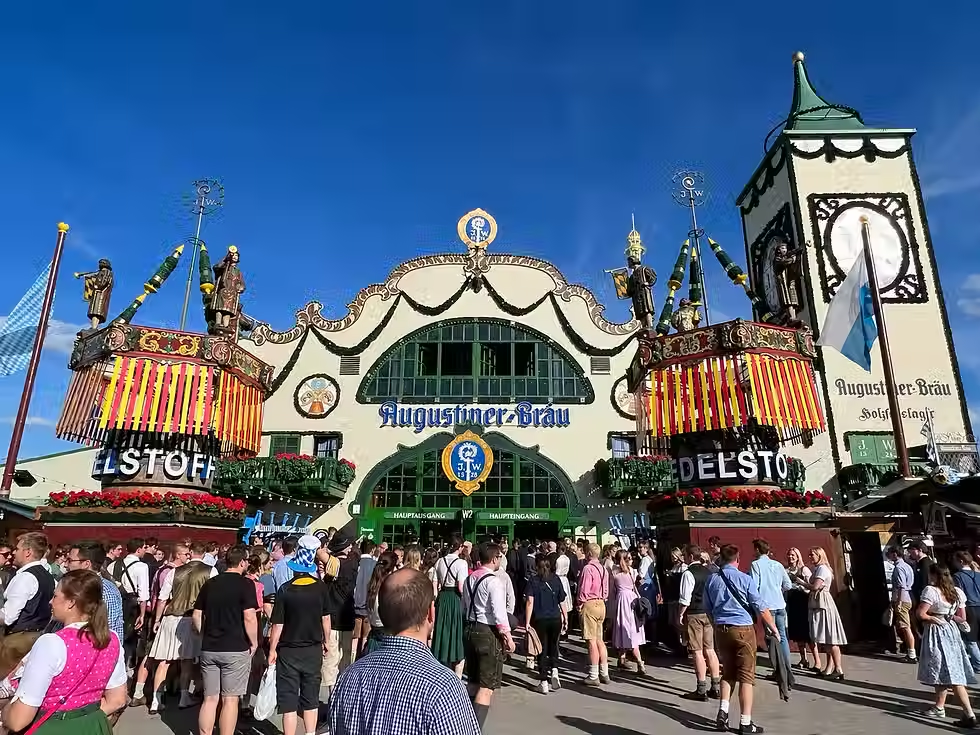
Crowds outside the Augustiner-Bräu beer tent at Oktoberfest in Munich
Travel Essentials
Munich requires relatively little advance planning compared with many major cities, but understanding a few basics will save time once you arrive. The airport is well connected, public transportation covers almost everywhere most visitors need to go, and regional trains make onward travel easy. Pay attention to fare zones, construction and Sunday closures, carry a little cash, and check current opening hours. For most stays, there is little reason to rent a car.
Getting There
Munich Airport lies about 40 kilometers northeast of the center. S-Bahn lines S1 and S8 connect it with central Munich, with journey times generally around 40–50 minutes depending on where you are staying. The Lufthansa Express Bus provides another option toward the Hauptbahnhof area, while taxis and private transfers are more convenient but considerably more expensive.
München Hauptbahnhof is the city's main rail gateway, with ICE and international trains as well as extensive regional services throughout Bavaria. The station and surrounding area are undergoing major long-term reconstruction, so entrances, platforms and walking routes can change. Depending on your accommodation and train, München Ost or München-Pasing may sometimes be more convenient than Hauptbahnhof.
Long-distance buses generally use the ZOB near Hackerbrücke. Once you arrive in central Munich, I would switch to public transportation, walking or cycling rather than renting a car simply to move around the city.
Paid Link Browse Munich transport.
Getting Around
One of the things I value most about Munich is how easily you can move around without a car. The MVV network combines the U-Bahn, S-Bahn, trams and buses under one ticketing system, while regional trains extend the network into the surrounding area. Choose the correct fare zones and remember that some paper tickets require validation. Day tickets can make sense when you plan several journeys.
The Deutschlandticket can be useful for longer stays or wider travel in Germany because it covers most local and regional public transportation, but it generally excludes long-distance ICE, IC and EC trains. It is a monthly subscription, so check the seller’s purchase and cancellation conditions before choosing it for a short holiday.
The Altstadt is compact enough to explore largely on foot. Cycling opens up a much broader side of Munich, especially along the Isar and through the Englischer Garten. Be aware that bicycle lanes sometimes run directly beside pedestrian areas, so watch the pavement markings. Use the MVV or MVG journey planner for current connections and disruption notices. If you need step-free access, check the route and lift status rather than assuming every interchange is accessible. Allow extra flexibility around Hauptbahnhof and central S-Bahn construction.

Pedestrian traffic light showing Munich’s distinctive green Ampelpärchen figures
Money & Payments
Munich has become much more card-friendly, and hotels, museums, department stores and most restaurants now accept credit or debit cards. I would still carry some euros in cash. Smaller cafés, bakeries, market stalls, traditional beer gardens and independent businesses may prefer cash or impose minimum card amounts.
ATMs are widely available. Restaurant prices include tax, and tipping is appreciated but much more restrained than in North America. I generally round up the bill or add roughly five to ten percent for good service. When paying a server, tell them the total amount you want charged rather than leaving the tip on the table afterward. A few coins are useful for small purchases and places such as public toilets.
Weather & What to Pack
Munich has four distinct seasons, but the weather within each one can change quickly. Spring can move between warm sunshine, cool temperatures and rain. Summer is generally best for outdoor life, although heat waves have become more noticeable and air-conditioning remains inconsistent. Early autumn can be mild and colorful before November becomes grayer and damper. Winter brings cold temperatures, short daylight and occasional snow.
I would bring layers during most of the year and include a light waterproof jacket even when the forecast looks promising. If you are heading into the Alps, check the mountain forecast separately: conditions at the Zugspitze or other higher elevations can be completely different from Munich. In summer, confirm air-conditioning at your hotel if sleeping in warm conditions is a concern.

Siegestor arch on Leopoldstrasse illuminated at night in Munich
Local Customs & Etiquette
Munich is relaxed and international, but a few everyday habits are useful to know. Punctuality is appreciated, and people generally wait for pedestrian signals even when a street appears clear. On public transportation, let passengers exit before boarding and keep conversations reasonably quiet, particularly during commuter periods. Be careful not to stand in marked bicycle lanes.
Beer gardens vary between table service and self-service. If you are unsure, watch what other people are doing before sitting down. In traditional beer gardens, sharing tables with strangers is completely normal. Their self-service areas often allow you to bring your own food while buying drinks on site; this does not automatically apply to tables with waiter service.
English is widely spoken in visitor-facing businesses, but basic German such as Hallo, Bitte and Danke is always appreciated. You do not need to speak German to travel independently in Munich, and asking politely for help generally works very well.
Good to Know
Check current opening hours before setting out, particularly for museums and palaces. Monday closures are common, while shops throughout Bavaria generally close on Sundays except for certain businesses at airports and major stations.
Public toilets may charge a small fee, so carrying coins remains useful. Tap water is generally an easy way to refill a bottle. Restaurant kitchens may also close earlier than North American visitors expect, particularly outside the busiest central areas.
Major festivals can substantially change the city. During Oktoberfest, accommodation becomes expensive, trains are crowded and streets around the Theresienwiese are busy, so book well ahead. Christmas and major trade fairs can also affect availability.
Finally, don't assume every paper transit ticket is automatically valid when purchased; check whether it requires validation. Journeys between central Munich and the airport require coverage for zones M–5; a Zone M ticket alone is insufficient. A standard MVV day ticket ends at 6 a.m. the following day rather than running for 24 hours, so check the validity period before buying.
Final Thoughts
Munich is a particularly easy city to explore independently once you understand the basics. Learn how the public transportation system works, allow for ongoing construction, keep a little cash available and check opening days before making firm plans. After that, you can move comfortably between historic sights, neighborhoods, parks and even destinations well beyond the city without a car. That freedom to change plans and explore spontaneously is one of the things I value most about Munich.